CLAS 301B
January 17, 2024
Plautus & Early Roman Theater
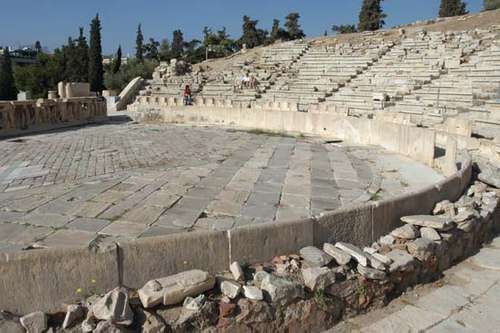
Theater of Dionysus (Athens, 4th century BCE)
Ancient Greek Comedy
Plautus (ca. 254-184 BCE)
- Roman (New) Comedy = fabula palliata, “play in Greek costume” (ca. 240 BCE)
- Titus Maccius Plautus = “Phallus, son of Clown, the Flatfoot (Mime Actor)” > influence of native Italian, non-literary theater (e.g. mime, farce, slapstick comedy); faux-wedding plot in Casina?
- Latin plays on Greek New Comedy models distorted by Plautus: music+, more farcical & broad characterization, linguistic fireworks (puns, jokes, parody: cf. parallel texts of Menander's Double Deceiver & Plautus' Two Bacchises after 1968 papyrus discovery)
- character types of New Comedy: typical plots re possession of women (e.g. love interest of young man, obstacles, e.g. senex amator); role of clever slave amplified in Plautus (Casina?)
- Greek setting ("Athens") but Roman customs, persons, places, institutions, etc. ("Romanization", e.g. Myrrhina's use of Roman divorce formula, "Out of the house, woman!", Casina 210/12); "Plautinopolis"
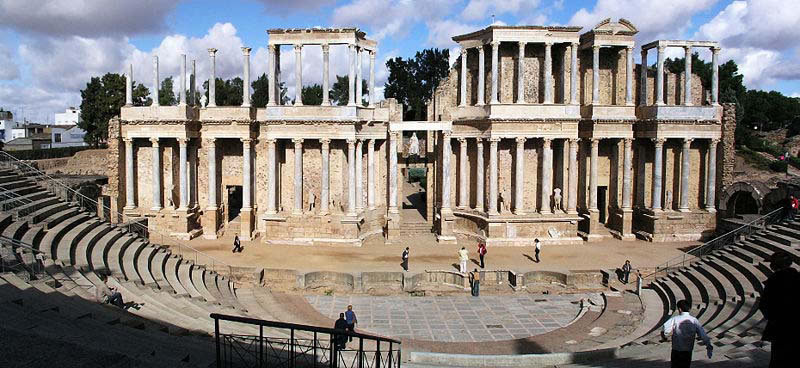
Theater of Mérida (Spain, 16-15 BCE)
Roman Theater in Plautus’ Day
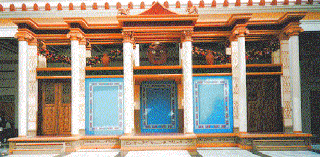
- temporary structures (forum, circus, before a temple); raised platform-stage a city street, painted backdrop (scaena) with 2-3 houses; 2 side-wings (forum vs. harbor/country); altar
- state-sponsored performances at religious festivals (aediles & senate; drama a "gift" for populace)
- wooden benches for audience; no orchestra; hierarchical seatings (senators, 194 BCE)
- no chorus; cantica (“songs”) + spoken (only ca. 1/3 of Plautus) + chanted lines (accompaniment of tibia); continuous action
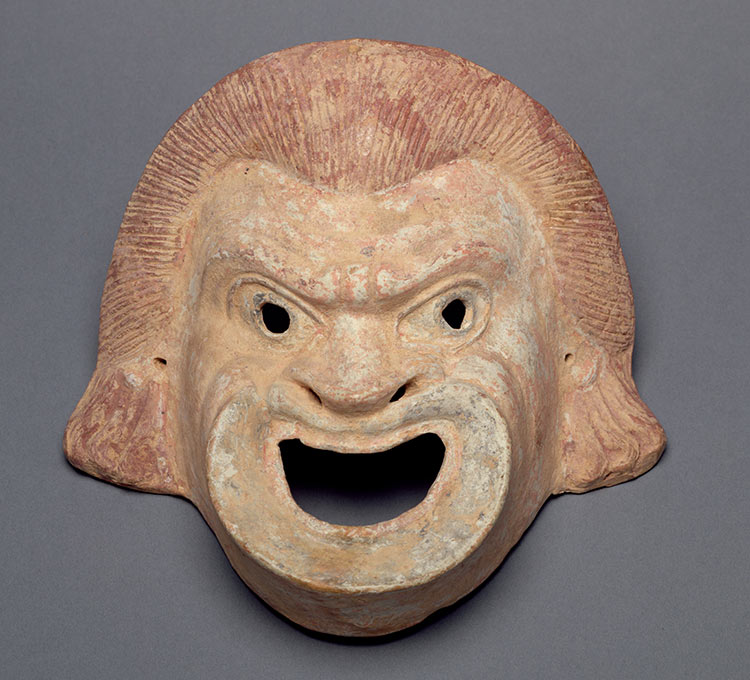
- characters wear masks, costumes codified (gender, class, age, etc.)
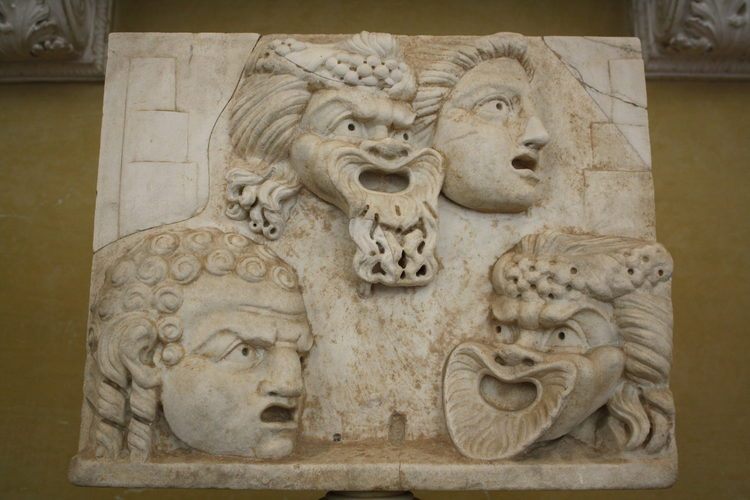
Marble relief of Greek theater masks (2nd century BCE)
- acting: no/low-status profession in Rome
Plautus' Casina (For a correction in your hard copy text of Casina, Scene 6, click here)
- late play (ca. 185 BCE; cf. "Bacchants", Scene 23), social-historical backdrop: Oppian law of 215 BCE limited women's personal expenditures (2nd Punic War), repealed after women's protests in 195 BCE; woman's finances/property rights still at issue (?)
- Myrrhina & Cleostrata in Scene 3 (Song): traditional marriage cum manu (transfer of father’s power & property to husband) vs. marriage sine manu, "without [transfer of] power" (transition)

Robert De Niro in Dirty Grandpa
- cast of characters: Lysidamus, Roman paterfamilias & senex amator, Cleostrata, Myrrhina; slaves Olympio, Chalinus, Pardalisca; neighbor Alcesimus, cook Citrio

- absent Casina ("Cinnamon Girl"; theme of food?) & Euthynicus (son of Cleostrata & Lysidamus, sent abroad, "[Plautus] brought down a bridge on the young man’s way home," 66)
- Greek source play's title from lot-drawing Scene 7
Casina 31-34 (prologue)
In Greek this comedy’s called Klerumenoi, ["The Lot-Drawers"]
In Latin Sortientes. Diphilus is the
Greek author. Plautus—he of the barking name—
Got hold of it and reworked it all over again.
- what has Plautus done with his Greek source play?
PROLOGUE: removed recognition plot (anagnorisis) from play (exposed child, sick slave); "His mistress agreed and gave it all her care, / Just as if it were her very own daughter (45-46)
EPILOGUE:
Spectators, here’s what will happen inside:
It’ll be discovered that this Casina is the neighbor’s daughter
And she’ll marry our young master, Euthynicus.
- Romanized performance context: dubious slave wedding, suspension of disbelief (67ff.)
Casina 79-86 (end of prologue)
... Now back to that abandoned girl,
The one the slaves are so eager to marry:
Turns out she’s a freeborn virgin:
Yes, the daughter of an Athenian! So they’ll be no
Fooling around with her in this comedy.
But trust me, as soon as the play’s over,
I’m sure whoever counts out the cash to her
Can have his honeymoon—no ceremony necessary!
GROUPS (scenes following the lottery)
- Cleostrata's metatheatrical victory over Lysidamus (play-within-the-play)
Casina 855-861 (Myrrhina, with Pardalisca & Cleostrata, waiting for Lysidamus and Olympio to come out of the house)
Myr: Such fine and fitting entertainment inside!
We’re out here on the street now to watch the wedding festival.
My goodness, I’ve never laughed so much in my life
And doubt I’ll ever laugh like that again!
Par: I so want to know what the new He-bride is doing with his new husband!
Myr: No playwright has ever devised a better
Plot than this clever production of ours!
Casina 1005-1006 (Cleostrata's metatheatrical decision to forgive Lysidamus):
But the only reason I'm going to forgive him
Is that this play is long and I don't want to make it any longer.
- Finale: Lysidamus' cloak and walking stick returned, all enter (his) house; family order restored?; a "proto-feminist" play?
Casina 1015-1018 (epilogue)
Now the right thing for you to do is to give us the thundering applause
We so richly deserve. Those who do will win the whore of their dreams
(and the wife will be none the wiser). Those who don¹t applaud as loudly as possible,
Will take a he-goat bathed in sewer-water to bed instead!