Classics 301B
February 26, 2024
Paper #1 (due Sunday, March 3 @11:59pm in D2L) *Topics*
Aeneid 1 (cont.): Aeneas as spectator at Juno's temple in Carthage: ekphrasis > bearing witness to Trojan suffering & loss (compensation through art, memory, memorialization – "there are tears for things")
Aeneid 1.485-8 (Hector's death)
Aeneas groaned deep in his heart, when he saw
the spoils, the chariot, the very body of his
friend, and Priam stretching out defenseless hands.
He saw himself as well, mixed in with the Greeks . . . [cf. 2.396 (Aeneas' narrative); variant of Aeneas as Greek collaborator (Menecrates of Xanthus, 4th century BCE)]
- Dido and Aeneas: commonalities – Venus' tale to Aeneas (Tyre, Sychaeus, Pygmalion, Dido’s vulnerability in North Africa)?
Aeneid 1.627-30 (Dido to grateful Aeneas)
". . . Fortune once
harassed me with hardship like your own. At last,
the fates let me settle in this land. Knowing
pain, I can learn to help the pain of others."
[cf. Trojan ambassador Ilioneus' (ironic?) plea to Dido, "We don't come to plunder Libyan homes / with swords . . .", 1.527-8]
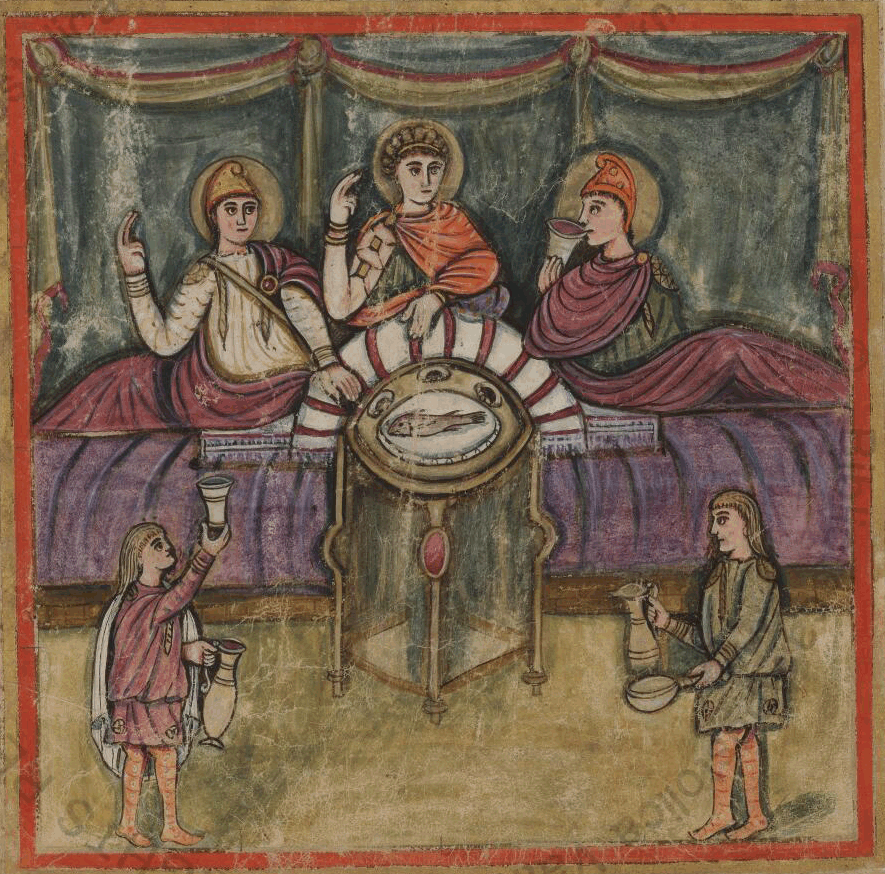
Dido's banquet ("Vergilius Romanus", 5th century CE illustrated manuscript)
Aeneid 2: Aeneas as narrator (cf. Odysseus among the Phaeacians, Odyssey 9-12) @ Dido's lavish ("eastern") banquet
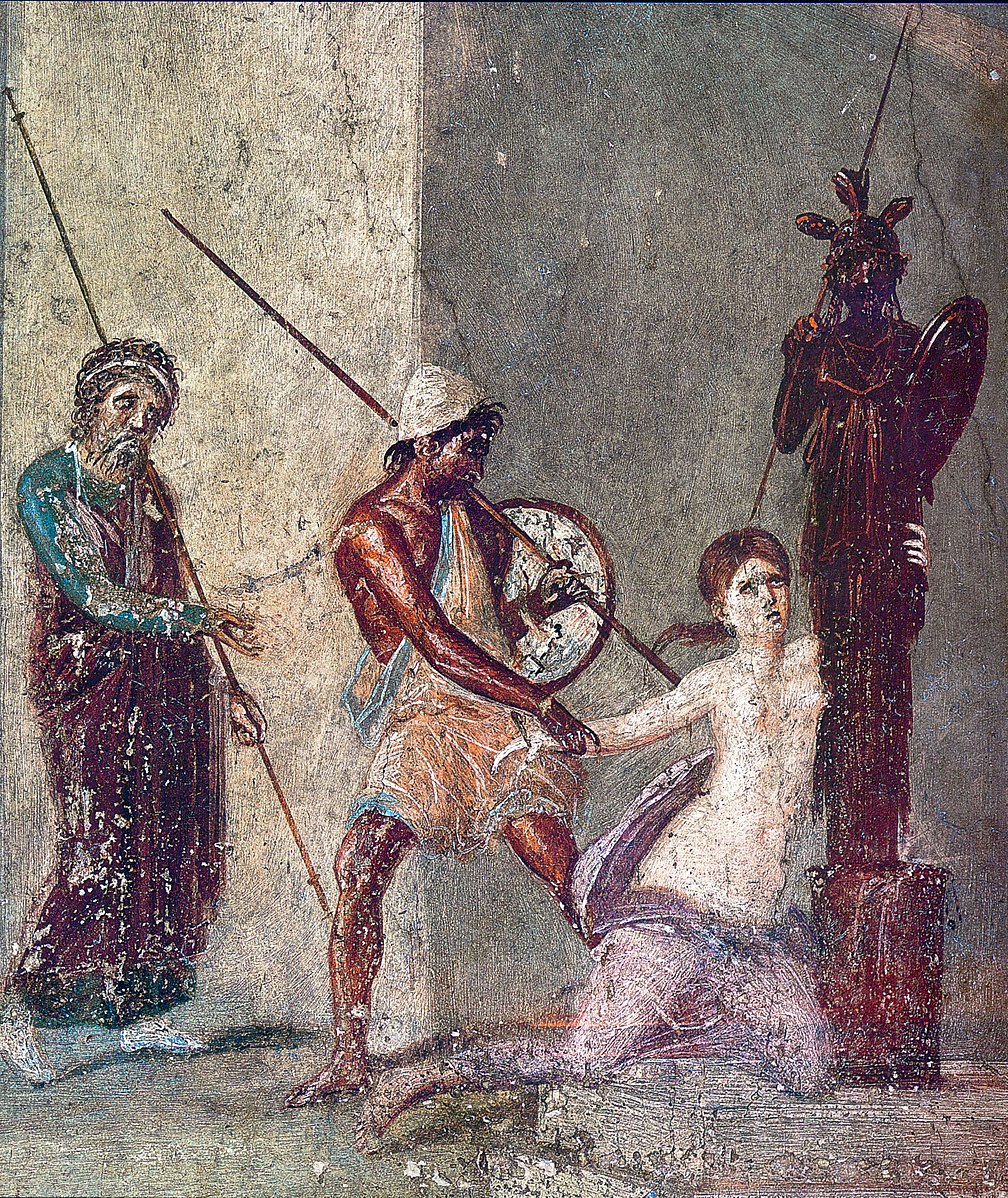
Priam watches Cassandra's rape (Casa del Meandro, Pompeii; cf. Aeneid 2.402ff.)
- Aeneas' narrative (renewed trauma?): "Queen, / you ask me to relive an anguish beyond words: / how the Greeks destroyed Troy's kingdom and her wealth. / I saw the piteous events myself—I played / no minor part" (2.2-6)
- Sinon's internal narrative of deception?
Trojan Horse in Troy (2004)
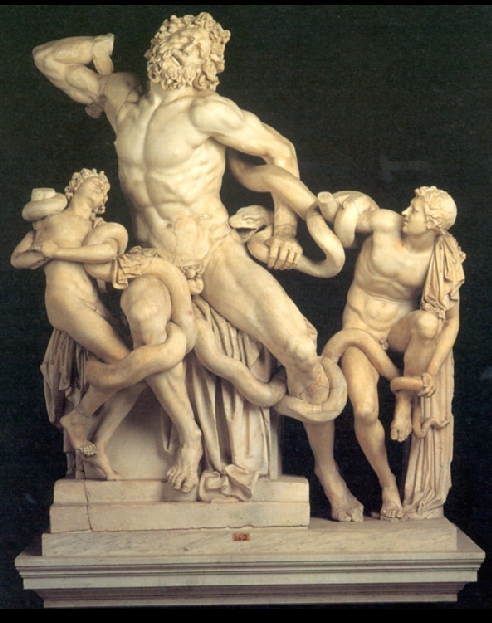
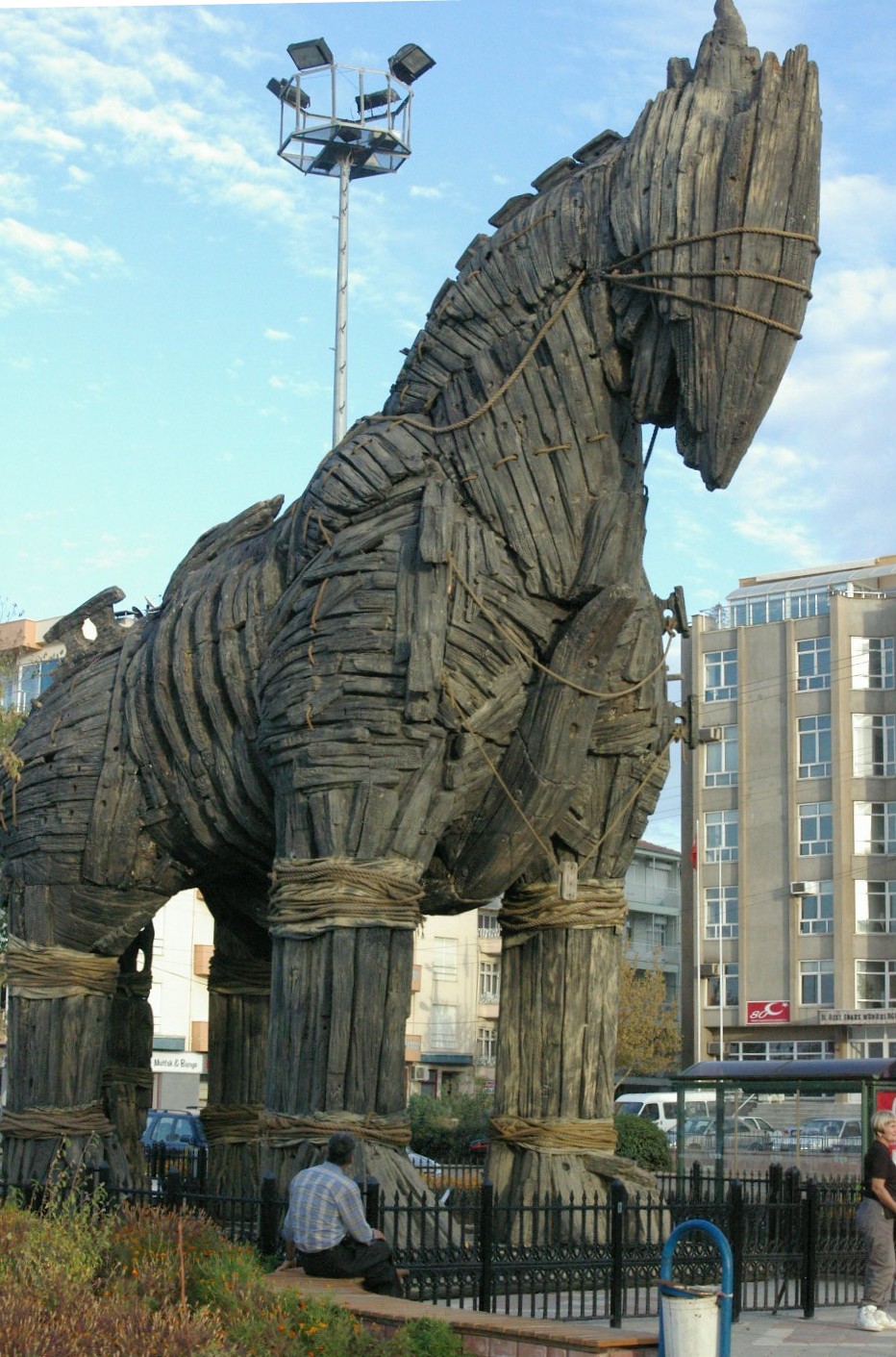
L: Laocoön & sons (1st century BCE Roman copy of Greek sculpture, ca. 200 BCE)
- (im)mobolized Aeneas' spectacular narrative (cf. traditional epic hero): "O Troy's ashes . . . I swear by you that as you fell I didn't run / from risk or Argive spears" (2.431-3), spectator at Priam's death (2.469-558); narrative challenges? a reliable narrator?
supernatural guidance & warnings (hero of destiny?):
(1) Hector’s ghost (2.270ff.): "build . . . great walls"; ancient commentator Servius' remarks on Aeneas' feigned ignorance of Hector's wounds (cf. Dido's dream of Sychaeus)
(2) Venus, after Priam's death (2.588ff.): reminder of family line, god-goggles ("Escape, my son, and give up your efforts")
(3) Iülus’ flaming head & shooting star (2.680ff.)
(4) Creusa’s ghost (2.771ff.)
(epic dreams, visions, prophecies: subject to human interpretation, i.e. of characters & readers; choice)
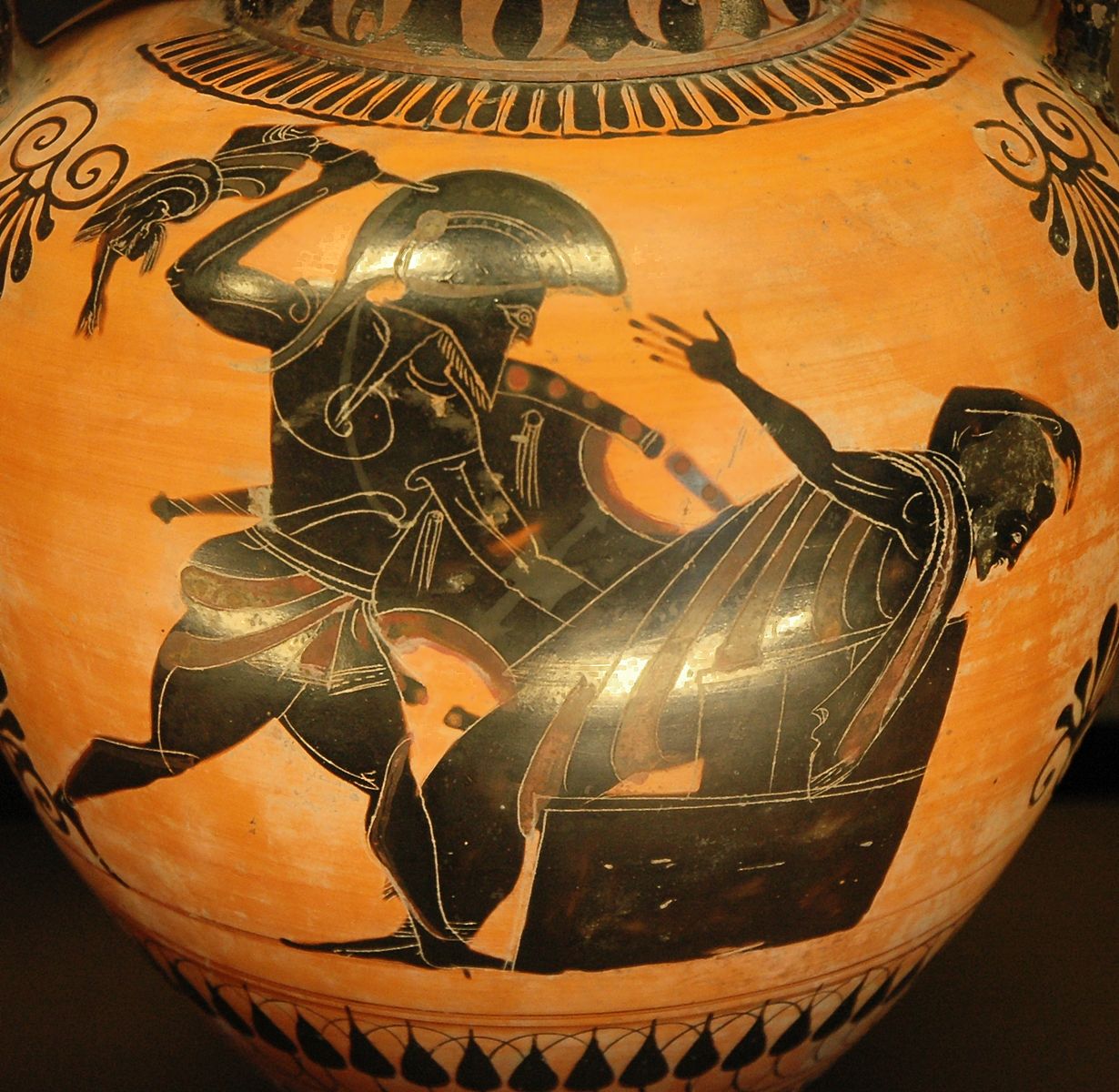
Pyrrhus kills Priam (Attic Amphora, 520-510 BCE)
- death of Priam at altar of household gods (a Pyrrhus worse than his father, 2.534ff.; Iliad 24), Aeneas reminded of family (esp. Anchises); "I was the only one of them alive" (2.567)
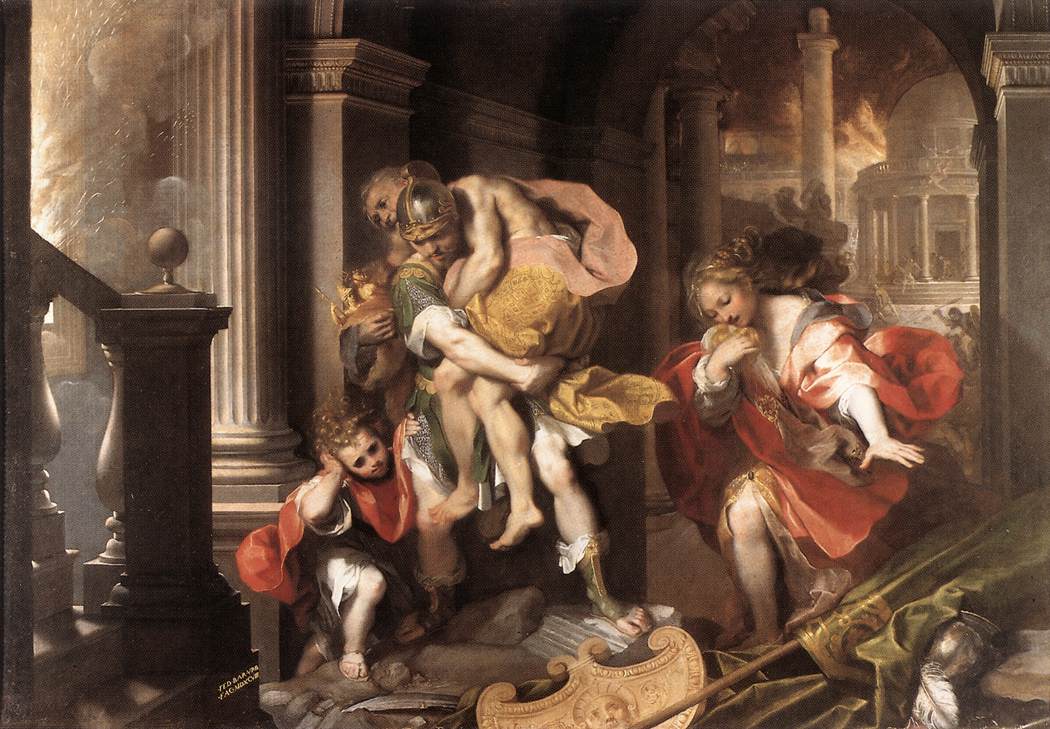
Frederico Barocci, Aeneas Flees Burning Troy (1598)
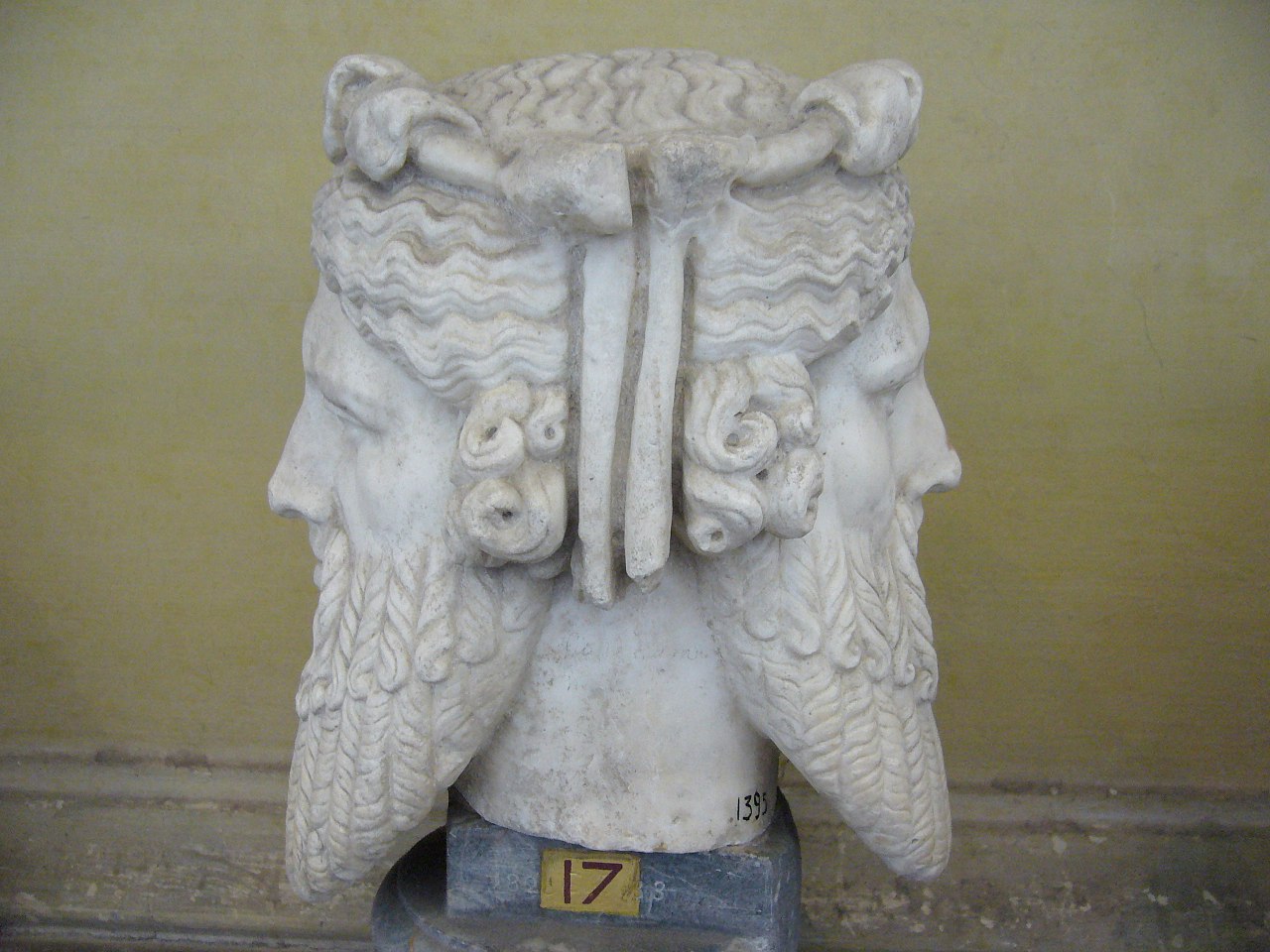
- departure from Anchises' house (2.707ff.); loss of Creusa: "No hope of help. / I gave up, lifted Father, and struck out for the hills" (2.803-4); another Janus-moment?
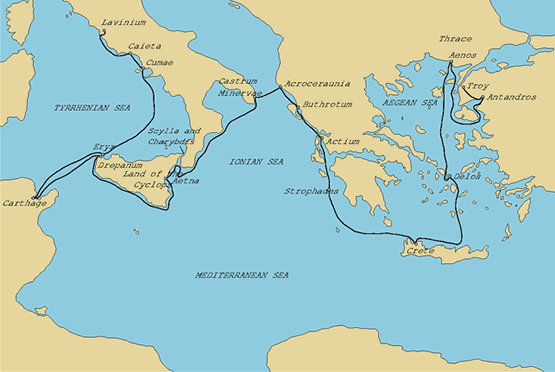
Google Map of Aeneas' Journey
- Aeneid 3: wanderings, false starts & stops, known past vs. fear of unknown future; less intense narrative between Aeneid 2 and 4, some overlap with Odysseus’ journey, but less fantastical & more historical (e.g. Actium & aetiology of Augustus’ Actian Games (3.274ff.)
- Buthrotum (northern coast of Greek mainland): Helenus & Andromache—their story (Pyrrhus)?
- Andromache's trauma ("Polyxena was the luckiest . . .", 3.321): uncertain Aeneas is real/alive; what's she doing in "a place for tears" (3.306)? Andromache & Dido?
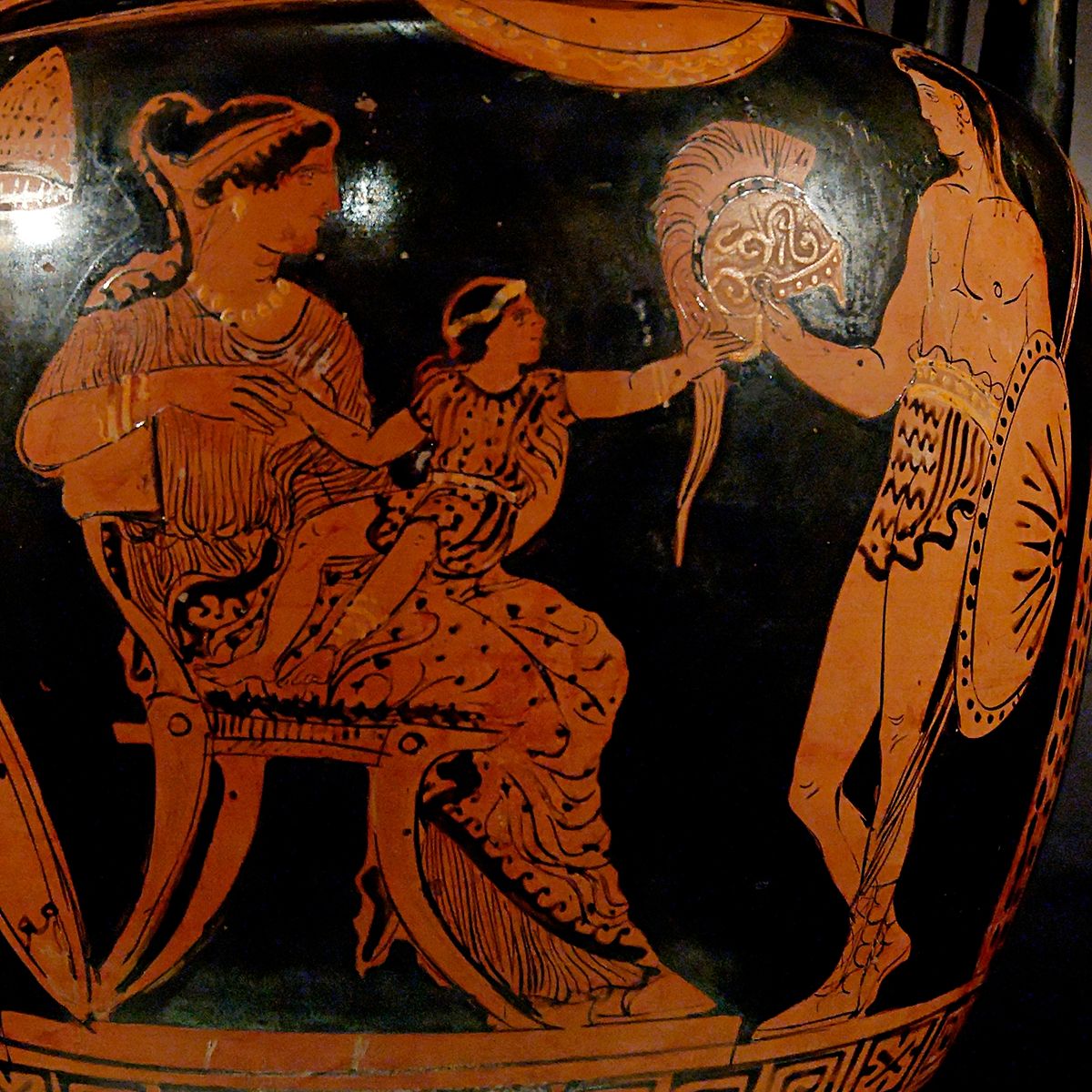
Andromache, Astyanax, Hector (cf. Iliad 6; Apulian vase, 370-360 BCE)
Aeneid 3.482-505 READER: Melia
Andromache was also sad at this last parting.
She brought out garments sewn with gold embroidery,
and a Trojan cloak for Iülus, just as lovely.
Heaping him with gifts of cloth, she said, "Take these
too, my boy: they're testimony to my craft
and the lasting love of Hector's wife,
Andromache. Accept these last gifts of your people,
you, my sole surviving image of Astyanax. [cf. Ascanius, "if a small Aeneas played / inside my home . . . ", 4.327f.]
His eyes, his hands and mouth were just the same,
and now he'd be a young man of your age."
I wept as I spoke my parting words:
"Live well, you whose fate has been fulfilled
while we are called from destiny to destiny.
You've won your relief. There's no sea to plow,
no fields of Italy to seek as they recede."
I pray that you have better fortune in your
second Xanthus and the Troy built by your hands.
May the Greeks never encounter them!
If I ever reach the Tiber and its fields,
and see the ramparts granted to my race,
one day we'll make a single Troy in spirit
from our sister cities, joining Italy
to Epirus. We share our founder, Dardanus,
and our sad past. This can be our children's task." [cf. Augustus' founding of Nicopolis, Epirus]
- end of Aeneid 3: death of Anchises @ Drepanum, Sicily; storm drives Trojans to Carthage; Aeneas' tale of wanderings finished
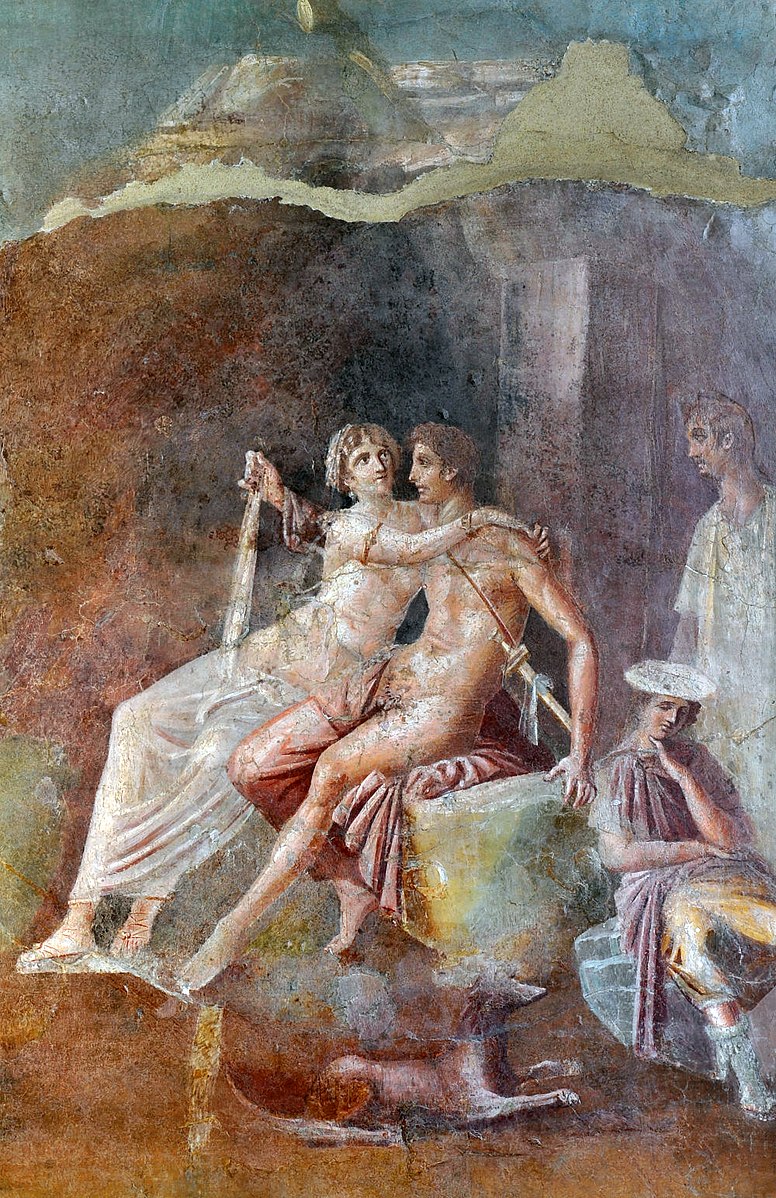
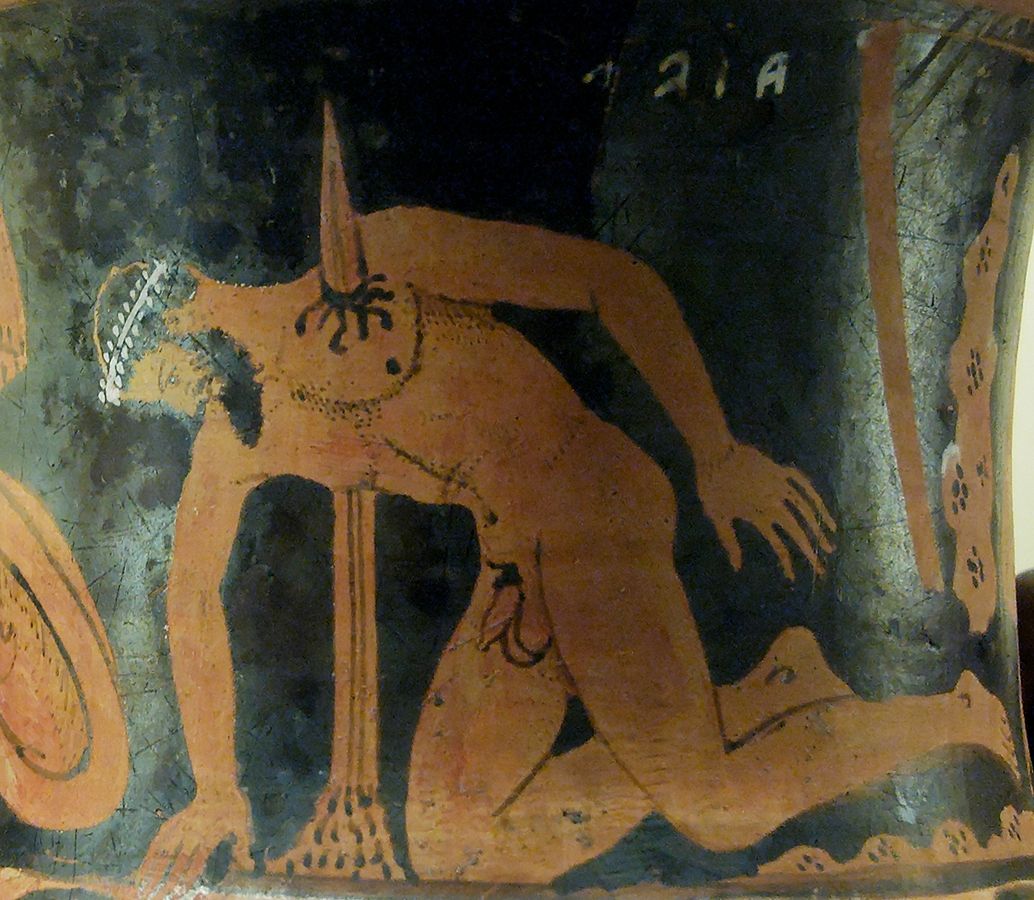
L: Dido and Aeneas fresco (Pompeii, 1st century CE); R: Suicide of Ajax ( Etrurian calyx-krater, ca. 400-350 BCE)
- Aeneid 4: tragedy of Dido (elaborated by Vergil); queen/leader/colonist turned tragic figure; female helper abandoned by ungrateful male hero (e.g. Jason, Theseus); Dido's tragic madness/suicide (cf. uncompromising heroes of Homer & Greek tragedy, esp. honor/shame of Sophocles’ Ajax); Dido to Anna, "I just need time for peace and space for passion, / until fortune teaches me to bear my loss" (4.433-4)
- Dido's conflicted self (idealism v. pragmatism): Sychaeus' memory (univira, "women with one husband"), "The man who first married me / Still has my love. Let him guard it in his grave" (4.28-9; marble temple (4.457ff.; cf. Andromache); fixation on Aeneas ("now she hosted the same banquet when night fell, / and madly begged to hear his hardships once again", 4.76-7)
Aeneid 4.68-73 (Dido/deer simile)
Mad with love, she wandered
through the city—like a careless doe pierced by
a shepherd's arrow from afar as he roams
the Cretan forest with his bow. Unknowing,
he leaves the shaft behind; she bolts through Dicte's
groves, the fatal arrow in her flank.
- Vergil's Dido: subjective style vs. “objective” style of epic narrator; emotional engagement with characters (cf. rare Homeric apostrophes); narrator may embed subjective viewpoint of a character (narrative focalization); narrator's/poem's "personal voice"?
Aeneid 4.397-415 READER: Payton
Now the Trojans fell to work in earnest.
Eager to escape, they pulled the ships to shore,
set afloat the pitch-smeared keels, and brought in
leafy branches from the woods for making oars.
You could see them swarming all over the city: [focalization]
like ants, when they pillage a huge heap of grain,
mindful of the winter, and store it in their home:
a long black stream hauls plunder through a narrow
pathway in the grass.
Some roll giant grains,
pushing with their shoulders; others mind the line
and chastise stragglers. The pathway teems with work.
What did you feel then, Dido, as you watched? [apostrophe]
How did you grieve, seeing from your citadel
the bustle on the shore before your eyes,
seeing the bay alive with so much shouting?
Cursed love, you make us stoop to anything.
Again Dido's forced to plead with him and weep,
to submit her pride to love, and beg.
She can't leave any stone unturned; her life's at stake.
- male gods (Jupiter & Mercury): a dandy Aeneas, "acting the good husband", 4. 266; "Females are a fickle thing, / always prone to change", 4. 569-70); Dido's Epicurean skepticism, "As if the gods lose sleep or worry over this!" (4. 379)
- Dido's knowledge of alternative Aeneas story? (self-address: "Poor thing, don't you / know or feel the treachery of Trojans yet?", 4.541-2; "Poor Dido, do his impious actions touch you now?", 4.596)
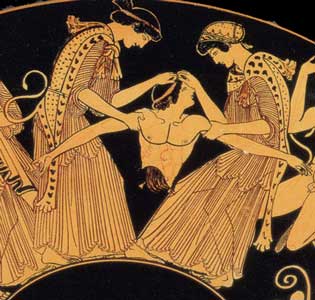
Pentheus dismembered (Attic red-figure vase, 480 BCE)
- Dido's descent into tragic despair/insanity after Anna's appeal to Aeneas fails: ". . . she seemed to hear her husband's voice, / calling her when dark night held the earth . . . She always found herself / alone on a long road, in a frenzy, / looking for her Tyrians in desert lands, / like mad Pentheus . . ." (4.460ff.)
- "Fall of Carthage": Aeneas & Trojans (re)inflict their city's trauma on Carthaginians?
Aeneid 4.667-71
Houses groaned with grief and women's wails,
and the sky echoed the clamor, as if Carthage
or ancient Tyre were falling, and the enemy
were in the city—raging fires rolling through
the homes of men and temples of the gods.
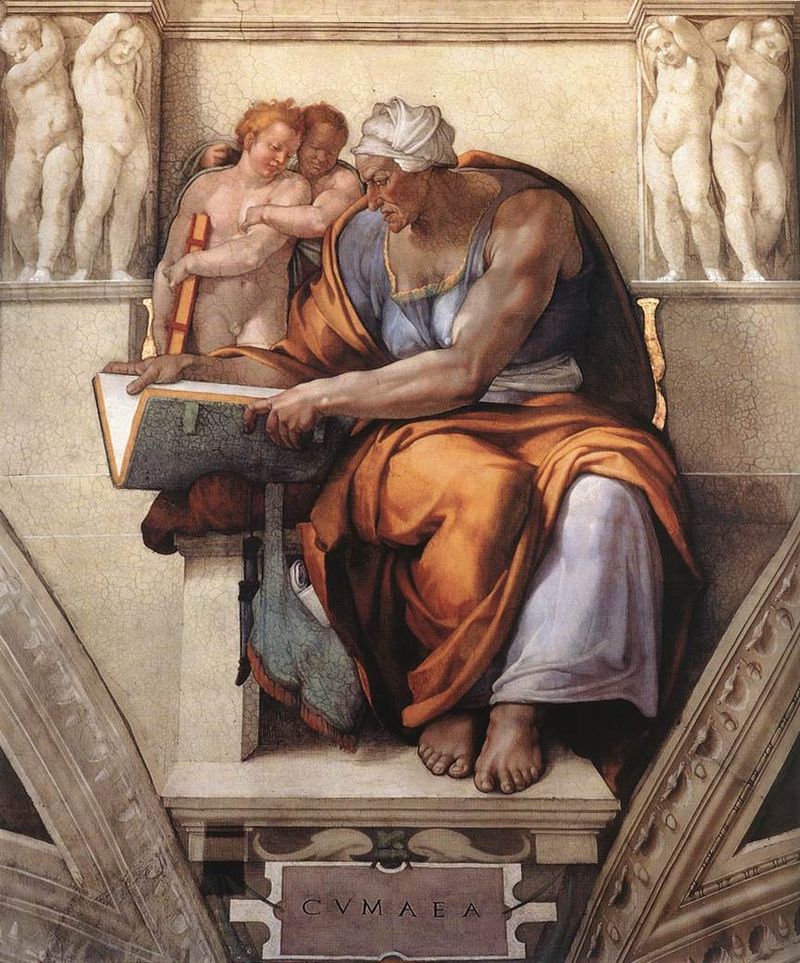
Michelangelo, Cumaean Sibyl (Sistine Chapel, 1508-1512)
- Aeneid 6: ekphrasis at the temple of Apollo in Cumae (Daedalus, Cretan labyrinth, Pasiphae, Theseus & Ariadna); katabasis (Sibyl), Vergil's underworld
- Dido in "Fields of Mourning" with "those whom heartless love consumed / with cruel pining" (6.440ff.): her reaction to Aeneas ("as hard flint or a rocky crag of marble . . .", 6.471ff.); cf. Odysseus' meeting with Ajax, Odyssey 11.543, "Only the soul of Telamonian Ajax stood off / at a distance from me.")
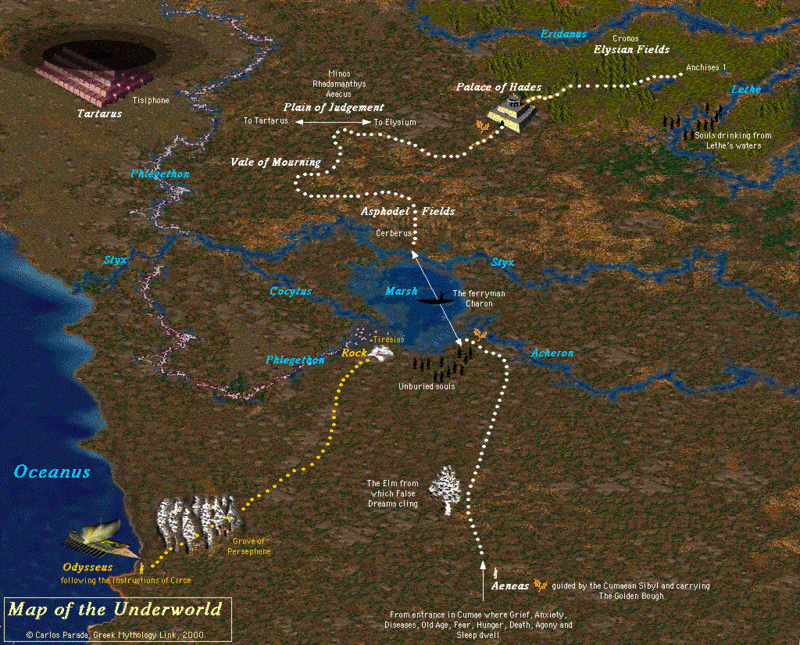
- Aeneas & Anchises review: parade of future Roman historical figures waiting to be born (Pythagorean metempsychosis, 6.756ff.); the Roman mission revealed
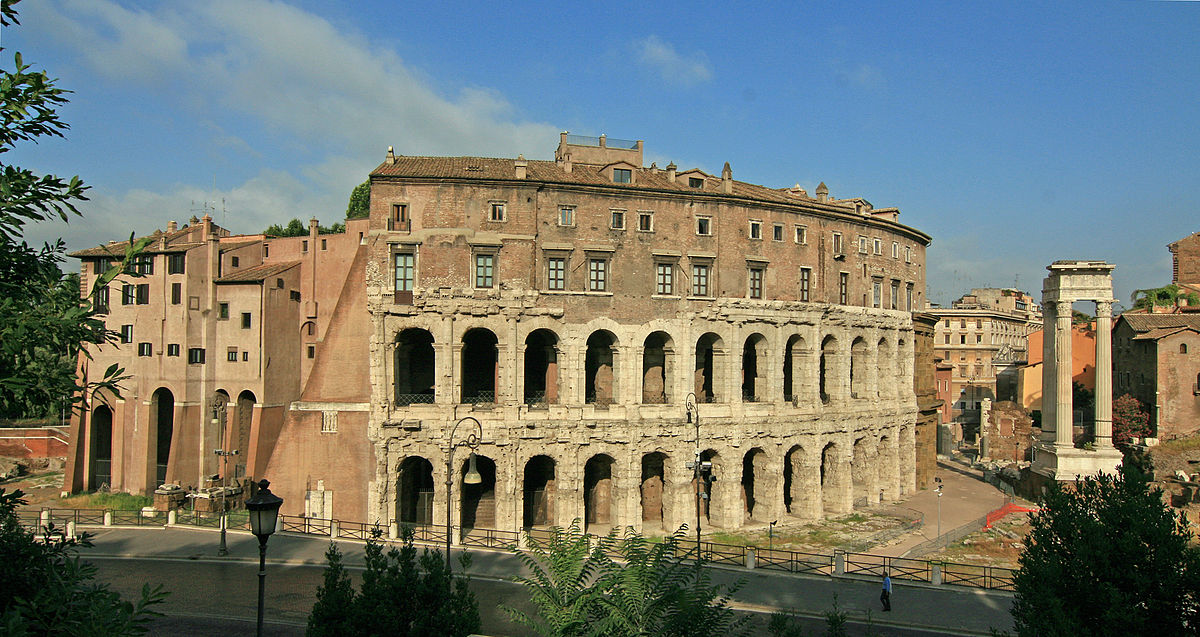
Remains of Theater of Marcellus (Rome, 13 BCE )
Aeneid 6.847-68 (Anchises & the Roman mission) READER: NORA
"Others, I believe, will beat out bronze that seems
to breathe and chisel living faces out of marble.
They'll excel in pleading lawsuits, and they'll trace
the heavens' paths and chart the rising stars
You, Roman, remember your own arts: to rule
the world with law, impose your ways on peace,
grant the conquered clemency, and crush the proud in war." [parcere subiectis et debellare superbos; cf. Augustus' Res Gestae & civil war clementia]; end of Aeneid]
They were struck with awe. Anchises added:
"See Claudius Marcellus, marked by splendid spoils? [Second Punic War hero]
Victorious, he strides along, the tallest there.
This horseman will steady Roman power
in a time of chaos, trample rebel Gaul and
Carthage, and for the third time offer captured arms [spolia opima]
to Romulus." Aeneas saw a handsome young man
near Marcellus, in bright armor, but his face
showed little joy, and his eyes were downcast. [nephew of Augustus, d. 23 BCE]
He asked Anchises: "Who is that who goes with him?
A son? A son's son from this noble stock?
How his comrades cheerr! What a fine impression!
But black night flaps around his head with her grim shadow."
Then tears welled in Anchises' eyes. "My child,
don't ask about the great grief of your people.
The fates will offer us the merest glimpse of him:
they won't let him live long . . ."
- exiting the underworld via gates of horn & ivory: cf. Penelope's unambiguous dream of 20 geese & 1 eagle (ivory gate for deceptive dreams, "their message is never accomplished . . . dreams that come into the open through the gates of the polished / horn accomplish the truth for any mortal who sees them", Odyssey 19.562ff.); clash of Vergil's (optimistic) public & (skeptical) private voices?
Aeneid 6.893-8
There are twin Gates of Sleep. One, they say, is made
of horn, and lets true visions pass through easily.
The other gleams with complex work in ivory,
but through its shades send lying visions to the light.
Anchises and the Sibyl brought Aeneas
to this gate and sent him through.
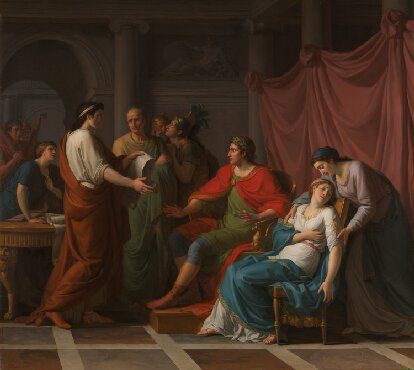
Tailasson, Vergil reading the Aeneid to Augustus and Octavia (1787)