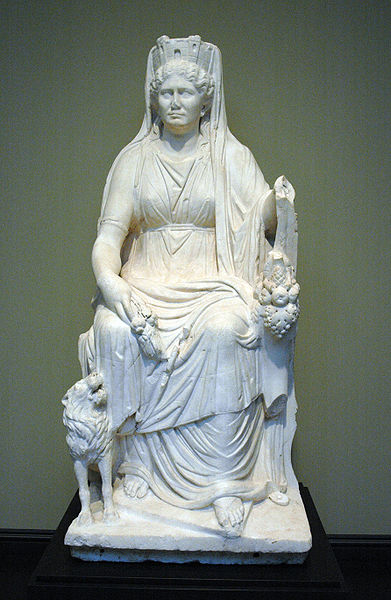
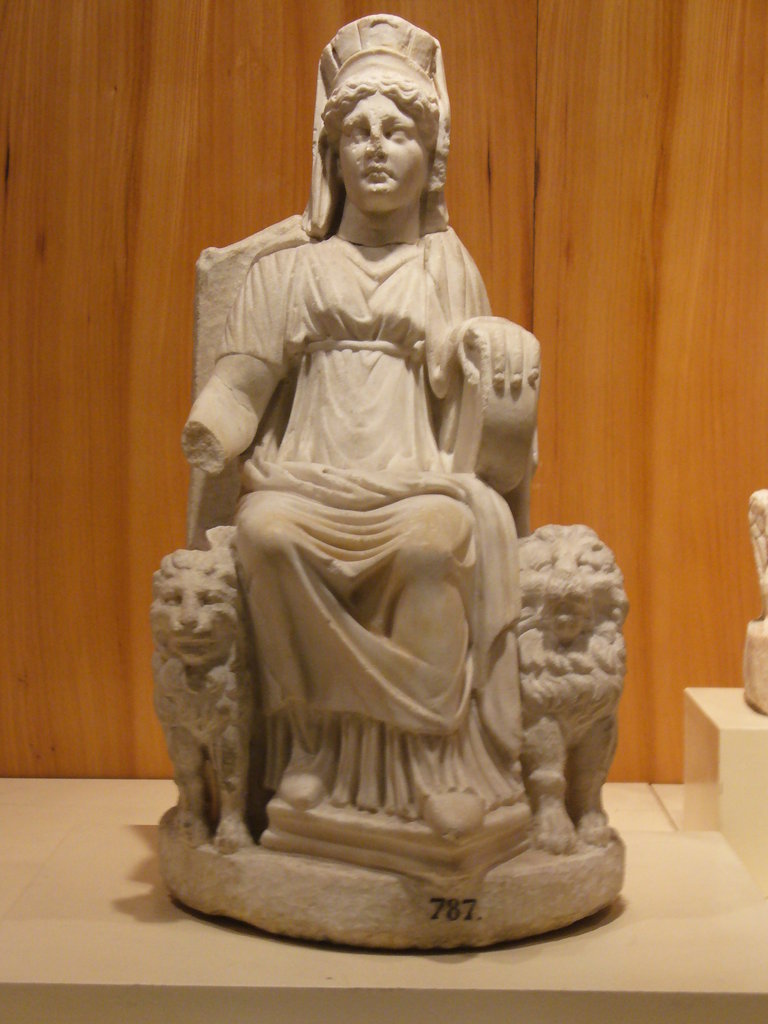
Roman marble of Cybele (ca. 50 CE)
Roman marble of Cybele (ca. 50 CE)
Catullus (continued)
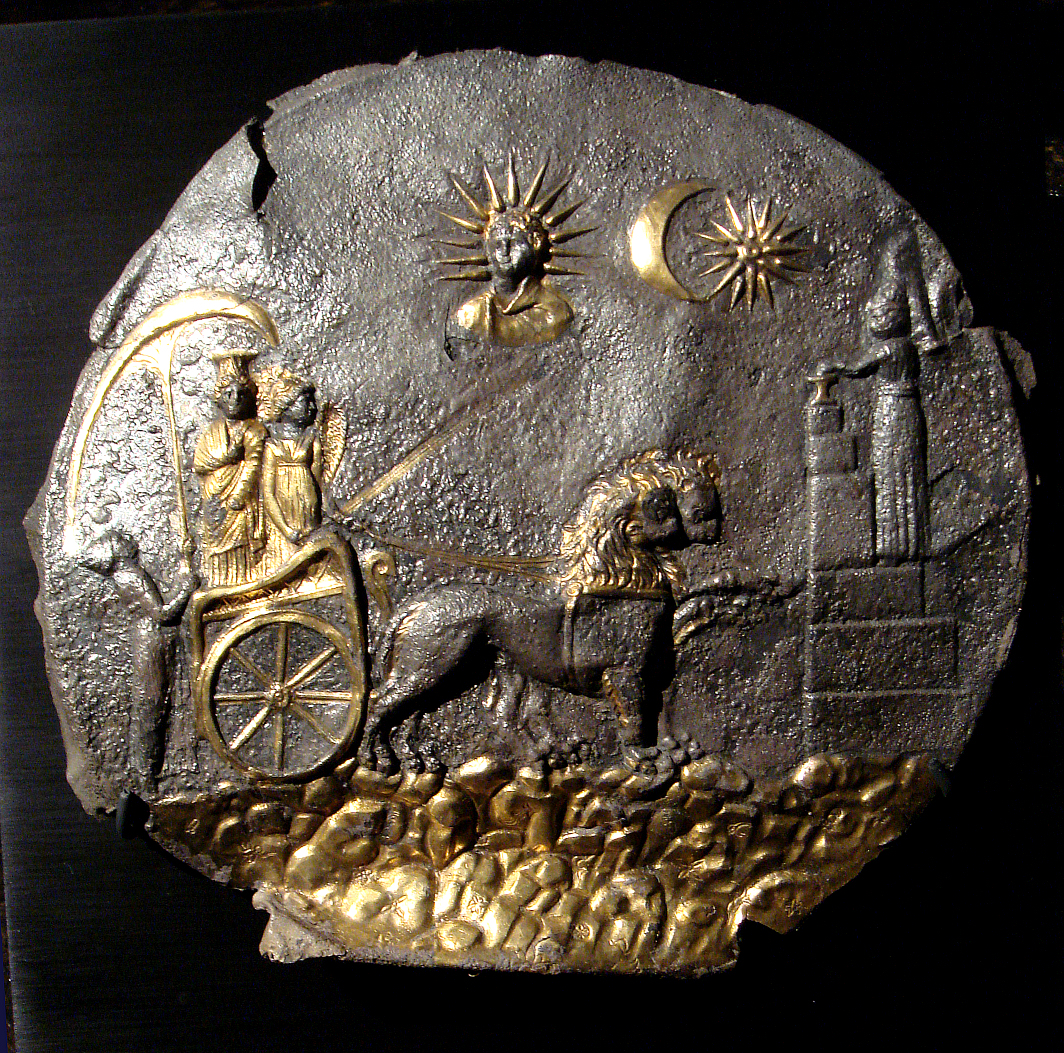
Poem 63 (Attis): cf. cult of Cybele & (dying/rising) consort Attis (eastern mystery religion, imported to Rome in 204 BCE – Magna Mater)
some ways of reading Poem 63:
(1) vivid description of frenetic/ecstatic & personal religious experience
(2)
psychological drama (separation from normalcy & loss of self)
(3)
radical experiment in crossing boundaries (geographic, cultural, sexuality & gender) – challenging traditional binaries
reading/performance by fiantlapides (swift Galliambics of cult songs): https://www.youtube.com/watch?v=DcYTpj2wb6g
an audiovisual translation by Henry Stead: https://www.youtube.com/watch?v=9eRbRBHd6HI
outline of Poem 63:
1-11: Attis, young Greek ephebe (cf. Chaerea in Eunuchus) crosses sea to Phrygia, he becomes she (8)
12-38: frenzied communion of Attis and Gallae/Galli ("eunuch priests") with goddess Cybele, compelled by "deep hatred of Venus" (17) – music, dance, "ululations" led by Attis as "the unnatural woman" (notha mulier, 27), ending in sleep at "Cybele's abode"
39-77: Attis' awakening in daylight as she, longing for home on beach ("gazing out over the vast ocean with tears in her eyes", 48), loss of identity/alienation of self, desire to escape from Cybele
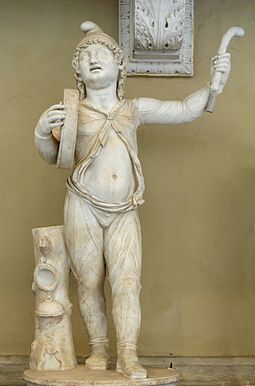
Roman marble of dancing Attis
Poem 63.50-73 (READER: Dan)
"O homeland, my father! o homeland, my mother!
Did I leave you, pitiable me, as escaped slaves leave their masters,
and turn my path to the forests of Ida,
to live in the snow and the frozen dwellings of wild beasts,
to visit, raging in madness, all their hiding-places?
Where are you? How can I reckon your position?
My eyes want to gaze towards you of their own accord,
while my spirit is free for a brief moment from wild, animal rage.
Shall I be carried away from my distant home into these forests?
O homeland, shall I be absent from property, friends, parents?
Absent from the forum, the palaestra, the race-track, the gymnasium?
Pitiable, ah! Pitiable heart! Lament, lament, again and again.
What kind of body is there that I have not had?
I am a woman, I was a youth, I was an ephebe, I was a boy:
I was the flower of the gymnasium, I was oiled glory in the palaestra.
My doors thronged with admirers, they slept on my doorstep!
My home was ringed with crowns of flowers,
when it was time for me to get up at Sol's rising.
Shall I be called maidservant of the gods, Cybele's handmaid? [famula, "slave"]
Am I a maenad, am I just part of my former self, am I a half-man?
Shall I live on the snow-capped heights of verdant Ida?
Shall I live my life under Phyrgia's high peaks,
Where wood-dwelling deer and forest-roaming boar live?
What I've done pains me, it pains me—I am sorry, so sorry!"
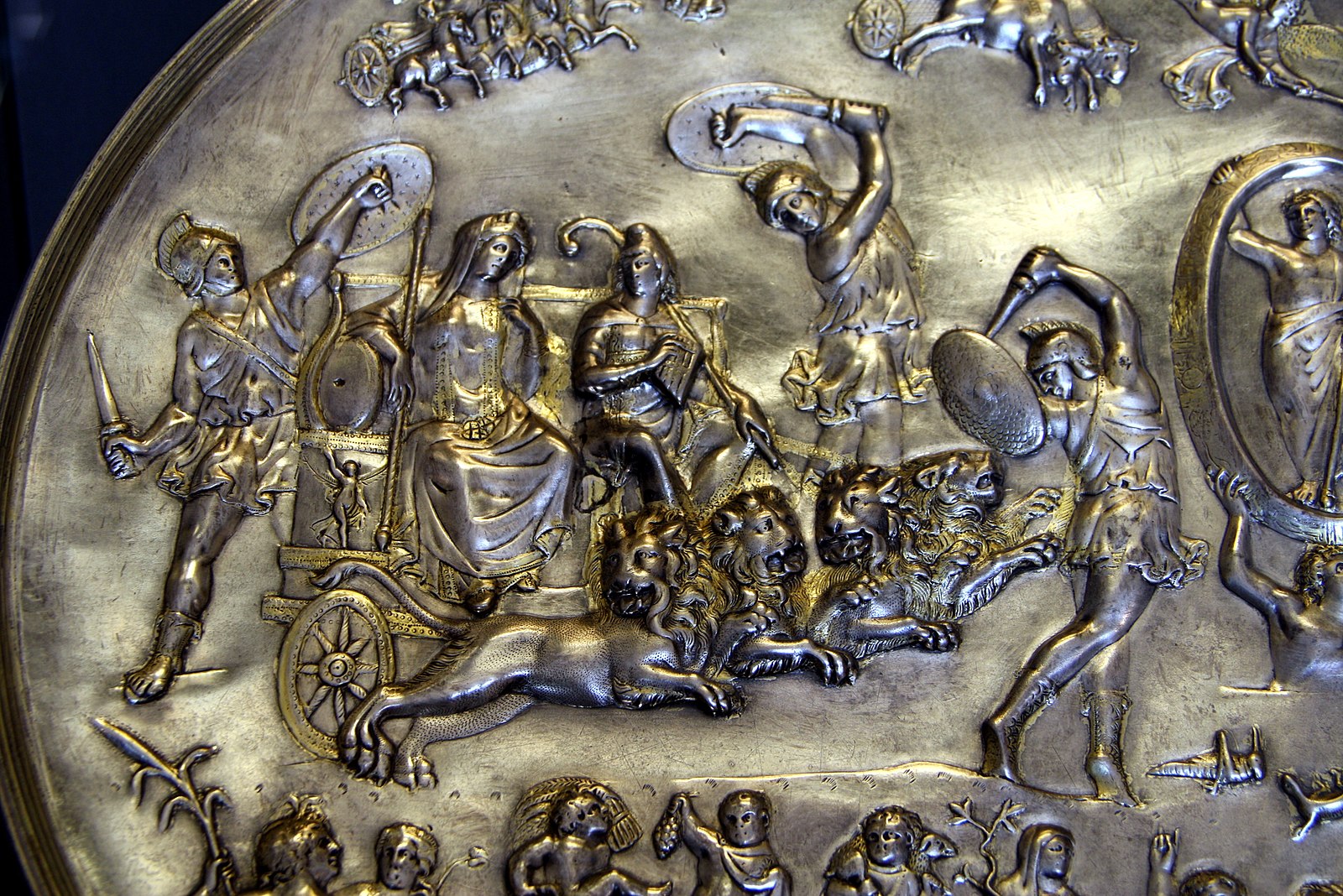
Cybele & Attis surrounded by Korybantes (Parabiago patera, 4th century CE)
78-91: Cybele and her lions regain control of Attis; "Attis, taking leave of her senses, fled into the wild woods / and there passed the rest of her life as Cybele's handmaid [famula, 90]", 89-90)
91-end (coda): the speaker's apotropaic prayer that Cybele stay far from him & his house and "drive others into frenzy, / drive others to raging madness") – cautionary poem about Catullan lover's "enslavement" to mistress (passion)?
Poem 68 (a/b?): 2 parts addressed to Manlius (1-40) & Allius (41-162); occasion of speaker's brother's death near Troy (cf. Poem 101); 1 or 2 poems (Manlius & Allius same person?); rich network of themes – what does it add up to?
Poem 68a, 1-40:
(1) Catullus (Verona) declines to write poetic response to lovesick Manlius' letter because of brother's tragic death – "Our home was buried along with you, entirely . . ." (preservation of family name & patriarchal line through marriage, 22ff.) – + lack of library (33ff.)
(2) Manlius' report of infidelity of mistress in Catullus' abandoned bed in Rome ("it is not shame I feel but rather a great sadness", 30)
(3) speaker asserts Rome (= books, poetry) his "home" ("where I truly live my life", 34-5)
Poem 68b, 41-162:
(1) poetic response out of gratitude for Allius' kindness ("I can't, o goddesses, keep quiet about what Allius helped me with / and how many good deeds he did, showing his duty as a friend: / I don't intend that the passage of time, as the forgetful ages flee, / should cover up with dark night his eagerness to be a friend", 41-45)
(2) mistress compared to Laodamia ("on fire with love for her husband, / once arrived at the house of Protesilaus", 73ff.) – her (brief) marriage (Trojan War, death of Protesilaus, suicide)?
(3) Trojan War & death, "mass grave of Asia and Europe" (90) including Greeks who "deserted hearth and home" (102) > reminder of brother's death, "our home was buried along with you" (94)
(4) speaker's acceptance of infidelity of mistress: "My love—her passion yields not at all, or only a little, to Laodamia's . . . Even if she is not content with her Catullus alone, / I will endure", comparison of self with Juno & praise of mistress ("she herself gave me stolen, secret gifts on that amazing night, / snatched from her very own husband's lap", 132ff.)
(5) reiterates poem a gift of gratitude to Allius – blessing of Allius, "house in which I and my mistress played" (154-155), mistress
(6) conclusion: "it is sweet for me to live because she is alive" (160)
main (repeated) themes of Poem 68 (a/b?): poetry (as remedy & consolation for loss, gift); death (Troy); home (cf. traditional Roman idea of permanence of domus) > embracing non-traditional view of love/marriage – what lasts (memory of passion, poetry)?
Poems 69-116: shorter poems in elegiac meter (epigrams)
Poem 85 (odi et amo)
I hate and I love. Perhaps you're wondering how this can be.
I don't know. But I feel it happening and torment myself.
