CLAS 301B
April 1, 2024

Carracci, The Triumph of Bacchus and Ariadne (1597)
Examination #2 Key
Group Projects (April 8 & 10)

Bottalla, Deucalion & Pyrrha (1635)
Metamorphoses (pre-exile; later editions?): Ovid’s innovative epic, dactylic hexameter poem on epic scale (15 books), but new direction for genre
- collection of ca. 250 independent/episodic stories linked by theme of metamorphosis; cf. Callimachus’ Aetia = series of independent stories giving an aetion for phenomenon, custom, ritual, etc.; Nicander’s (lost, 2nd BCE) Metamorphoses; strong aetiological strain in Ovid (e.g. Daphne and Apollo story?)
- archetype of ancient collective verse: Hesiod’s Theogony (and Hesiodic Catalogue of Women)
Metamorphoses 1.1-4 (programmatic opening)
My mind would tell of forms changed into
new bodies; gods, into my undertakings (for you changed even those) [elegiac couplets > dactylic hexameter/epic]
breathe life and from the first origin of the world
to my own times draw forth a perpetual song!
[1.4 ad mea perpetuum deducite tempora carmen; deductum carmen > “a well-woven poem, i.e. tapestry”]
- Ovid's paradoxical epic (anti-epic?), Callimachean (anti-Callimachean poem?; cf. rejection of “one continuous poem” in prologue of Aetia): chronological scope = origin of world (book 1) to Ovid's day (book 15), but Alexandrian/Ovidian style, learned content, non-linear narrative
- fluidity of narrative: swift, witty, entertaining, humorous, surprising, shocking, narrative complexity; multiple storytellers & nesting of stories to avoid catalogue-effect or single narrative voice
- Ovid the virtuoso poet/subsumer of poetic genres: variety of voices, styles & genres (heroic epic, mock-epic, cosmogonic, cosmological, tragic, comic, elegiac, scientific, philosophical, didactic, pastoral)
- Augustan poem: Rome in book 1: the gods’ council & meeting place
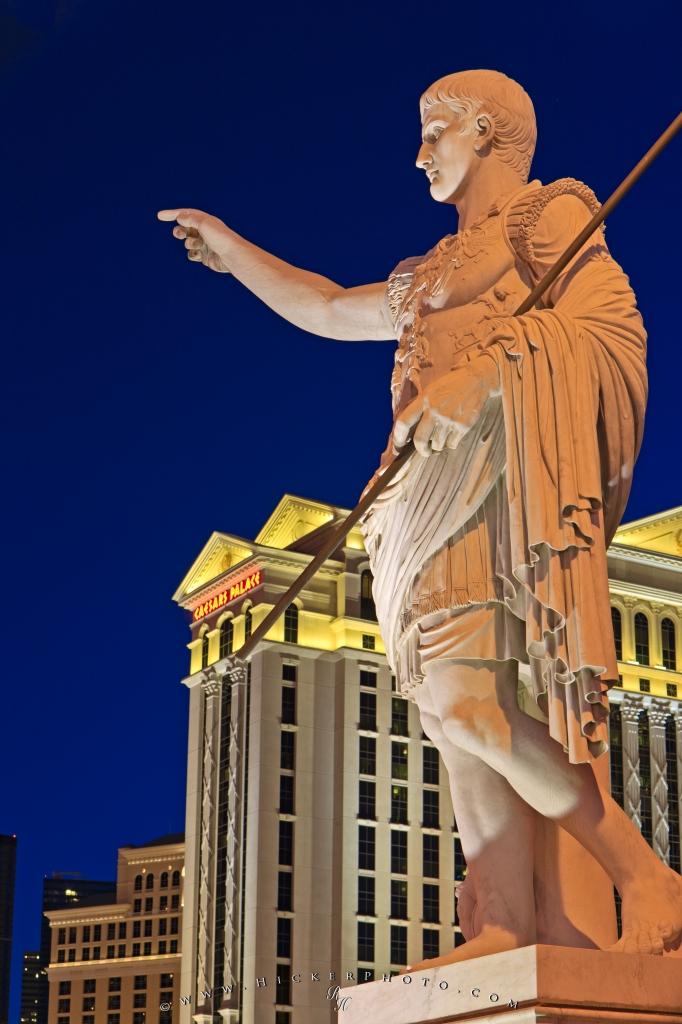
Metamorphoses 1.163-81 (council re Tantalus-figure Lycaon & humanity)
When from his high citadel the Saturnian father saw all this,
he groaned and, thinking of the foul banquets of Lycaon's board,
a deed not yet known abroad because it was new,
conceived a wrath huge in spirit and worthy of Jove
and summoned a council: those summoned were not delayed.
There is a celestial way, clear in the cloudless sky:
its name is "Milky," by its very whiteness distinct.
Through it the gods
have access to the palace of the great Thunderer,
his royal home: the courts of the noble gods on right
and left are thronged through their opened double doors.
The commons dwell apart in their place: on this side the mighty
and famous sky-dwellers established their Penates;
here is the place, which if bold expression be allowed,
I should not hesitate to call the Palatine homes of the sky.
And so when the gods sat down in that marble retreat,
more lofty at his place and leaning upon his ivory staff,
Jove tossed three times and a fourth the awesome locks of his head
with which he moves the earth and sea and stars.
He then let loose his indignant tongue with words like these . . .
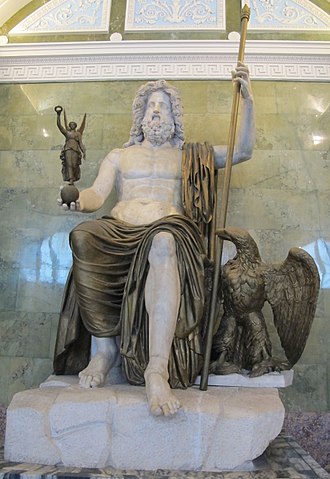
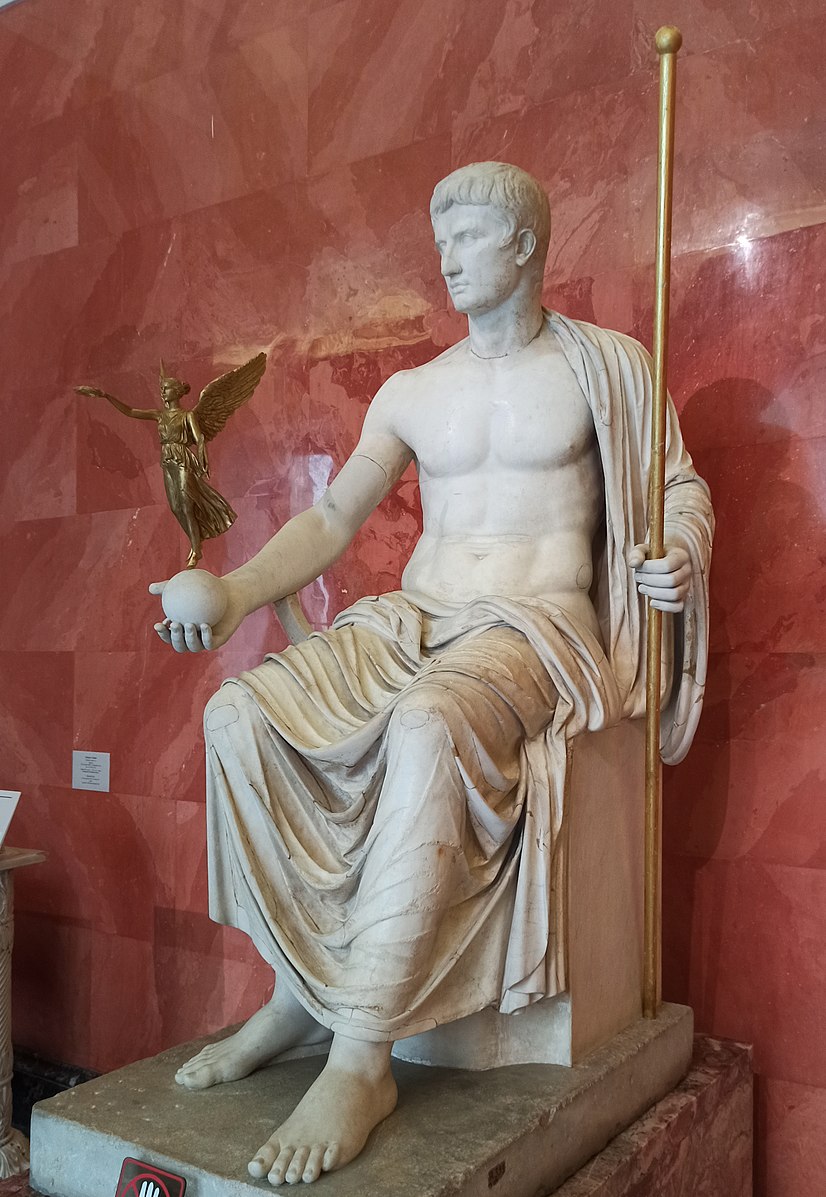
L: Jupiter (1st century CE ); R: Augustus as Jupiter (1st century CE)
Metamorphoses 1.244ff. (lesser gods' reaction)
Some voice approval of Jove's ruling, applying to his rage
more goads, while others fulfill their part with applause.
And yet the loss of human life is cause for grief
to all, for what will be the future form of earth, bereft
of mortals . . .
- chronology between end points (books 1-15) flimsy/invisible; narrative chronology most important; various transitions (= forms of metamorphosis) & links (geographical, genealogical, thematic, psychological & other, e.g. “X was absent from the gathering . . .”, as Inachus, father of Io, following the transformation of the river Peneus’ daughter Daphne (1.583ff.)
- central themes: appearance vs. reality (inconstancy of appearance vs. fixed essences); representation & reality (e.g. Arachne's Europa tapestry: "you'd think the bull were real, real the sea" 6.104) in universe of dynamic flux/change; philosophical underpinnings of poem revealed by Pythagoras (6th century BCE) in Book 15, e.g., omnia mutantur, nil interit, “All things are changing; nothing perishes,” 15.165); cf. Heraclitus (fl. ca. 500 BCE), cuncta fluunt (Greek panta rhei), “all things are changing” (“you can’t step in the same river twice”)
- Metamorphoses: emotionally intense & highly visual narrative tapestry – (metapoetic?) Arachne & Minerva
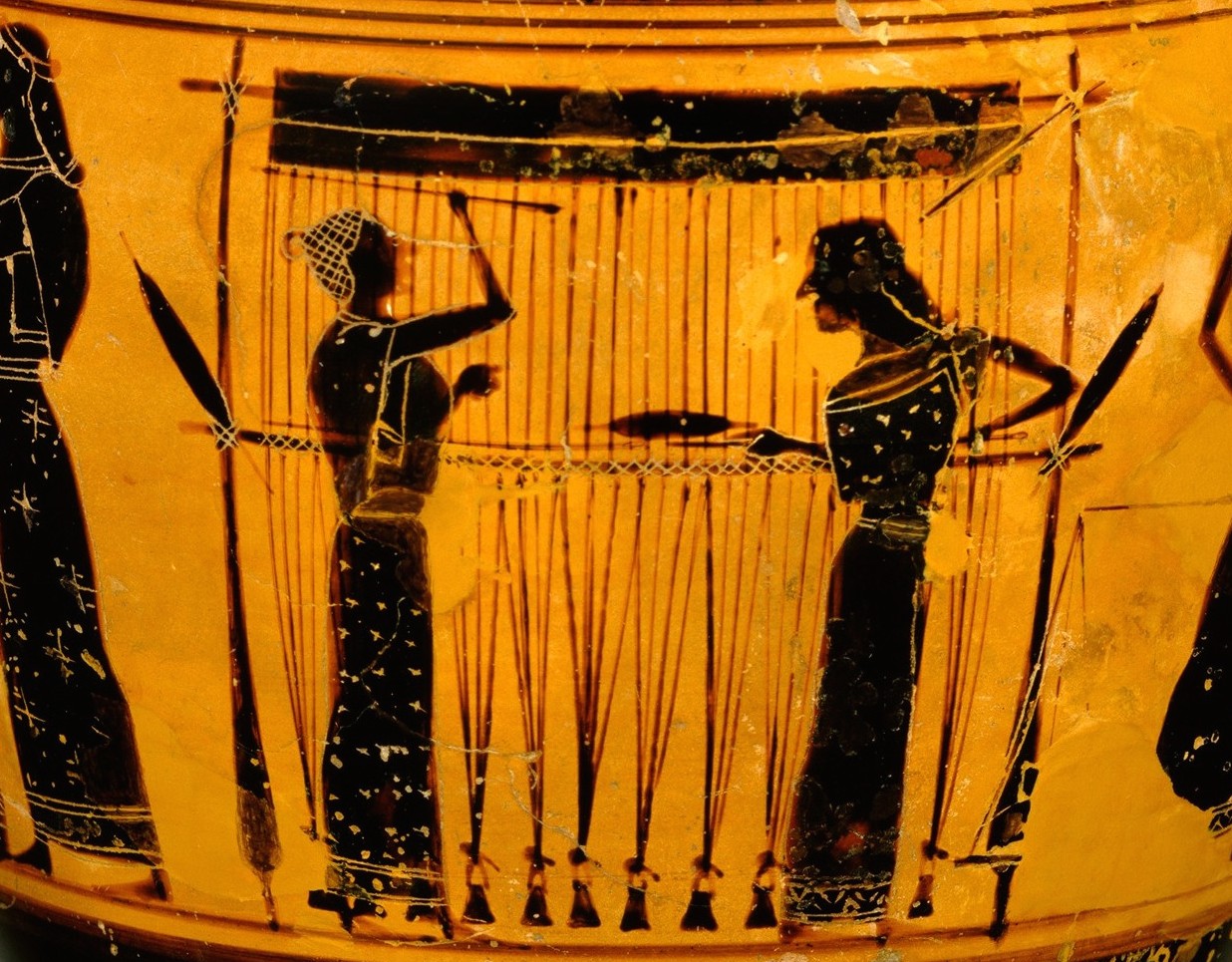
Ancient loom scene (black-figure lekythos, 550-530 BCE)
- Metamorphoses 6: Minerva's weaving contest with mortal Arachne of Lydia (theme of impiety toward gods, Lydia in Asia Minor)
Metamorphoses 6.61-7 (contestants' artistry > Metamorphoses' complex narrative tapestry)
On one side the purple that had known the Tyrian vat of bronze
is woven and subtle shades of slight difference;
just as rainbows when the sun has been stricken by rain
imbue the big sky with an enormous arch,
in which albeit a thousand colors brightly shine, nonetheless
the change from one to the other deceives the observing eyes:
so much alike they are when they touch, yet so different at the extremes.
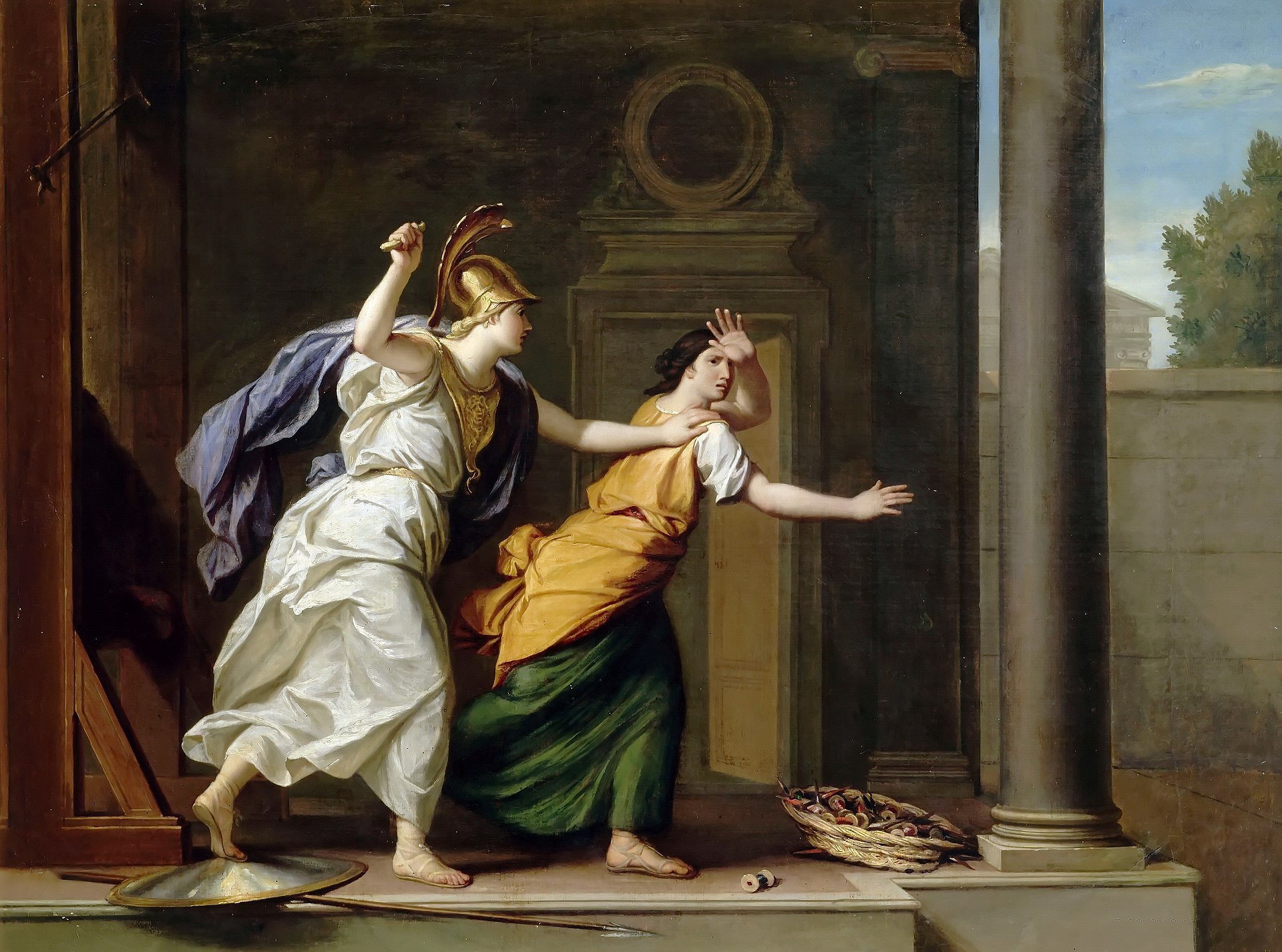
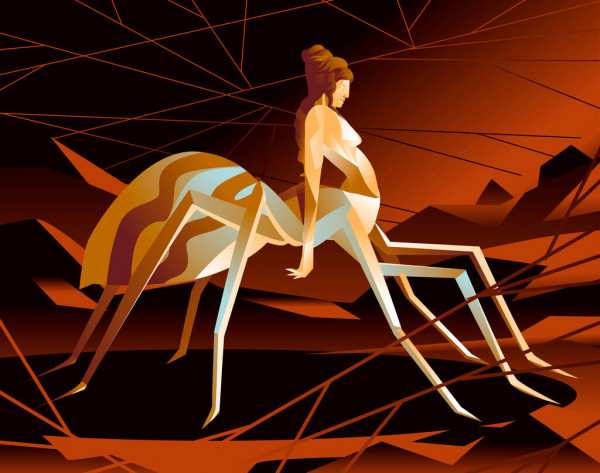
L: Houasse, Minerva and Arachne (1706)
- Minerva's "traditional" tapestry: contest of Minerva & Neptune (Athens) in center, in corners cautionary tales of divine challengers, e.g. Rhodope & Haemus (6.85-102) versus Arachne's "subversive" composition of powerful shape-shifting male gods (Jupiter, Neptune, Apollo; e.g. Europa & the bull)
Metamorphoses 6.129-38 (the censored tapestry & artist)
That work could neither Pallas nor Malice endure:
the fair-haired Maiden was angry at the other's success
and ripped up the web and its pictures and heaven's faults [cf. Xenophanes (6th century BCE) et al.]
and, holding a shuttle from the Cytorian mount,
struck thrice and a fourth time Idomonian Arachne's brow.
[Arachne's suicide attempt & metamorphosis follow]
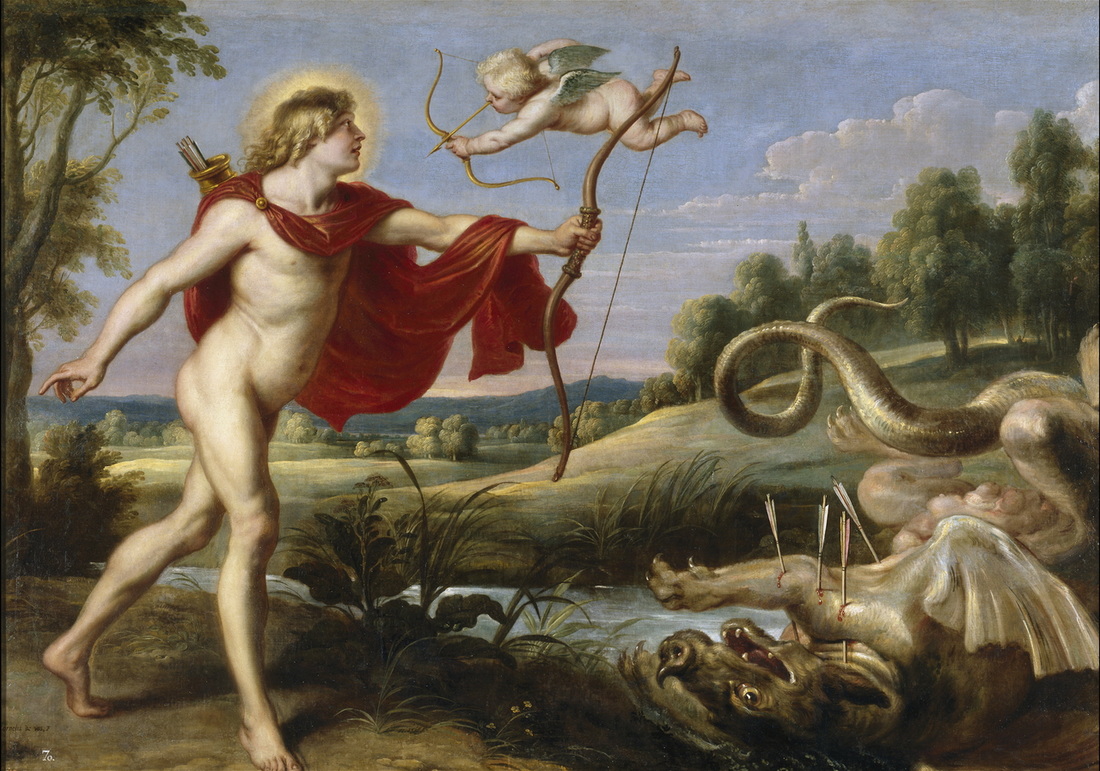
Cornelis de Vos, Apollo and the Serpent Python (ca. 1636)
Book 1: primeval chaos & order; the “loves” of powerful male gods (Apollo & Jupiter)
- creation/primordial metamorphosis: order from undifferentiated chaos, peopling the world; decline of order = myth of four ages of man; Lycaon and the decision to flood the earth back to chaos; Deucalion & Pyrrha (“toss behind your backs your great mother’s bones,” 1.383) = rebirth of order & human life; earth produces Python (epic monster)
- boastful epic Apollo yields to Cupid's arrows (1.452ff.: cf. Amores 1.1): the elegiac Apollo (lover/predator)
Metamorphoses 1.452-65 (quasi-programmatic: from epic to elegy)
The first of Phoebus' loves was Daphne, Peneus' child,
which no unwitting chance supplied, but rather Cupid's cruel wrath.
The Delian, grown proud by the serpent's recent defeat,
had spied him trying to bend to the tight-stretched string the horns of the bow;
"What business have you, naughty boy, with the arms of the brave?"
he said, "Those ornaments you have for our shoulders are fit,
who to the wild can give and do give to the foe well-aimed wounds,
who recently laid with countless arrows the swollen Python low,
whose plague-bearing belly weighed down the fields.
You there, be content to inspire with your torch
one love or another, and do not to our praises assert a claim."
The son of Venus said to him, "Phoebus, let yours pierce all,
it's you my bow shall pierce; and as much as animals all
cede place to divinity, so much the less is your glory than mine."
- Jupiter (meeting of Peneus & rivers; link is Inachus’s grief) & Io follows—her story (cf. the silencing of victims, theme of voicelessness)?
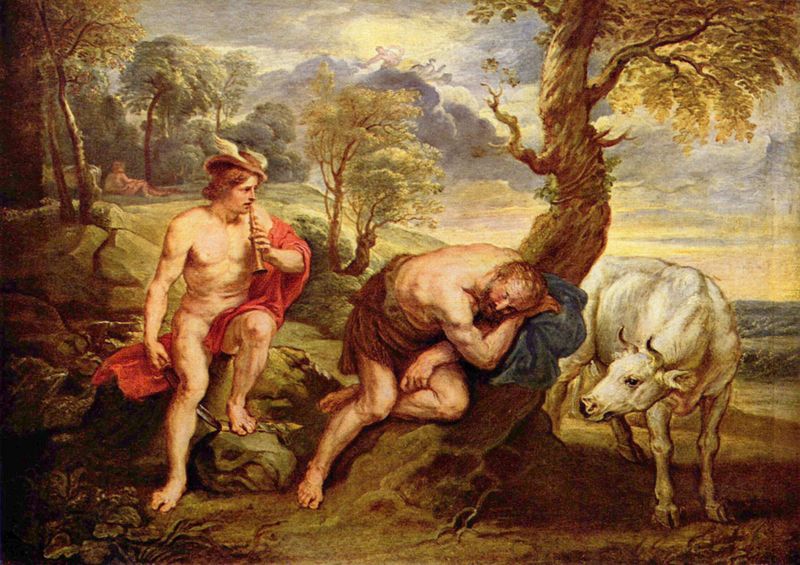
Rubens, Mercury & Argus (1635)
- Mercury sent to deal with Argus > Ovid does pastoral ("since there's no place for the flock / with richer grass, and you see the shade that shepherds like . . ." 1.680ff.; tells story of Pan and Syrinx to Argus ("those words were left unsaid", 1.700, narrator interrupts Mercury's story and summarizes; Argus? Ovid’s audience?); aetion of Pan’s pipes & peacock’s tail; outcome for Io? Jupiter's affairs/assaults continue (Europa in book 2)
Suetonius, Deified Augustus 71
As regards the affairs with women, the allegations held. Indeed, later on he had a keen taste for deflowering virgins, who would even be procured for him from all over the place by his wife.
_-_Napoli_MAN_111475_-_02.jpg)
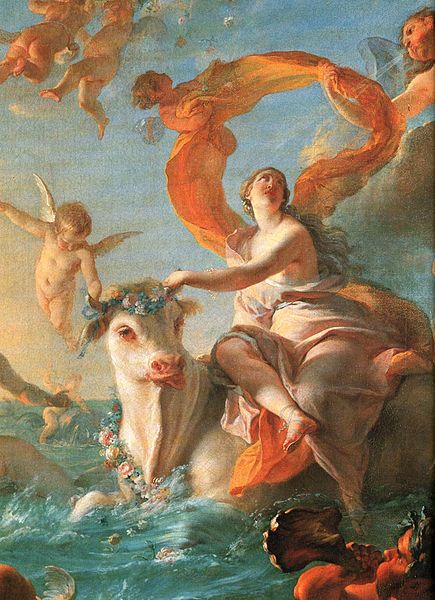
L: Europa & bull (wall painting, Pompeii)
Book 3: swift transition to Cadmus of Phoenicia & foundation of Thebes < from Jupiter-bull's abduction of Europa, Cadmus’ sister (Cadmus, son of Agenor, sent in search of sister Europa; oracle of Apollo tells him to settle Boeotia ("land of cows")
.jpg)
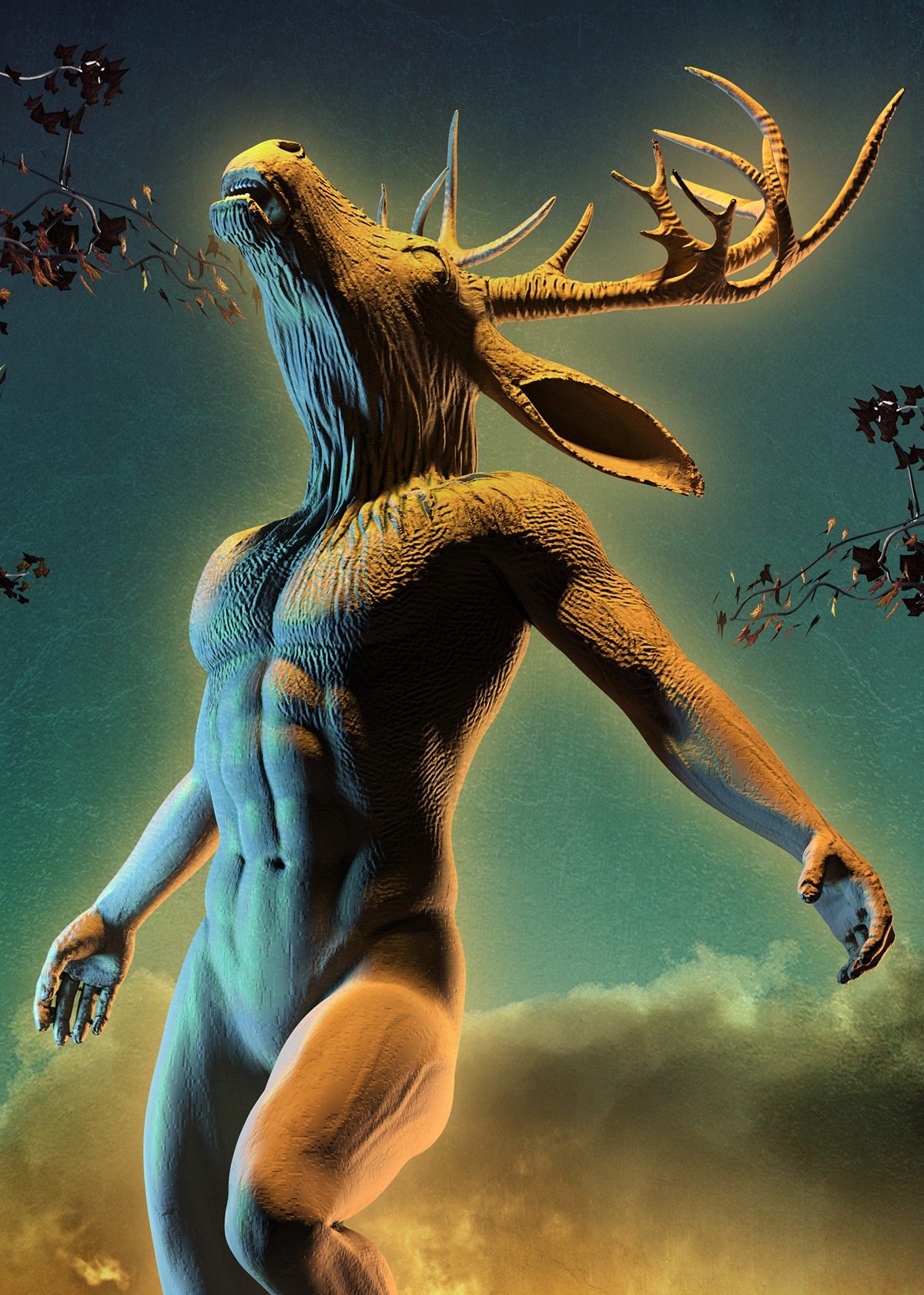
L: death of Actaeon, Apulian red-figure skyphos (400-350 BCE)
- Thebes: center of tragedy (esp. familial dysfunction/civil war, fate/fortune/human error, lack of (self-)knowledge, impious challenges); Cadmus slays serpent & sows teeth; shift to Actaeon
Metamorphoses 3.138-42 (Ovidian poet's identification with Actaeon)
Your grandson, Cadmus, amid so many fortunate things,
was first cause of grief, and those alien horns added to
his forehead, and you, O dogs, glutted with your master's blood.
But if you well inquire, you will find a charge of misfortune upon
him, not one of crime; for what crime did mere wandering contain? [error]

Titian, Diana and Actaeon (1556-1559)
cf. Ovid, Tristia 2.107-14
Why did I see anything? Why make my eyes guilty?
Why was a mischief, unwittingly, known to me?
Actaeon, unaware, saw Diana unclothed:
none the less he became his own hounds’ prey.
Even fate must be atoned for, among the powers that be,
to a wounded god chance is no excuse.
On that day, when my unlucky error misled me,
my house, humble, without stain, was destroyed.
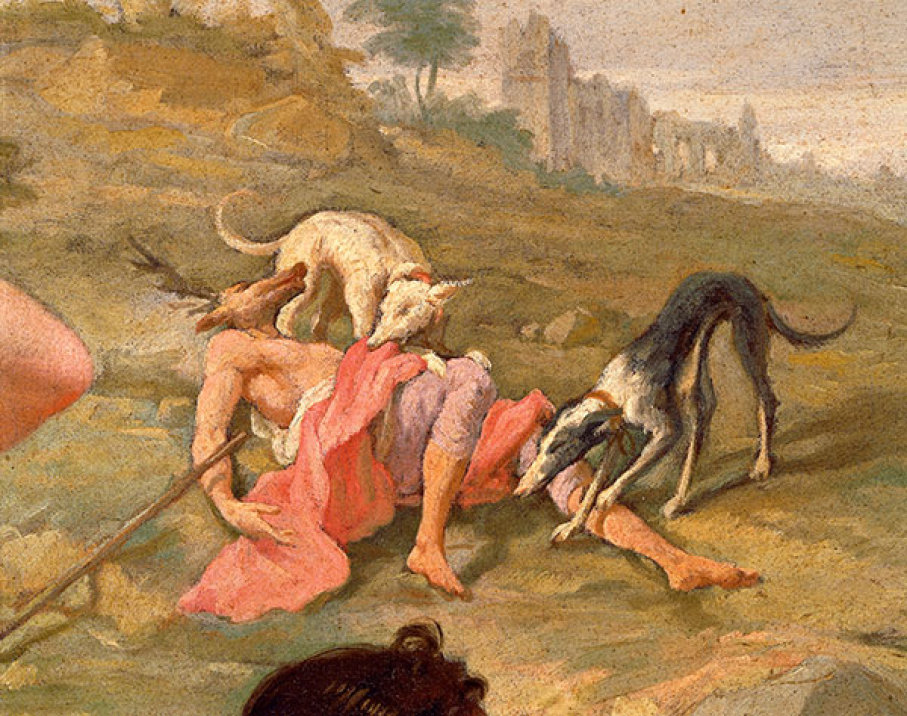
Diana & Actaeon, Pittoni the Younger (1721)
Metamorphoses 3.228-31 (following catalogue of Actaeon's dogs – loss of self, voice)
Actaeon flees over the paths he had often pursued;
alas, he flees his own servants. He wanted to cry
'Actaeon I am, acknowledge your lord!'
His mind lacked the words; with barking resounds the air.

Waterhouse, Echo and Narcissus (1903)
- story of Semele (daughter of Cadmus & Harmonia) & link to Narcissus through Tiresias, prophet of Thebes: the ultimate paradox of elegiac (self-)love – Narcissus falls in love with himself (cf. Lucretius' simulacra, "overcome by the image of the form he saw, / he loves a hope without a body, and what is water he takes for flesh", 3.417-18)
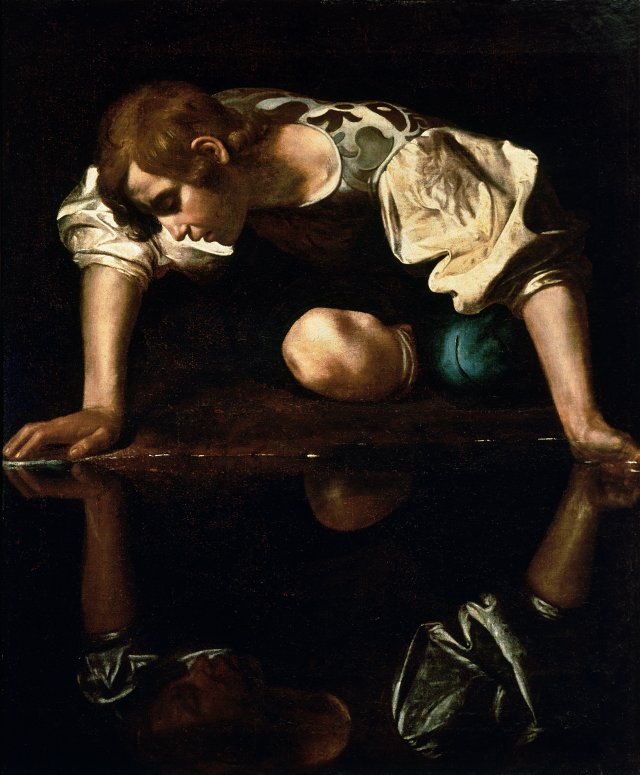
Caravaggio, Narcissus (1598)
Metamorphoses 3.454-73 (Narcissus paradoxically courts himself)
"Whoever you are, come out to me! Why are you, singular boy, deceiving me?
And when I seek you, where do you retreat? Surely it's not my beauty or age
you're fleeing, since even nymphs have been in love with me.
Your friendly face promises some kind of hope,
and when I extend my arms to you, you extend yours of your own accord;
whenever I've smiled, you smile back; and often I've seen your tears
as I myself am weeping; at my nod you return the same sign,
and though I see from the motion of your lovely mouth
that you are sending back words, they do not reach our ears.
That fellow, it's me! I've got it now, by my own image I'm not deceived.
I burn with love for myself. I both create and endure the flames.
What should I do? Be sought or seek? What indeed shall I seek?
The thing I love is within me. Availability has made me powerless!
O would that I could withdraw from this body of ours!
A strange vow this is in a lover, that I should desire the absence of what we love.
Already grief is robbing me of my strength, and of the span of my life
not much remains, and I'm being destroyed in the prime of life.
And death is not a burden for me since death will quell my pain;
I wish that he in whom I delight might be longer-lived.
United now in spirit the two of us will die in one breath."
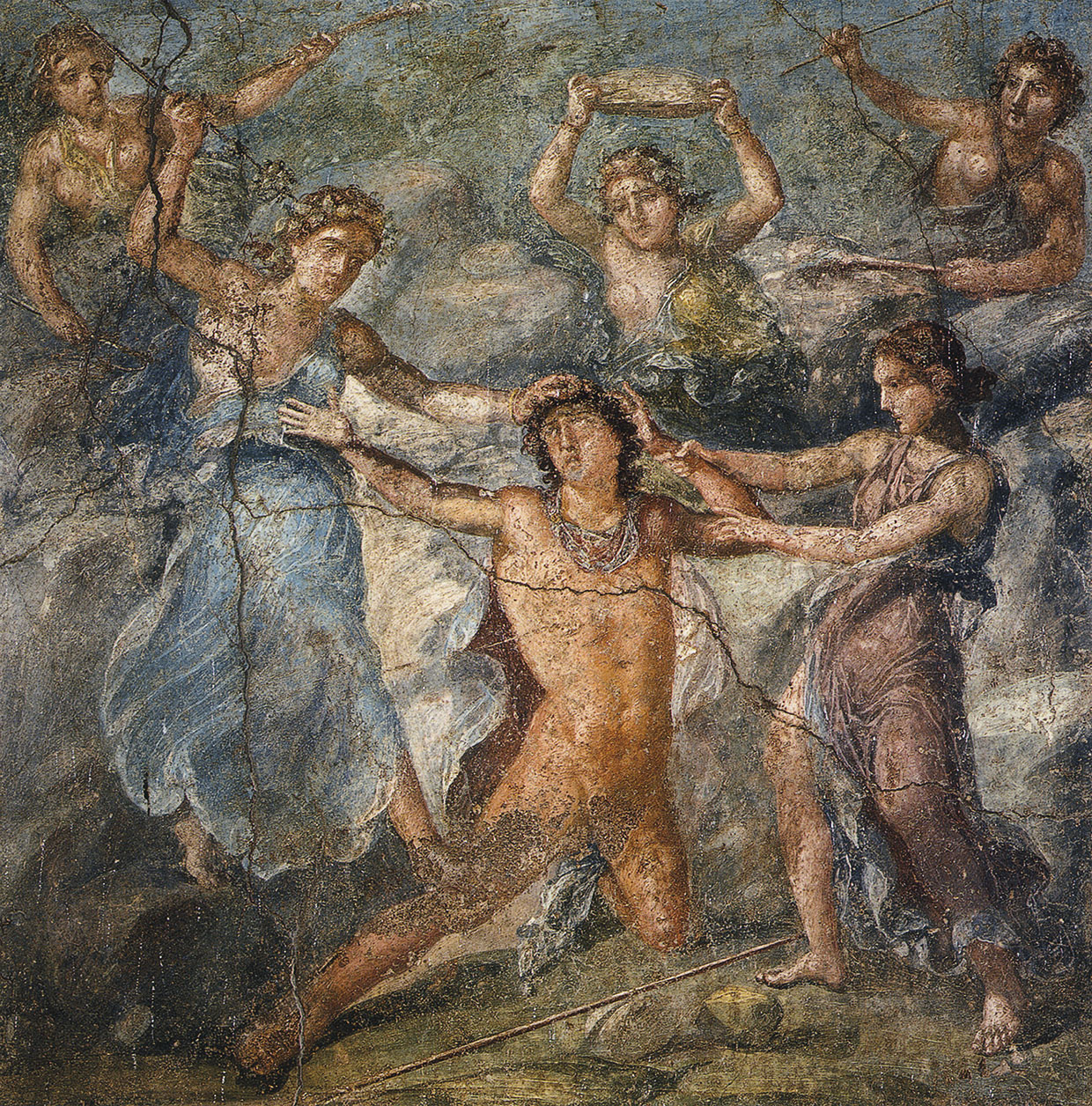
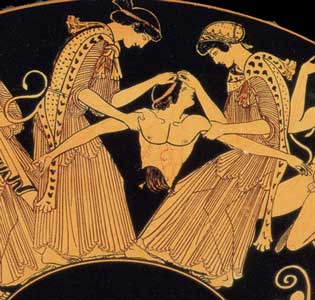
L: Death of Pentheus (House of Vettii, Pompeii); R: death of Pentheus (5th century BCE red-figure kylix)
- end of Book 3: Bacchus & pirates; "signature" Theban death of Pentheus (cf. Euripides' Bacchae)

- Metamorphoses 6: Tereus & Procne (daughter of King Pandion of Athens) married & son Itys born, sister Philomela
- Ovid does tragedy (theme of family dysfunction; cf. Seneca's Thyestes, Medea): silencing of Philomela & the narrative tapestry (6.574ff.), finding her voice again after violation by powerful figure
Metamorphoses 6.631-5 (Procne's self-exhortation to murder Itys; sister vs. son)
"Why does one advance
his charms, the other remain silent with tongue torn out?
If he calls me mother, why shouldn't she call me sister as well?
Consider, O daughter of Pandion, to what husband you are wed!
Degenerate are you! Piety towards a husband like Tereus is a crime!"
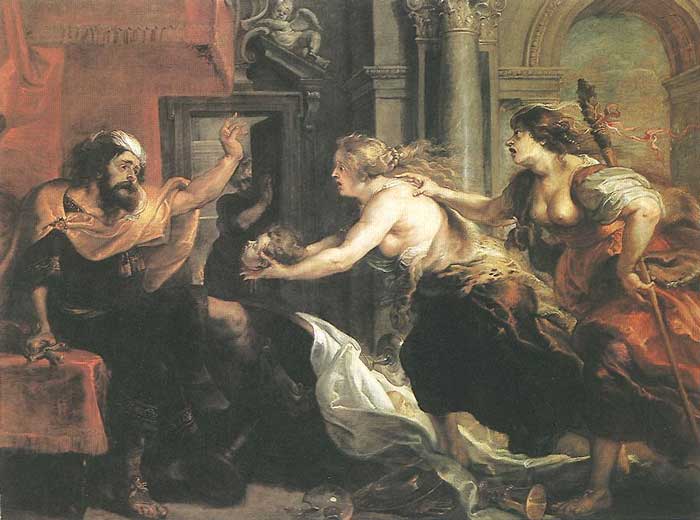
Rubens, Tereus Confronted with the Head of his Son Itys (1636–38)
Metamorphoses 6.652-60 (tragic irony & revelation of horror)
"Have Itys brought to me!"
Unable to conceal her cruel delight and now eager to come forth as
the messenger of her slaughter, Procne replies,
"You hold within the one you demand." He looks about
and asks where he is. And as he looks about and repeats his command,
just as she was, with hair spattered with frenzy’s gore,
forth sprang Philomela and cast Itys’ bloody head
into his father’s face nor would she have at any time
more wanted the power to speak and profess her joy with fitting words.
[transformations to nightingale, swallow, hoopoe follow]
Groups/Group Projects