Classics 351
Introduction
January 13, 2022

Beginnings of Latin Literature = Roman Drama
- traditional founding date of Rome, 753 BCE; Homer's Iliad and Odyssey?
- Roman contact with Greeks & other Mediterranean cultures; southern Italy colonized by Greeks (8th century BCE)
- Punic Wars between Rome and Carthage (1st Punic War, 264-241 BCE; Carthage destroyed in 3rd Punic War, 146 BCE)
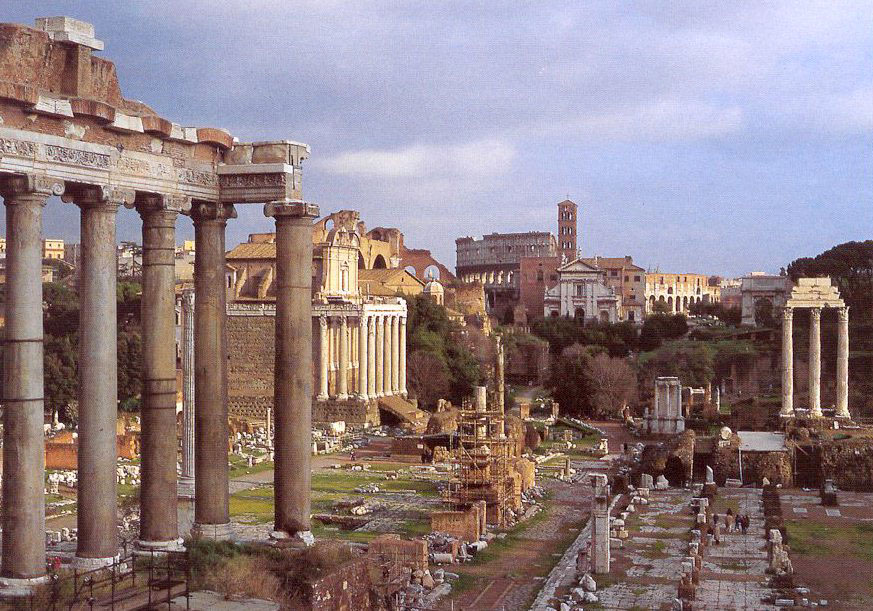
Ancient Roman forum today
- End of First Punic War: wave of Hellenism, demand for drama in Rome; national identity & literature > acquisition of Mediterranean empire
- religious festival in honor of Jupiter (240 BCE): drama on Greek models introduced (creative adaptations), comedy & tragedy
- Surviving plays: Plautus (254-184 BCE); Terence (160s BCE); Seneca (1 BCE-65 CE)
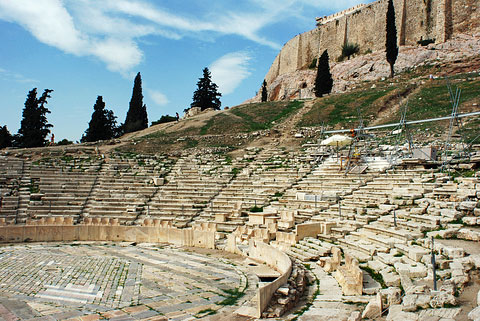
Theater of Dionysus in Athens
- Greek comic tradition: escapist & satirical Old Comedy of Aristophanes (mid 5th-early 4th century BCE) vs. New Comedy (325-250 BCE)
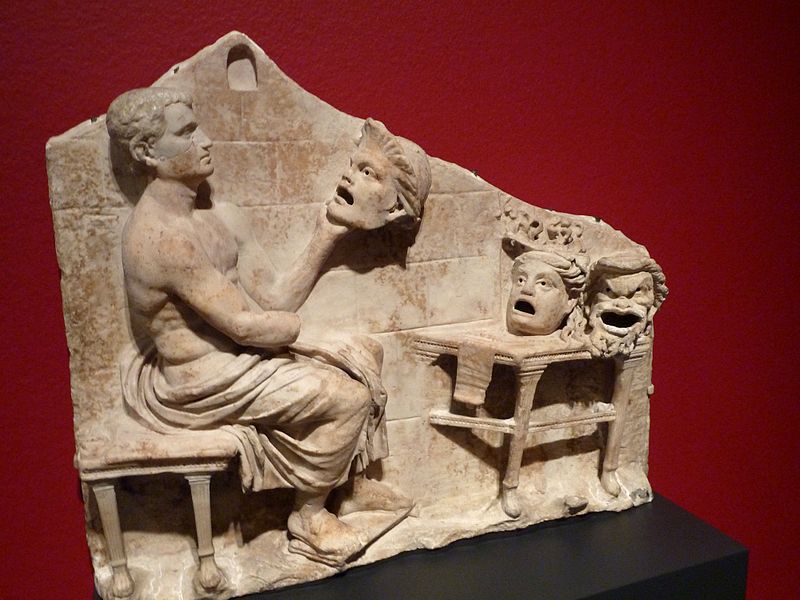 Menander (?), Roman Relief (1st Century BCE-CE)
-
Greek New Comedy (Menander, e.g.
Dyskolos, “Grumpy Old Man”): universal themes, stock characters from domestic life (cf. sitcom), stereotypical situations, e.g. love interest of young man & impact on family; plain language without music & chorus, obscenity & satire of Old Comedy gone;
realism
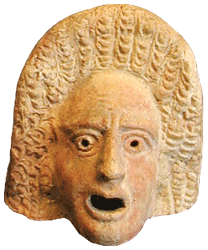
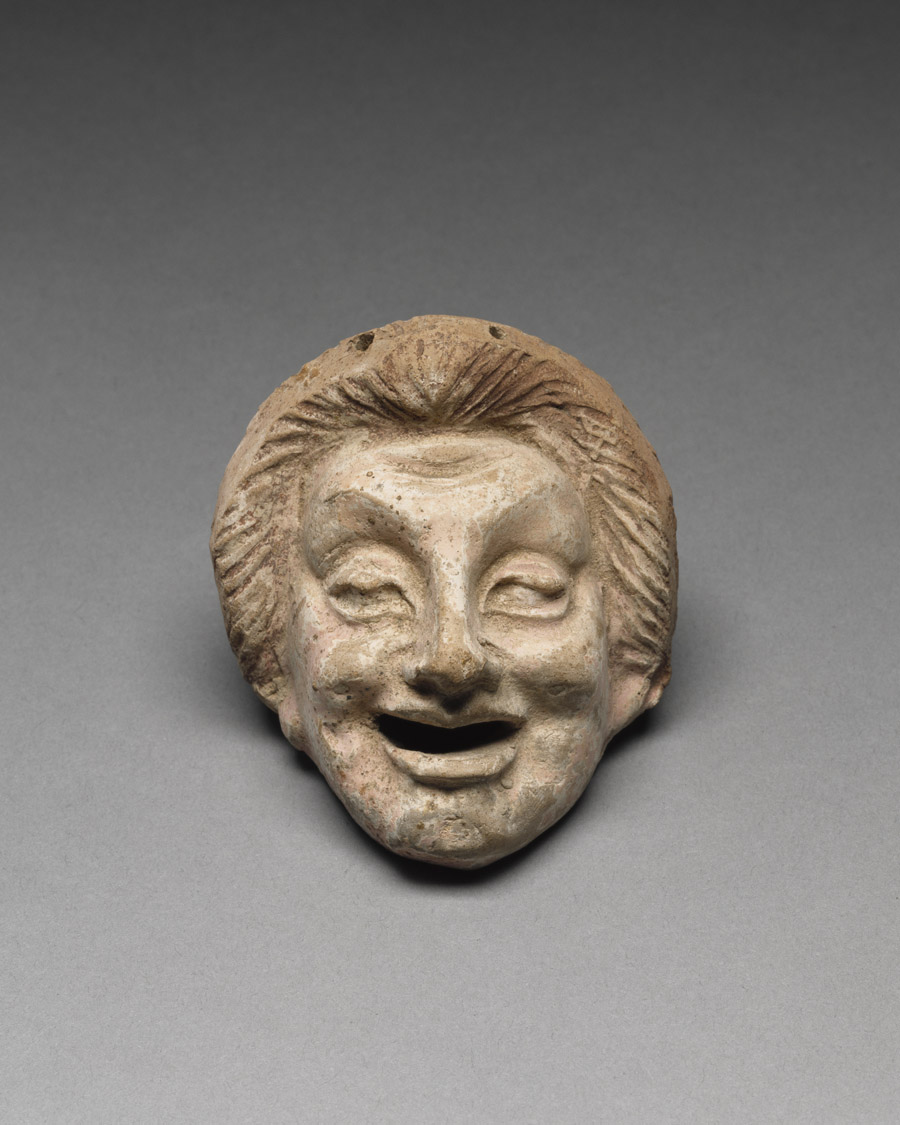 Greek Theater Masks
- Greek New Comedy > Roman Comedy = fabula palliata, “play in Greek costume” (stock characters, plots & scripts of Greek New Comedy); Greek setting retained ("Athens") but Roman customs, persons, institutions pervasive ("Romanization")
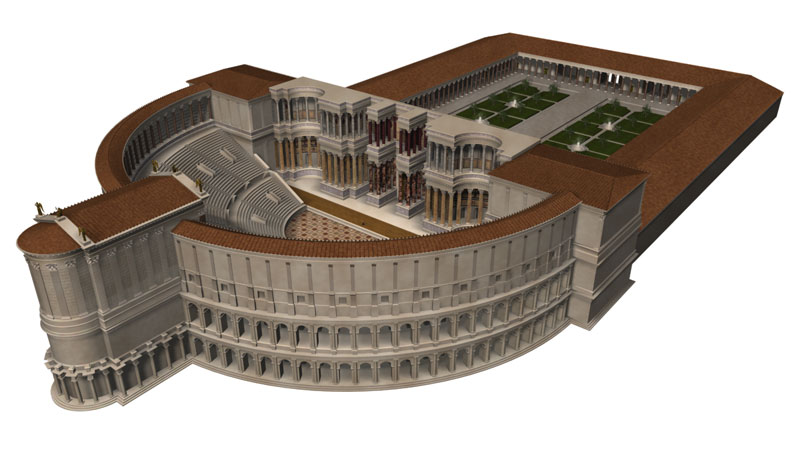
Theater of Pompey (55 BCE)
-
Early Roman theater (Plautus, Terence): temporary (wooden) structures in Roman forum, circus, or before a temple; state-sponsored performances (magistrates)
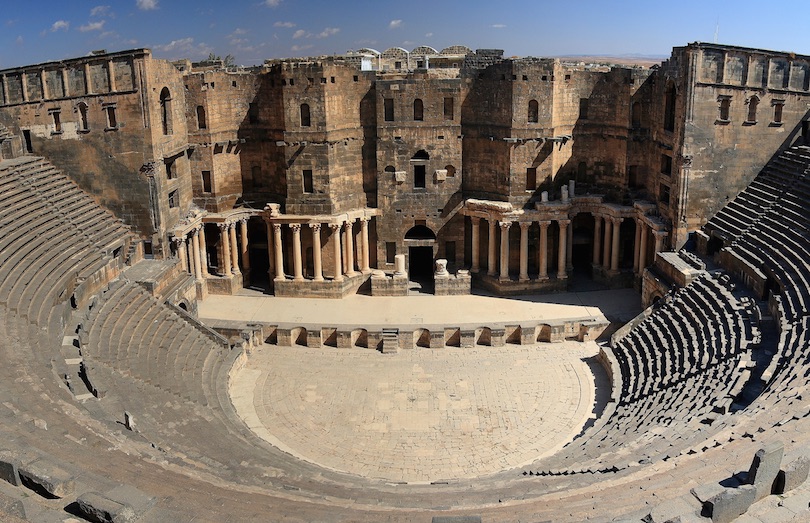 Roman Theater in Bosra, Syria (2nd Century CE)
- early Roman theater: platform stage, painted backdrop with 2-3 houses & doors; street setting + 2 side-wings (forum vs. country)

Reconstruction of Early Roman Theater Backdrop
- no curtain, no orchestra, bleachers for audience; continuous action, scenes marked by character entrances & exits
- no chorus, but Plautus has songs (+ spoken and chanted lines to accompaniment of reed instrument); musicality of Plautine (and earliest) Roman comedy
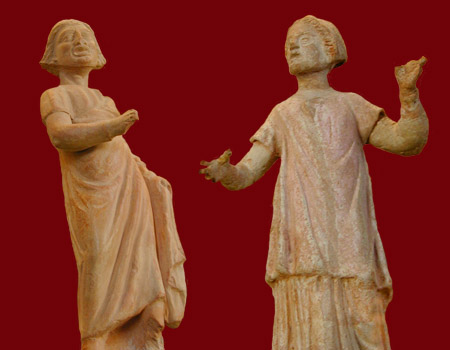
Greek Comic Actors (Terracotta, 2nd Century BCE)
- characters wear masks & costumes according to gender, class, profession, age
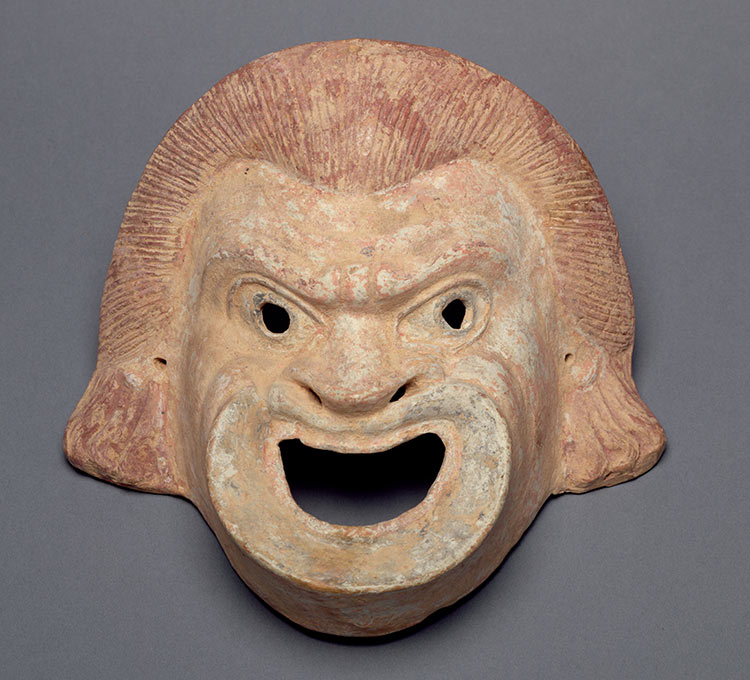
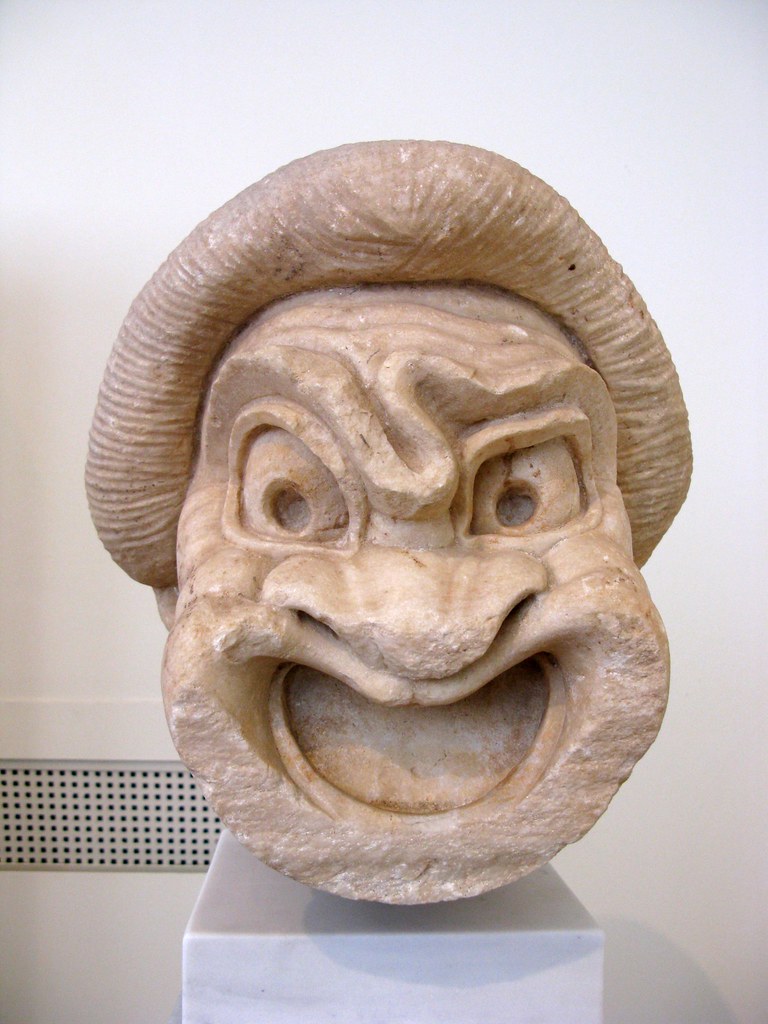
Greek Comic Masks
- Roman comedy focused on household/family (patriarch/paterfamilias, mother, children, slaves) + outsiders (citizen neighbors, prostitutes, pimps, cooks, parasites, soldiers)
Tuesday, January 18: Plautus's Casina; also read pp. 1-10 in Christenson, Plautus: Casina, Amphitryon, Captivi, Pseudolus
NEH Summer Institute (U. of North Carolina at Chapel Hill) performance of Casina 353-423: https://www.youtube.com/watch?v=xmA_uQMGBsE