Classics 351
March 1, 2022
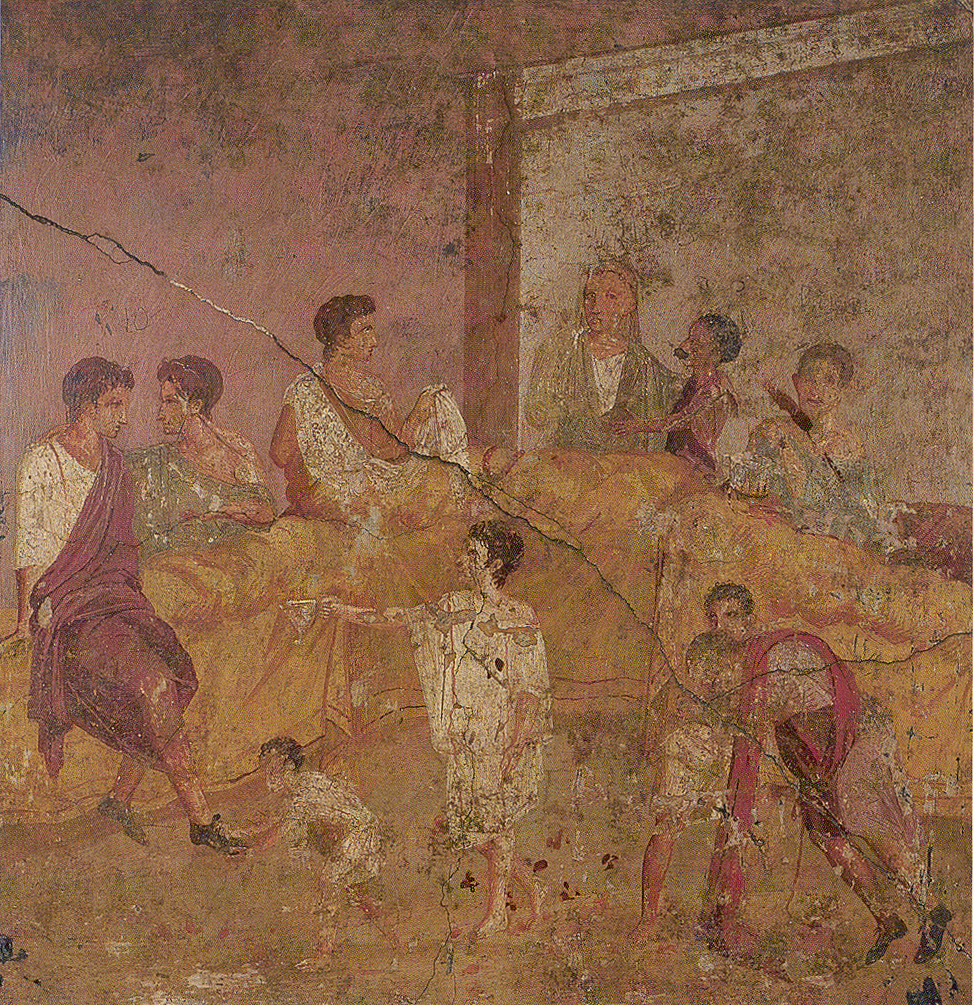
Dinner Party Fresco, House of the Triclinium, Pompeii, 1st century CE
GROUPS
GUIDELINES
GROUP QUESTIONS
Plautus’ Captivi 659-1030: further problematizing of essentialist views of slavery & mastery (after Philocrates's & Tyndarus's plot exposed)
- Tyndarus: the paradox of “the noble slave” (a social role & construct)
Captivi 682-688 (Tyndarus to Hegio after restraints are brought by Boxer, Killer, Banger)
I’m not afraid of dying, as long as it’s not for an unjust cause.
If he does not return and I die here, at least
What I did will be remembered after my death,
How I restored my master to his freedom, father, and fatherland
After he had been captured and enslaved by the enemy,
And how, to save his life, I choose to expose
Myself to the ultimate danger.
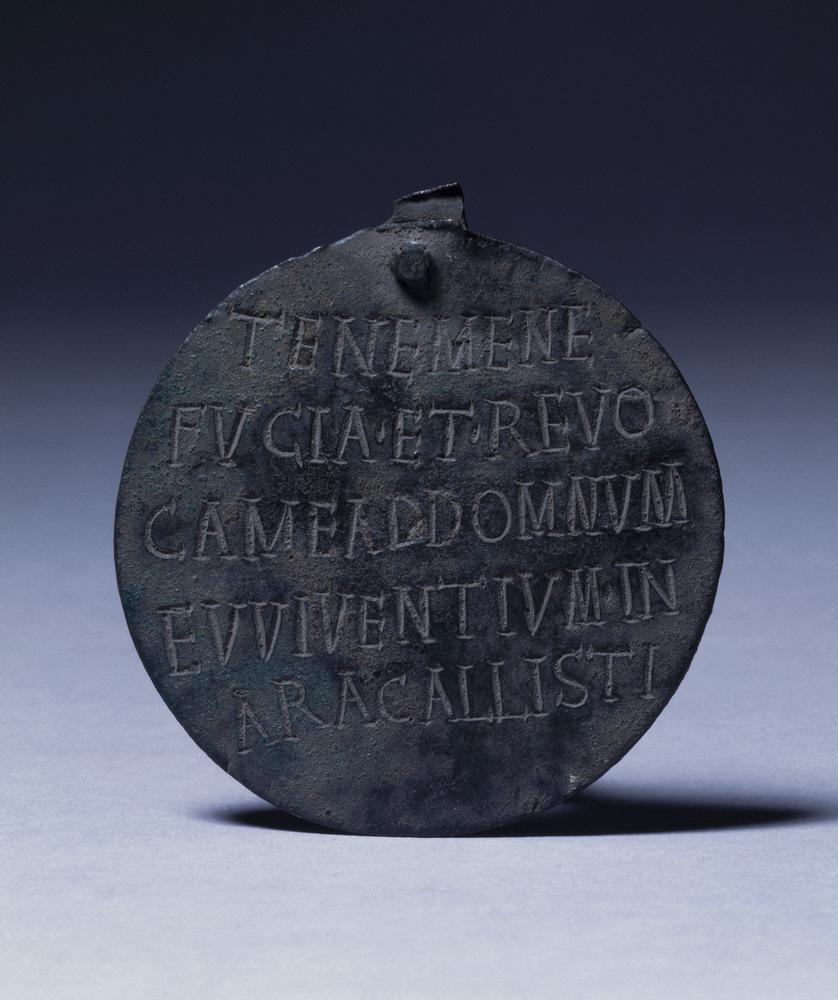
Bronze Roman slave collar tag ("hold me, lest I flee ...")
- Tyndarus's defense: the double bind of serving two masters
Captivi 710-716
Tyndarus
Well, I beg to differ with you: I say it was the right thing to do.
Suppose one of your slaves did the same thing
For your son: wouldn’t you be very grateful?
Wouldn’t you want to free that slave?
Wouldn’t he be the most beloved slave in your house?
Please, tell me.
Hegio
I suppose.
Tyndarus
Then why are you so angry with me?
Hegio
Because you were more loyal to him than to me.
- Tyndarus's references to ethics of reciprocity/"golden rule"
Captivi 739-743 (after Tyndarus is banished to stone quarry)
Why ask for mercy when you won’t grant it?
The danger you put me in puts you in danger too.
Once I’m dead, there’s no evil in death to fear.
It’s only for a brief span of time I’ll endure your punishments—
Even if I live to a ripe old age.
cf. Captivi 313-314 (Tyndarus to Hegio), "Surely a god is watching and listening to what we do, and will see /
That [Philopolemus's] treatment there matches your treatment of me here."
- Captivi: a serious play with dramatic tension, tragic irony & potentially tragic mistakes (Hegio: “Did I have children only so that I would be childless?”, 763), philosophical & ethical questions re slavery
- Ergasilus: the parasite does running slave bit in Scenes 10-11 (“I'll make my entrance just like the slaves in comedies do, / The ones who bring the latest news", 779-780); news from the harbor delayed until 871ff. (food humor & fantasies); last we hear of him?
*PERFORMANCE, Scenes 16 & 17 (978-1022): Elsa (Tyndarus), Finn (Hegio), Katheryn (Philocrates), Viktor (Stalagmus)*
- character of Stalagmus, his background (tense confrontation with Hegio, Scenes 15-16):
a deracinated slave from Sicily (887)
Stalagmus's opening response to Hegio ("my charming little piece of property", 954: “I used to be handsome and charming, but I've never been a 'good man'”
(956)
Hegio: “Hard to believe he was so respectful [morigerus, “obliging”, “compliant”, i.e., as a subordinate to a superior] as a boy” (967)
cf. Tyndarus's original name Paegnium (“Plaything”, 984); Philocrates: “I can assure you he had a proper and respectable upbringing” (992); cf. Ergasilus's pederasty joke to Hegio (Hegio: “I'm easy.” Ergasilus: “Old habit from when you were a boy, huh?”, 867)
Stalagmus's harsh economic perspective: “Hegio: Is he [Paegnium/Tyndarus] still alive?” Stalagmus: “I got my money. The rest I don't care about” (989)
final transfer of chains (Tyndarus > Stalagmaus) & the last word: “Just the thing for someone who has nothing of his own” (1022)
- epilogue: vouching for the play's purity ("There are very few plays like this around for playwrights today, / Edifying plays that make good folks even better", 1027-1028) + call for applause