CLAS 353
October 4, 2023
*Creative Project* (due October 11)
Thebaid 4 (cont.)
- cut to Thebes & simultaneous mustering of defense “rather slowly, it must be said, / and ashamed of king and cause" (4.349-50)
Thebaid 4.360-3 (lack of enthusiasm for Eteocles' war, glimpse of effects on non-combatants)
. . . Even so, a vengeful craze for iron
swept through Boeotian towns. Ties of kinship moved them more
than did the need for their help expressed by the unjust king—
a man like a lone wolf that's attacked an abundant flock . . .

Pentheus dismembered, Attic red-figure kylix (480 BCE)
- Eteocles summons Tiresias & Manto: sacrifice, haruspicium, augury insufficient > necromancy/opening up underworld at high noon (4.417ff.)
- bloodline of Cadmus, grim Theban parade of the dead (4.553ff.; cf. future Romans in Aeneid 6):
Cadmus & Harmonia (now snakes)
Spartoi ("Sons of Earth . . . the tribe of Mars / whose lifetime lasted a single day . . . nor do they care to guzzle / from the grisly trench—they thirst to suck one another's blood!")
daughters of Cadmus & Harmonia: Autonoë (Actaeon's mother), Ino (harried by Juno, "breathless"), Semele (mother of Dionysus, "shielding her belly"), Agave (mother of Pentheus, "[she] chases him, wailing . . . he flees along Lethe's pathless tracts . . . where his gentler parent, / Echion, weeps and reassembles his dismembered corpse")
- "sighted" Tiresias: dejected ghosts of Argos portend Theban victory (4.588ff.)

Pentheus is torn apart by Ino and Agave (ca. 450 BCE)
Thebaid 4.636-44 (hateful Laius’ confusing prophecy to Eteocles)
"War on all fronts is coming, war
with troops beyond count, as the fateful Marcher urges
Lerna's sons with his lash. Earth's portents await them, as do
divine weapons, beauteous deaths, and heinous delays
of flames for cremation.
Victory for Thebes is assured, have no
fear; your ferocious brother will not gain the kingdom . . . but
Furies will! And twofold sin, and by wretched blades
(just my luck!) your cruel father wins." When he’s said all this,
he slipped off and left them to puzzle his knotty riddle.
Thebaid 7-8: preliminaries to war; battle commences at Thebes; Amphiaraus' death; Day 2 of battle; death of Tydeus
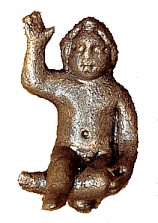
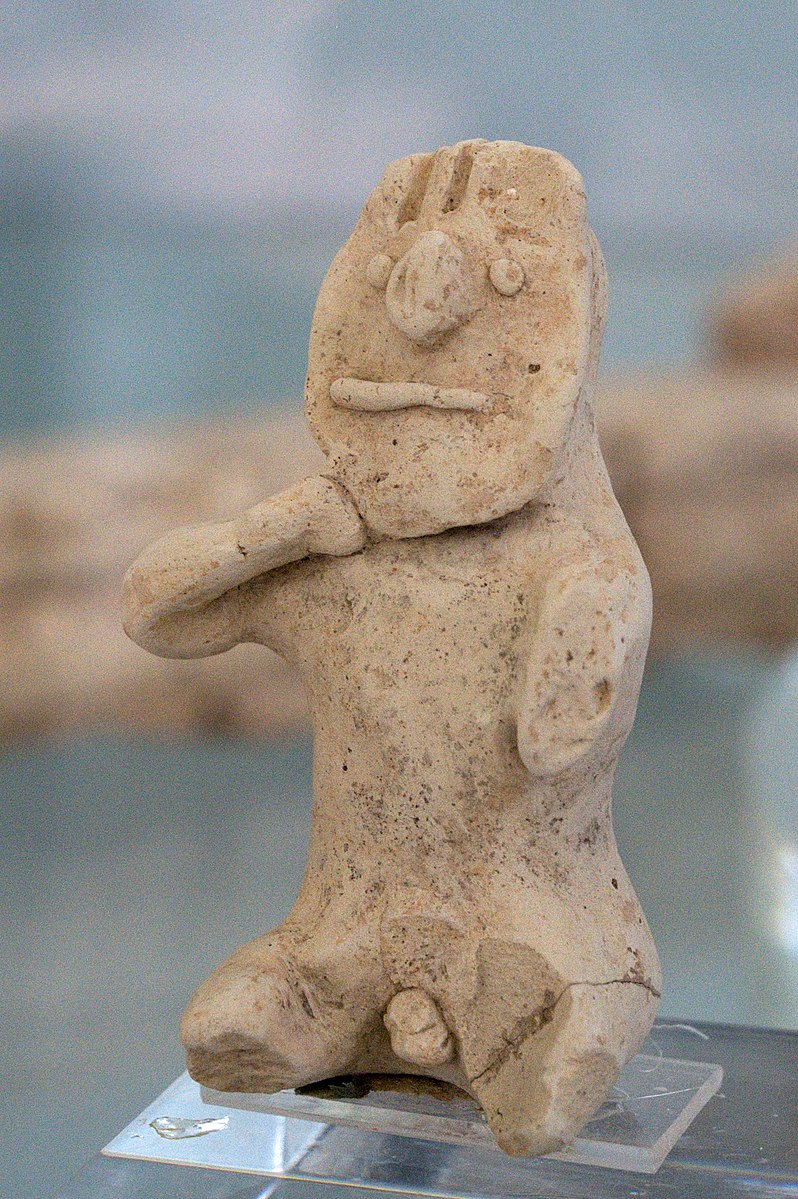
L: bronze figurine of Archemorus/Opheltes, ca. 300 BCE; R: terracotta Opheltes (Heroön at Nemea, 5th-4th centuries BCE)
- Thebaid 5-6: delaying events at Nemea, nurse Hypsipyle's story (Lemnos), death of prince Archemorus, funeral games in Thebaid 6 > aetiology for Nemean Games (cf. Aeneid 5), Amphiaraus wins chariot race
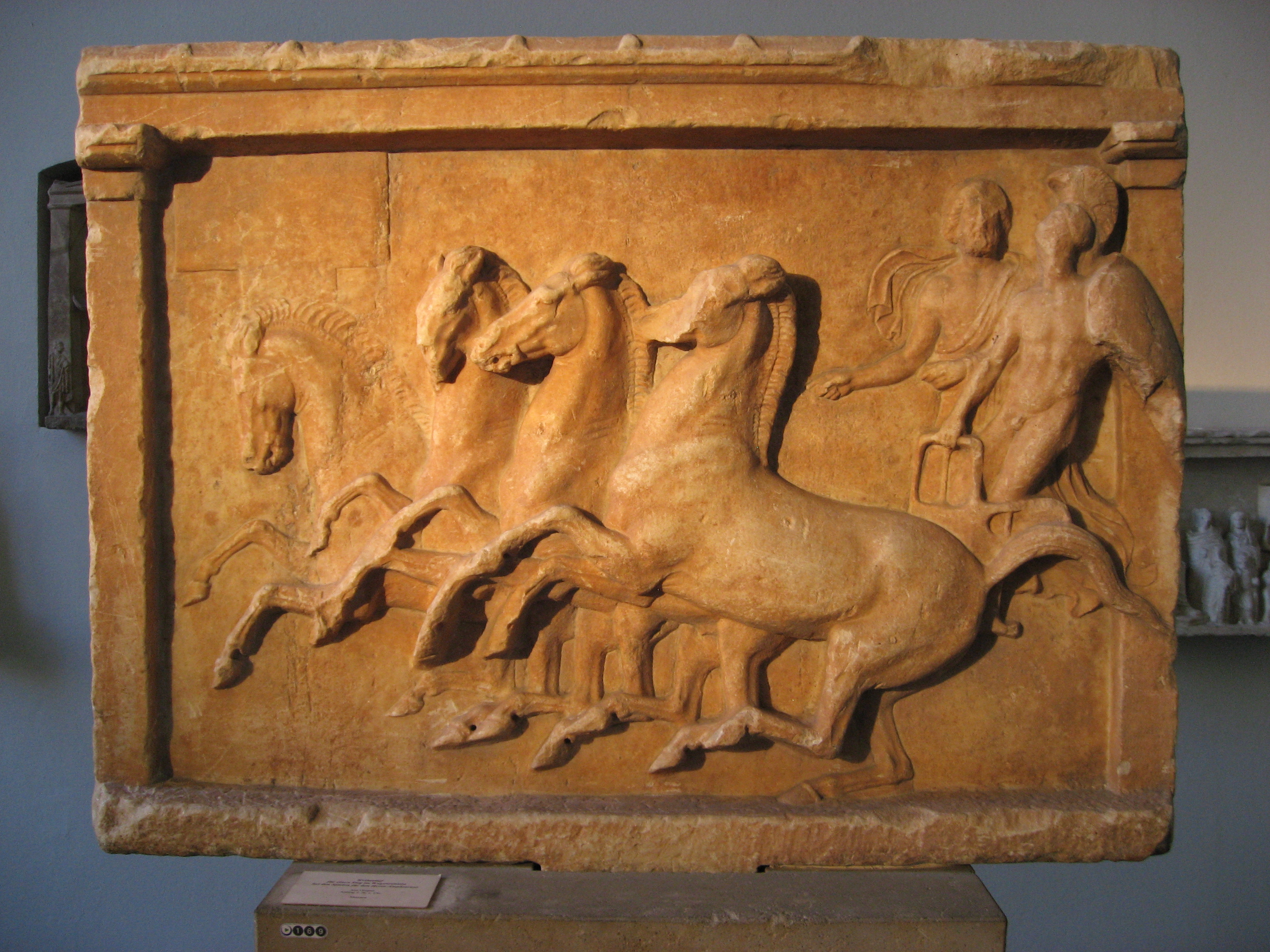
Amphiaraus in chariot race (?), marble stele (4th century BCE)
- Thebaid 7: what are they fighting for? ("higher purpose"? cf. Aeneid or nuda potestas, 1.150, its abuse & retention); divine influences (Jupiter, Mercury, Mars, Bacchus)
- humans: Argives conclude Nemean rites (7.90-103) & march toward Thebes (prayer to Archemoros, "beginner of doom")
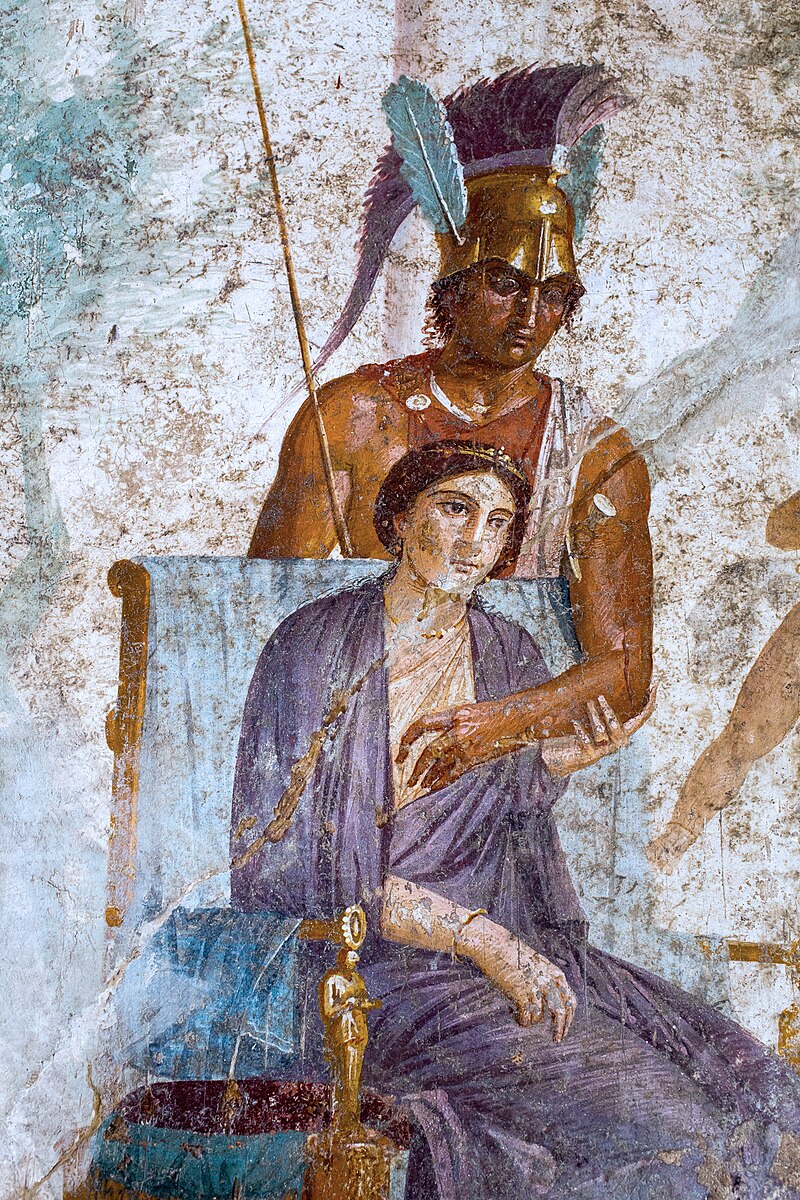
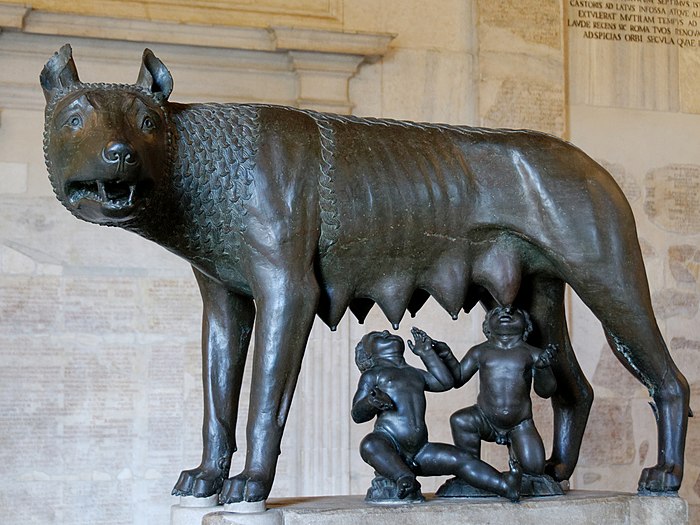
L: Mars & Venus (Pompeii, 1st century CE); R: Capitoline she-wolf
- gods (malignant Jupiter > Mercury > Mars – war or athletics? Cf. Thebaid 3); horrific ekphrasis of Mars' grove & temple guarded by Assault, Atrocity, Fear, Rage, Death, Insurrection (Insidiae), et al. ("The only offering on those / altars is blood shed in war, and fire kindled from pillaged towns", 7.40ff.)
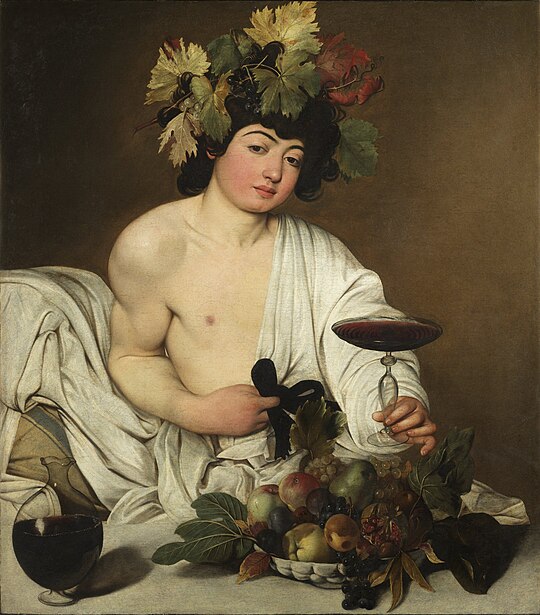
Caravaggio, Bacchus (1598)
- Thebes: Bacchus’ concerns for his “unwarlike crowd” to Jupiter (7.168; "I'm the one whose weight you found / sweet in the bearing", 7.165-6), Jupiter's promise that Thebes won't fall "just yet" (7.219); catalogue of Theban fighters (Antigone & Phorbas: teichoscopia, 7.243-374, cf. Iliad 3, e.g. Narcissus absent, Laius recalled, "I was there, reining the team in tight . . . just / when your—under the horses it fell, hacked off in spurting / strokes . . . your head fell severed); Eteocles' hollow speech about "volunteers" (7.375-90)
- cut to Argives: bad omens, crossing of Asopus (cf. Julius Caesar & Rubicon in Lucan)
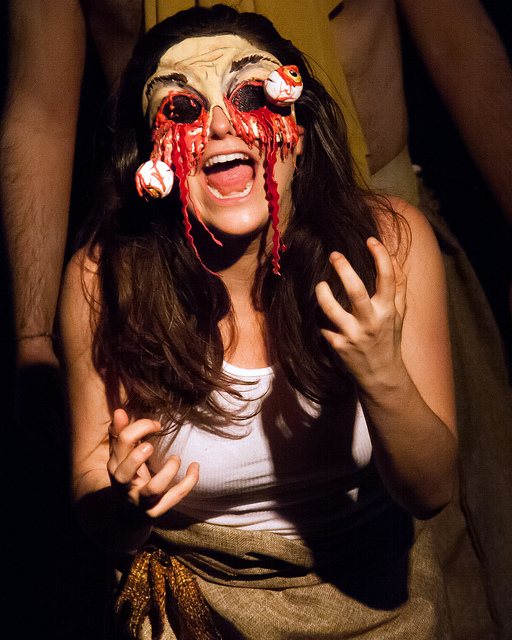
- Tisiphone "runs amok / through both camps" (7.465ff.); Oedipus resurfaces ("he wants his eyes back" as battle imminent)
- bold embassy: Jocasta, Ismene & Antigone march to Argive camp at dawn
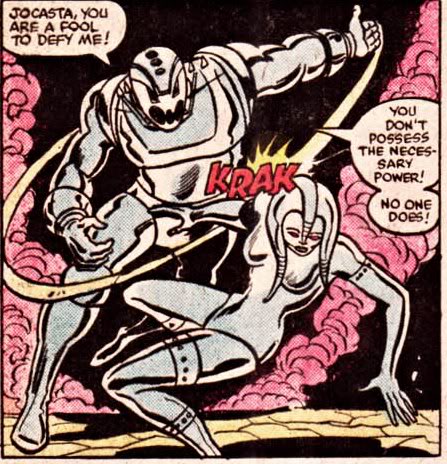
Thebaid 7.480-4 (Jocasta's maternal appeal to Polynices)
Flanked by her daughters, (the sex now preferred!), she speeds up her
old woman’s pace, going farther than she has strength to.
Leaning on them, she comes up to the foe and, with breasts bared,
knocks at the hostile barricade; in quavering wails, she pleads
to be let in: “Open up! War’s unnatural mother
begs you. Your camp owes my womb some sort of perverse
justice!”
- Polynices moved, Tydeus objects (revenge for embassy of Thebaid 2; "Where were you then, Mother Ambassadress for Peace- / in-Good-Faith?"); "Arms are in favor again, and fury . . ." (7.562ff.)
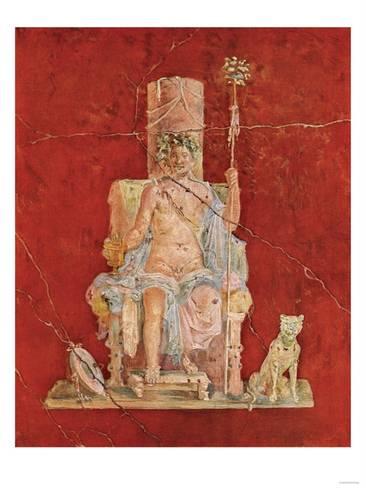
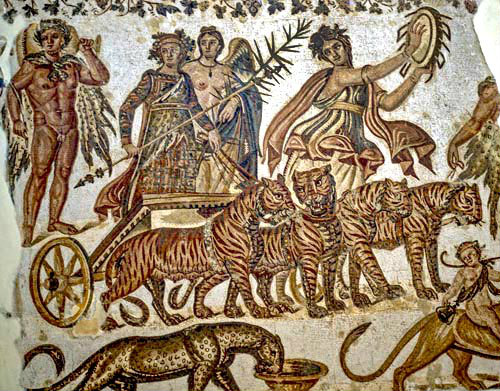
L: Bacchus,
wall painting (Pompeii); R: triumph of Bacchus, mosaic (Tunisia, 3rd century CE)
- Tisiphone > Bacchus’ tame tigers, mauling of Amphiaraus' charioteer et al., Aconteus killed by Thebans; cf. proximate cause of war in Aeneid 7; Jocasta & daughters flee, battle commences as Muses invoked (7.628-31); first death in battle (Tydeus' spear) = Pteralas & horse "stiched together" (7.636), bloodbath ensues (esp. groin injuries)
- Amphiaraus, Apollo's doomed seer, impervious in battle: aristeia (corpses impeding chariot!); "I already hear the current of rapid Styx" (7.782); geologically mysterious death-spectacle
Thebaid 7.801-22 (Apollo's gift: Amphiaraus' pseudo-katabasis, degradation of heroic epic continues)
At once, all wrath fell away: men stuck their nodding
spears in the ground, or, reeling, leant on the unsteady shafts. Face
to face, each drew back at sight of another's pallor.
So too, when Bellona stirs up a naval battle [Roman war goddess]
in calm waters: comes a storm (less cruel than war!), and it's
"Every man for himself!" The threat of disaster puts up
their swords, and their mutual fears have made peace. Such was the scene
now on dry land—a battle tossing up and down!
Whether Earth, laboring hard with gusts of chambered air,
expelled the rage and pent-up fury of winds; or whether,
eating away in secret, water scraped and scooped out
the crumbling soil; or, just here, revolving Heaven's
mechanism heeled over; or Neptune's tines broomed the waves
and rolled a too-heavy
sea onto outermost shores;
or that crack! saluted the seer; or Earth threatened the brothers—
look there!
Deep down, a sheer drop, the ground springs apart
in a vast chasm, frightening stars and shades in turn.
The huge crater swallows the man and engulfs the horses
struggling to cross; neither arms nor reins did he let slip
but, just as he was, drove the chariot straight into Tartarus
and, falling, flung one last look skyward and groaned as the ground
closed over him. Then, an aftershock drew the gaping
verges together and shut the light out from Avernus.
- Thebaid 8: arrival of "fresh" Amphiaraus in the underworld: aggrieved Dis (Pluto): raging autocratic god of underworld (flanked by Furies, Retribution): “Nearby, with his awesome brother [Rhadamanthus], / good Minos advised verdicts more just, and tempered the blood- / thirsty king,” 8.27-9); Dis to Amphiaraus, “Which of my two brothers attacks me?" (8.36)
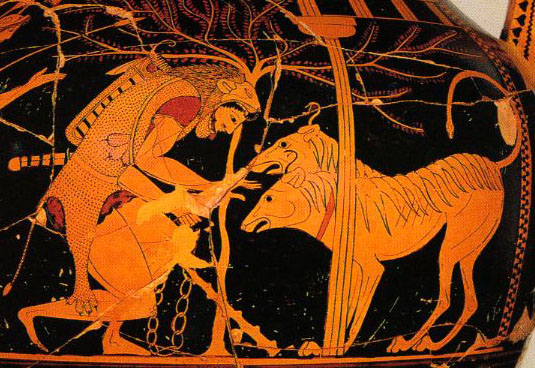
Herakles & Cerberus, amphora (520-510 BCE)
- Dis's katabasis-related grievances: Pirithoüs & Theseus > Persephone; Hercules > Cerberus; Orpheus > Eurydice
Thebaid 8.61-74 (Dis's own reverse katabasis; curse & prophecy)
"Only once have I dared depart: I slipped out—and not
to stars above!—when I raped my bride from that meadow
in Sicily—unlawfully, so they say—and straightway
injustice from Jove, and her mother cheats me of half the year!
[Demeter]
But why jabber? Tisiphone, go! Avenge the domain
of Tartarus! If ever you’ve spawned weird monsters, produce
one now—evil, alien, huge, something the sky has not
yet seen, something to make me gasp and the Sisters turn green.
As for the brothers—and let this be the ominous first
sign of my hatred—the brothers should rush to slay one another
in lethal combat. Let someone, like a rabid beast,
gnaw his enemy’s head: let another deprive the dead
of fire for last rites and foul the air with naked
corpses—that’s a sight should please the brutal Thunderer!"
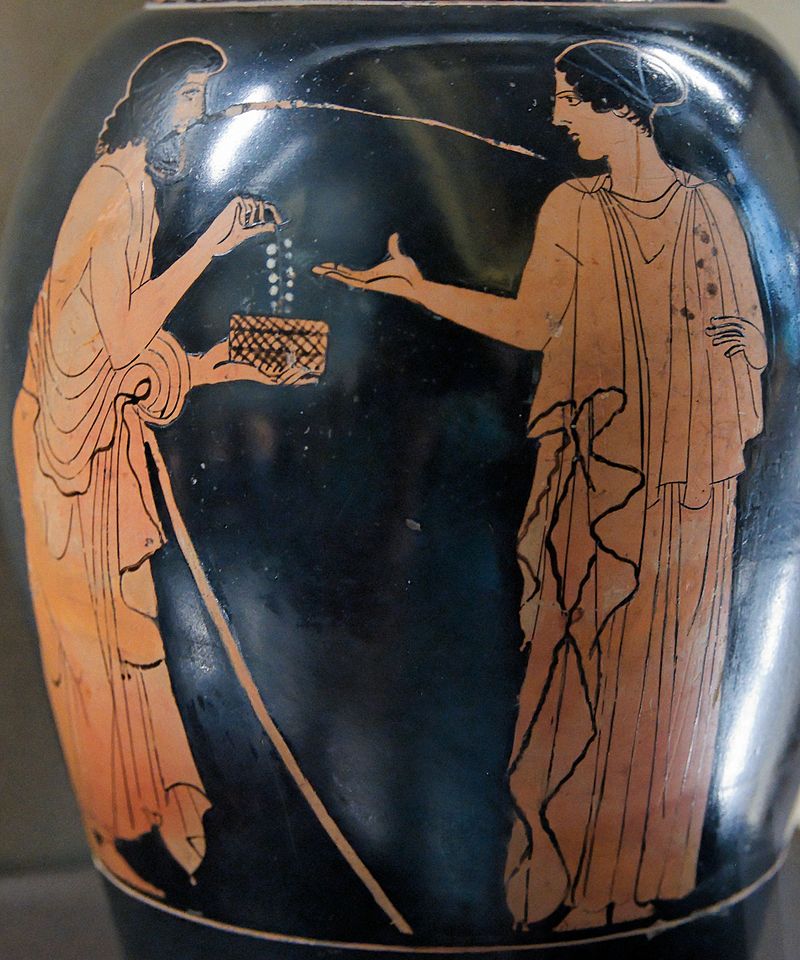
Amphiaraus & Eriphyle, red-figure oinochoe (450-440 BCE)
- Amphiaraus' plea for clemency, curse of Eriphyle – Dis's reaction? (lion simile, 8.123ff.)
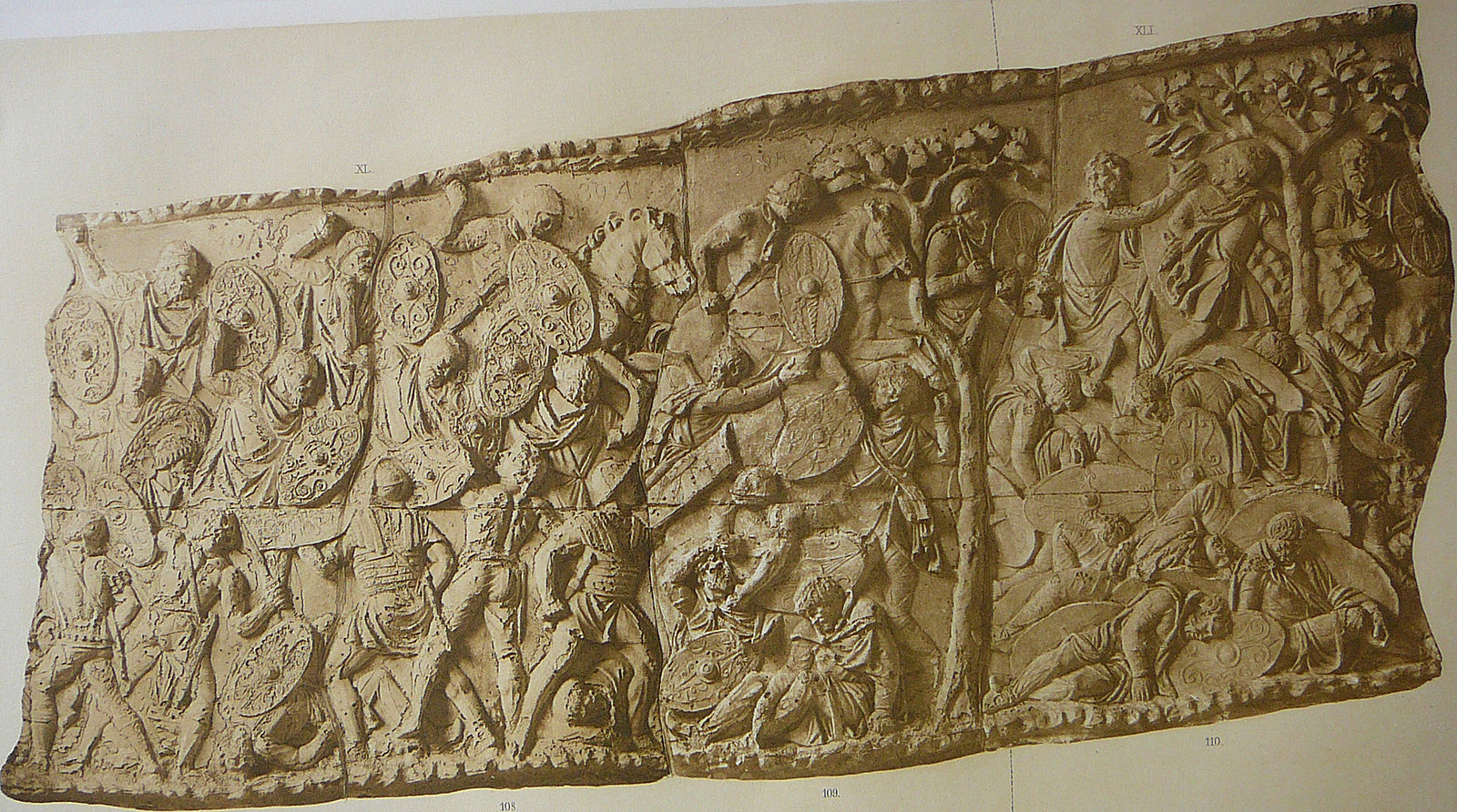
Romans vs. Dacians (Column of Trajan, 113 CE)
- 2nd day: battle fiercer, mutual destruction, anonymous, random deaths (8.412-20)
Thebaid 8.548-53 (epic poetry a casualty of civil war!)
Corymbus of Helicon, former friend of the Muses, had taken up
arms against the Danaans: aware of his Stygian portion,
Uranie had herself charted the stars and long since [Muse of Astronomy]
predicted his death. Planning an epic perhaps, this man yearned
for combat and warriors—but fell himself, a subject for long
songs of praise; but the Sisters have wept his loss in silence.
- Tydeus’ ultra-extreme aristeia (8.456ff.): kills young Atys (“Doom”), betrothed to Ismene ("War had snuffed out their wedding torches", 8.561); shift to Antigone's & Ismene’s bedroom & conversation ("I've seen him once, Sister, / here in this house, when pledges of some sort were sworn for my troth— / not something I wanted!", 8.606ff.), tragic moment of love-lost (wedding/funeral)
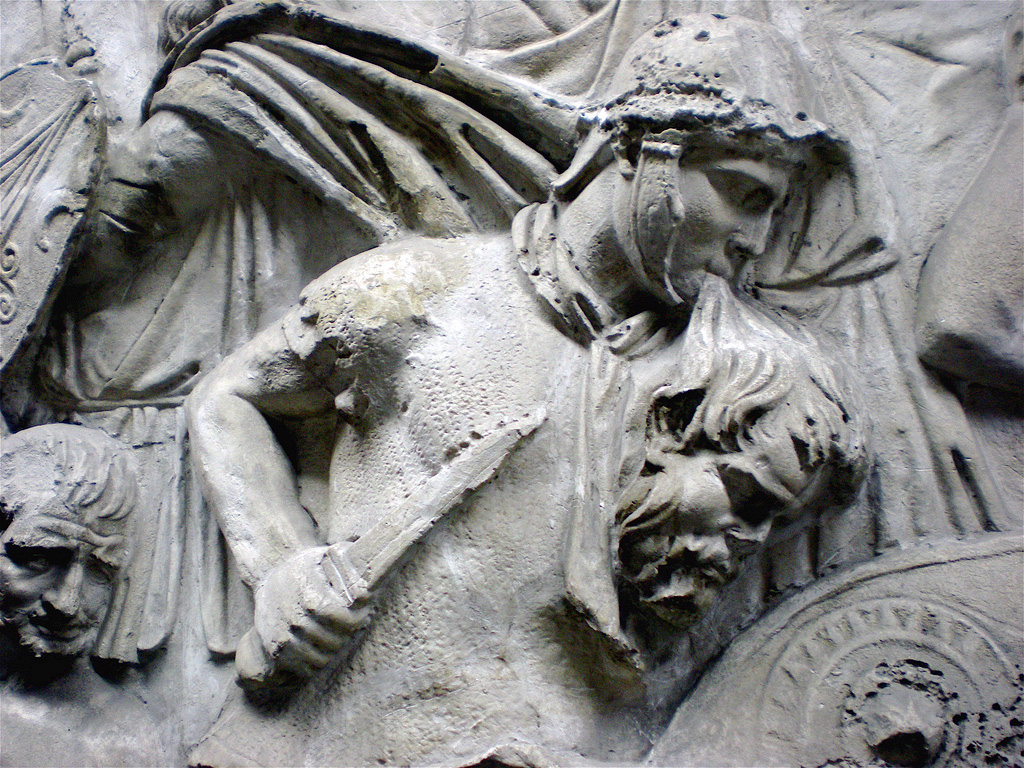
Roman & severed Dacian head (Column of Trajan, 113 CE)
- Tydeus wounded by Melanippus but returns fire (“the effort squirting out jets of blood", 8.727) & taken to camp; Melanippus fetched ("The head! oh, the head!", 8.739)
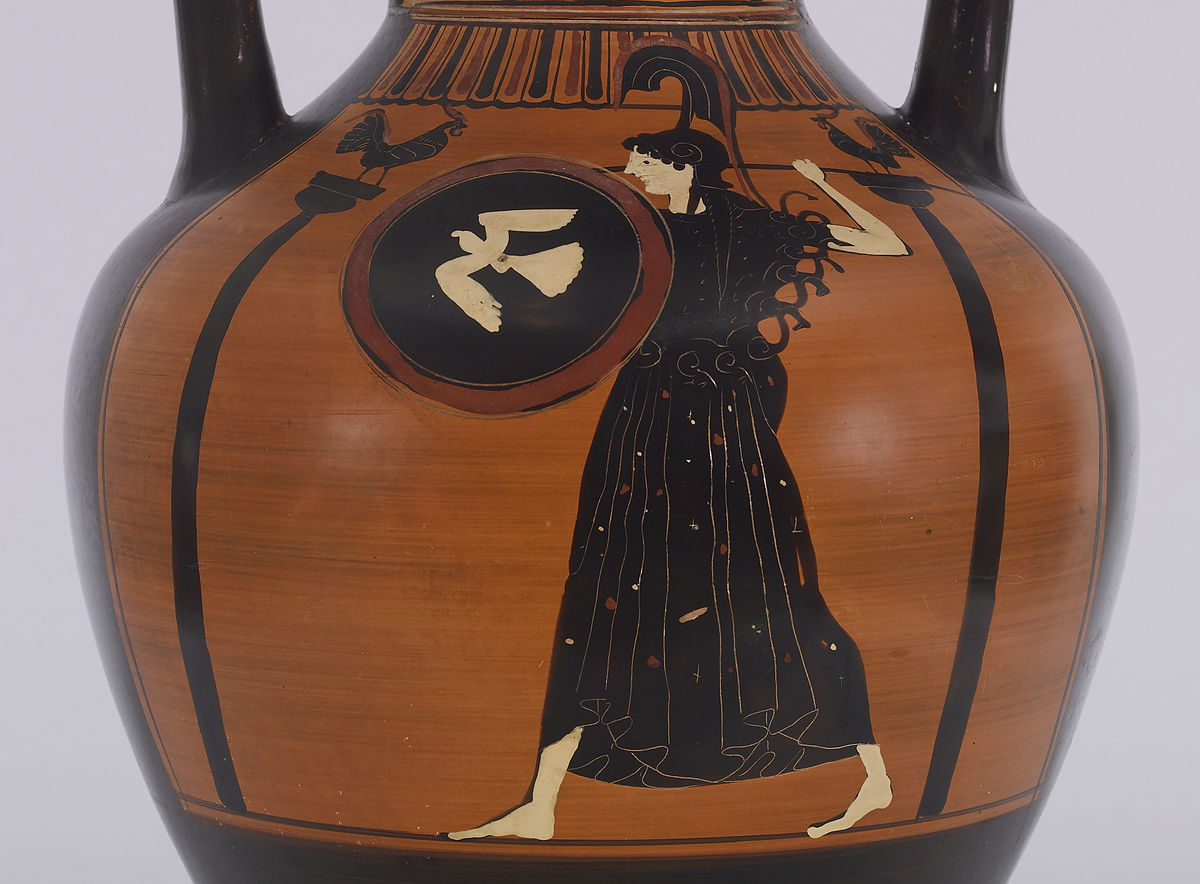
Athena, black-figure amphora (ca. 500-485 BCE)
Thebaid 8.751ff. (Tydeus and Melanippus; epic heroism degraded; cf. Achilles)
Struggling to rise, Tydeus raced with his gaze to meet him: mad
with joy and rage when he saw that face gasping for air,
Saw those fierce eyes, and in the sight perceived himself, he [seseque agnovit in illo]
insisted they cut off his enemy’s head and bring it
to him. Seizing it left-handed, he gazed, savage and bloated,
seeing the hot eyes glaring yet hesitant to meet his own.
Luckless, he was content. Vindictive Tisiphone drove him
one step further. Her father swayed, Tritonia by now had returned, [Athena]
bringing the wretch immortal glory, but—! When she saw
him, sluiced with the foul gush of a brain smashed into gobbets,
his jaws evilly stained with living blood, as companions
strove to wrest the thing from him, her harsh Gorgon stood,
snake-hackles rising, crests upreared before her face,
shielding the Goddess. She turned from the fallen man and fled ...