Classics 353
October 5, 2021


L: Apollo & Artemis Slay the Children of Niobe, ca. 450 BCE; R: Paulus Bor, Bacchus, 1630-35
Group Projects: Tuesday, October 12 (Groups 1-4) and Thursday, October 14 (Groups 5-7)
GUIDELINES
Thebaid 3-8 highlights:
- Maeon, sent back alive to Thebes at Minerva's suggestion: an off-center hero in a heroless epic
Thebaid 3.99-102 (narrator apostrophizes Maeon)
Maeon: you outdid us all in death and resolve!
never—and this is your due—will you suffer decay, for you
dared
scorn kings outright and make sacred a way whereby
Freedom might come in full.
- Thebaid 4: three years pass, Argive forces muster for war!

.jpg)
L: Atalanta wrestling Peleus, ca. 550 BCE; R: Reni, Atalanta & Hippomenes, ca. 1625
- catalogue of Argive warriors: generals = Adrastus, Polynices, Tydeus, Hippomedon’s, Capeneus; Amphiaraus, Parthenopaeus

Pentheus is torn apart by Ino and Agave, ca. 450 BCE
- Eteocles summons Tiresias & Manto (necromancy0; Cadmus and others from horrific Theban past appear (4.553ff.); Tiresias concludes forlorn ghosts of Argos portend Theban victory, 4.588ff.); cf. parade of future Romans in Aeneid 6)

Pentheus dismembered, Attic red-figure kylix, 480 BCE
Thebaid 4.636-44 (Laius’ confusing prophecy)
"War on all fronts is coming, war
with troops beyond count, as the fateful Marcher urges
Lerna's sons with his lash. Earth's portents await them, as do
divine weapons, beauteous deaths, and heinous delays
of flames for cremation.
Victory for Thebes is assured, have no
fear; your ferocious brother will not gain the kingdom … but
Furies will! And twofold sin, and by wretched blades
(just my luck!) your cruel father wins." When he’s said all this,
he slipped off and left them to puzzle his knotty riddle.
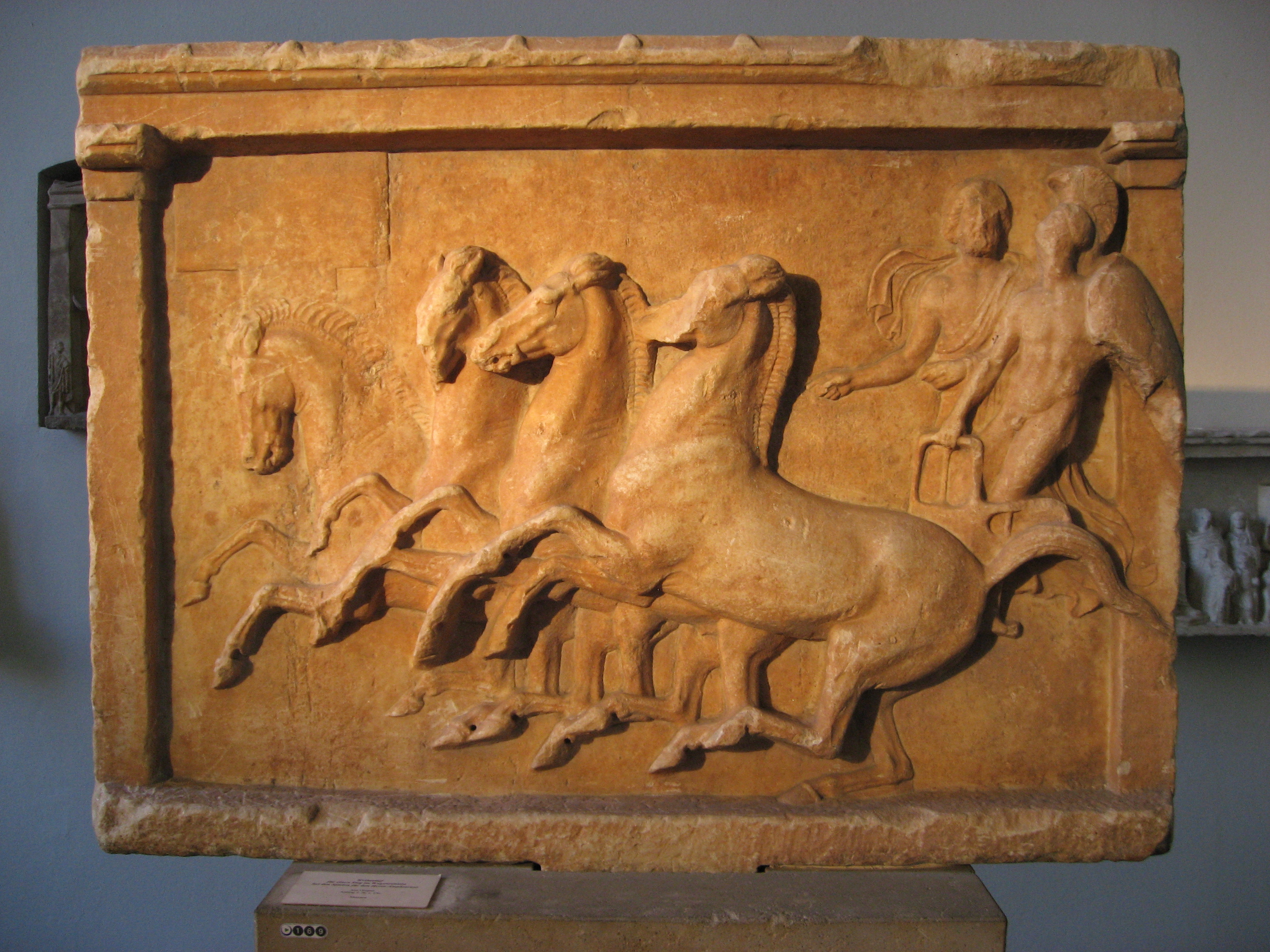
Amphiaraus in chariot race (?), marble stele, 4th century BCE
Thebaid 7: battle commences, what are they fighting for? ("higher purpose"? cf. Aeneid); nuda potestas (1.150)
- heroism: Jocasta, Ismene & Antigone march to Argive camp at dawn
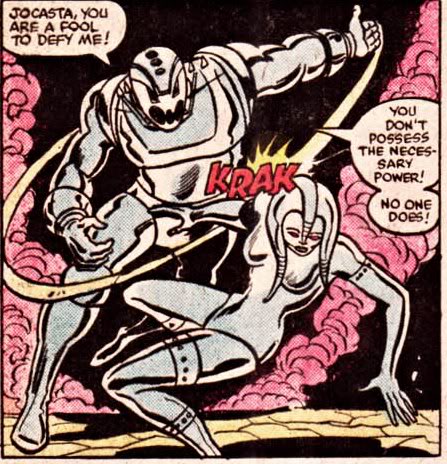
Thebaid 7.480-4 (Jocasta's maternal appeal to Polynices)
Flanked by her daughters, (the sex now preferred!), she speeds up her
old woman’s pace, going farther than she has strength to.
Leaning on them, she comes up to the foe and, with breasts bared,
knocks at the hostile barricade; in quavering wails, she pleads
to be let in: “Open up! War’s unnatural mother
begs you. Your camp owes my womb some sort of perverse
justice!”
- Polynices moved, but Tydeus objects (cf. embassy of Thebaid 2-3); "Arms are in favor again, and fury ..." (7.562ff.)
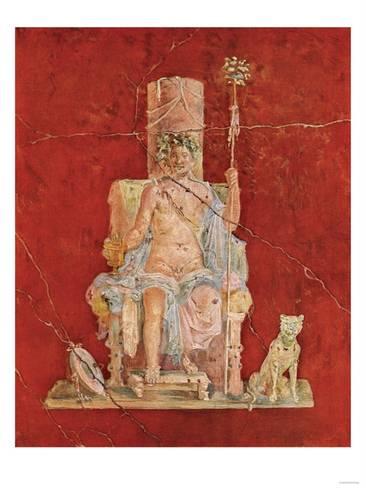
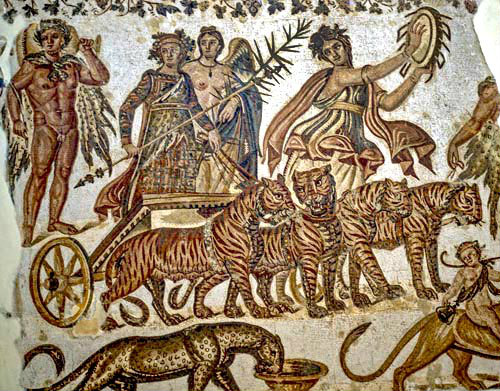
L: Bacchus,
wall painting (Pompeii, 79 CE); R: Triumph of Bacchus, mosaic (Tunisia, 3rd century CE)
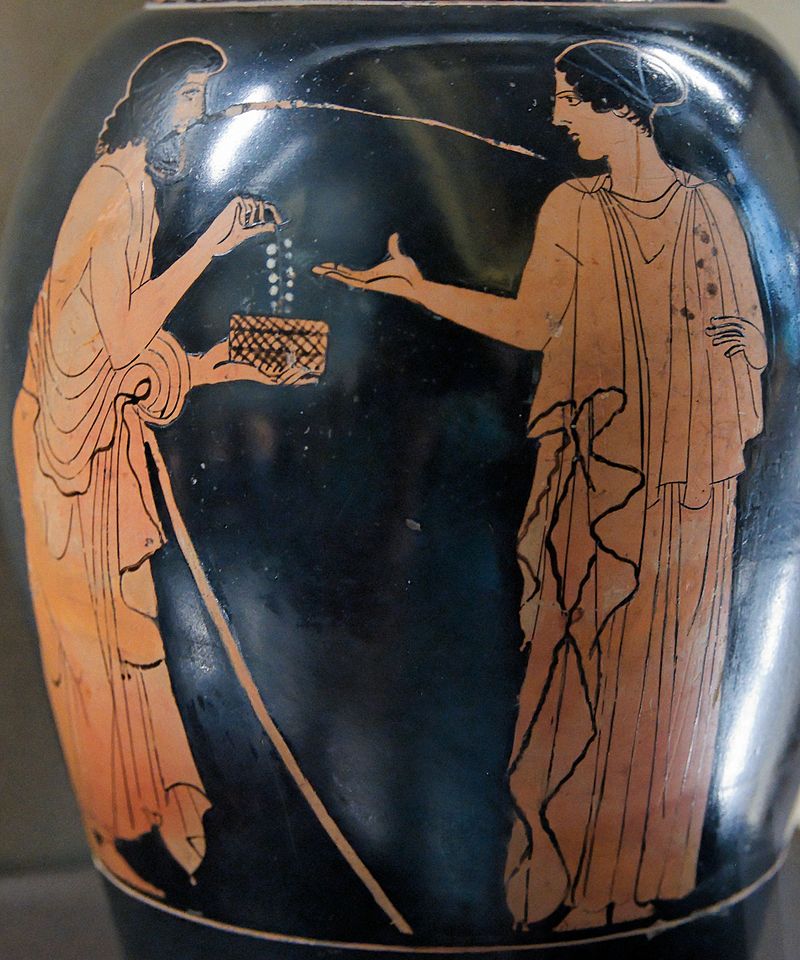
Amphiaraus & Eriphyle, red-figure oinochoe, 450-440 BCE
- Amphiaraus, Apollo's seer fated to die: aristeia and geologically mysterious death at end of Thebaid 7; part of general degradation of heroic epic; Dis/Pluto: bitter, autocratic & envious god of the underworld (flanked by Furies, Retribution): “Nearby, with his awesome brother [Rhadamanthus], / good Minos advised verdicts more just, and tempered the blood- / thirsty king,” 8.27-9); Dis's reaction to Amphiaraus’ dropping in (“Which of my two brothers attacks me?,” 8.36); Dis/Pluto's katabasis-related grievances: Pirithoüs & Theseus > Persephone; Hercules > Cerberus; Orpheus > Eurydice
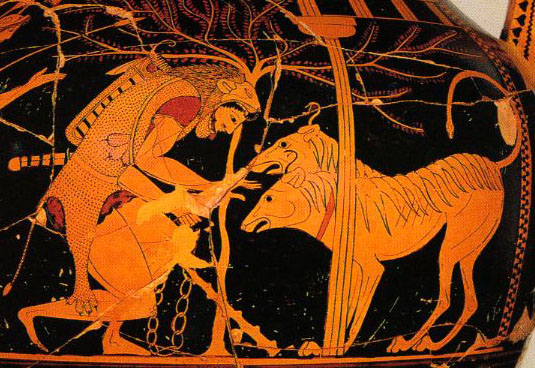
Herakles & Cerberus, amphora, 520-510 BCE
- Thebaid 8: Tydeus's aristeia, mortally wounded by Melanippus but returns fire (“the effort squirting out jets of blood,” 8.727) & taken to camp; Melanippus fetched
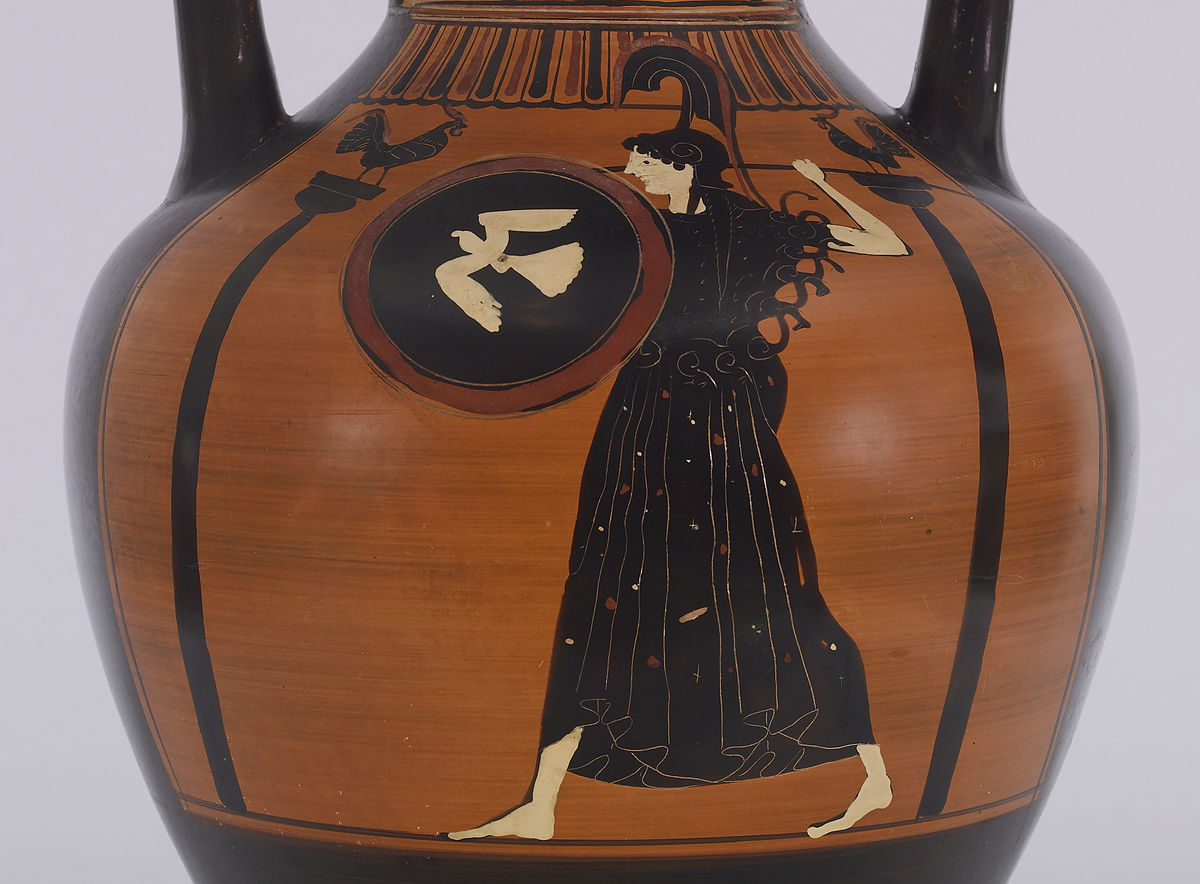
Athena, black-figure amphora, ca. 500-485 BCE
Thebaid 8.751ff. (Tydeus and Melanippus; beyond Achilles?)
Struggling to rise, Tydeus raced with his gaze to meet him: mad
with joy and rage when he saw that face gasping for air,
Saw those fierce eyes, and in the sight perceived himself, he
insisted they cut off his enemy’s head and bring it
to him. Seizing it left-handed, he gazed, savage and bloated,
seeing the hot eyes glaring yet hesitant to meet his own.
Luckless, he was content. Vindictive Tisiphone drove him
one step further. Her father swayed, Tritonia by now had returned, [Athena]
bringing the wretch immortal glory, but—! When she saw
him, sluiced with the foul gush of a brain smashed into gobbets,
his jaws evilly stained with living blood, as companions
strove to wrest the thing from him, her harsh Gorgon stood,
snake-hackles rising, crests upreared before her face,
shielding the Goddess. She turned from the fallen man and fled ...
Thebaid 10: end of second day of battle, Thebans; gory, night(marish) raid on Theban camp
Thebaid 10.445-8 (eulogy of heroic Dymas & Hopleus, squires of Pathenopaeus & Tydeus; engagement with Vergil)
(Though my song soars from a lowlier lyre, the two of you,
like others, will—immortalized—cheat memorial Time. [memores superabitis annos, "you'll conquer the years that have memory"]
And perhaps, Euryalus shall not spurn your shades as his
comrades and you shall bask in Phrygian Nisus' glory!)
- battle continues at dawn of 3rd day; resentment of Eteocles in Thebes following night raid (“Restore the brother! ...", 10.580-8)

Rubens, The Death (devotio) of Decius Mus in Battle, 1618
- Tiresias calls for human sacrifice; Creon’s (Jocasta's brother) son Menoeceus' heroic suicide (= Roman devotio, sacrifice of general to underworld gods)
Thebaid 10.773-82 (Menoeceus's devotio)
That said, he sought with his glittering blade the notable soul
that scorned his flesh and grieved to have been so long detained:
he found and broke its thread with a single thrust. Sprinkling
the towers with his blood and asperging the walls, he threw himself
out over the battle lines and, since he had not yet drawn
his sword out, he tried to crush savage Achaeans. But
Devotion [Pietas] and Valor [Virtus] bore his body gently to earth,
cradling it in their arms; his soul had long since entered
the presence of Jove and called for its crown amid stars on high. [cf. Stoicism]
- Menoeceus receives special rites with human sacrifice (12.60ff.)
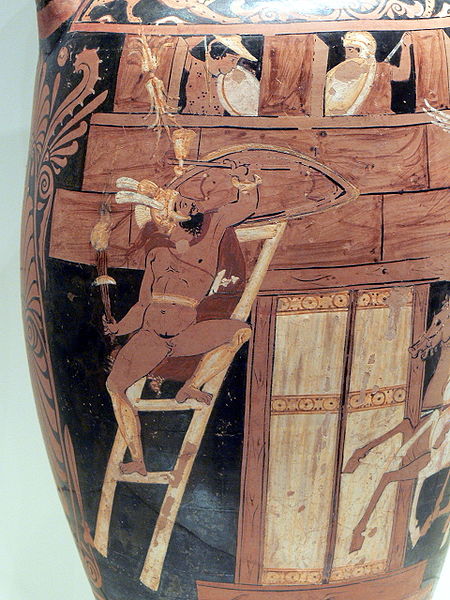
Capaneus on Walls of Thebes, red-figure amphora, ca. 350 BCE
Thebaid 11: Furies (Tisiphone, Megaera) drive brothers to duel; Jocasta’s and Antigone’s pleas fail (11.315-87)
Thebaid 11.396-402 (Polynices's envy highlighted before duel)
... he [Polynices] glared at his brother—for, deep in his heart, jealousy burned
at the other’s vast retinue, regal casque, at his steed
draped in crimson trappings, his buckler flashing with yellow
gold—although he himself was not meanly accoutred,
but wore an unusually lustrous cloak (one that Argia
had worked in Maeonian fashion: her skillful
fingers had allied golden warp to purple web).
- Adrastus offers Polynices his kingdom!
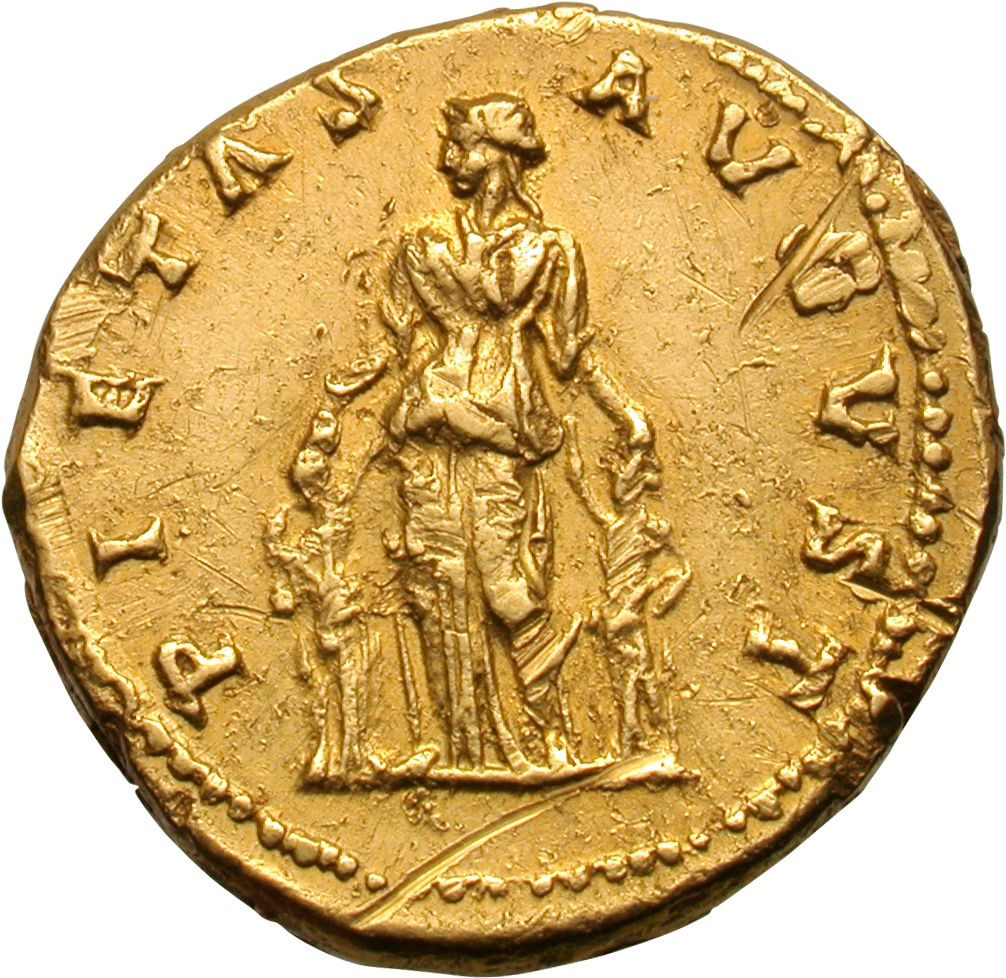
Pietas on coin of the emperor Trajan, 98-117 CE
- Pietas ("Devotion") appears on battlefield: "the ranks saw that what they did was wrong / Cheeks and chests flowed / tears, a wordless revulsion stole over the two brothers," 11.475-6; Pietas flees (chased off by Tisiphone!); duel of Eteocles & Polynices
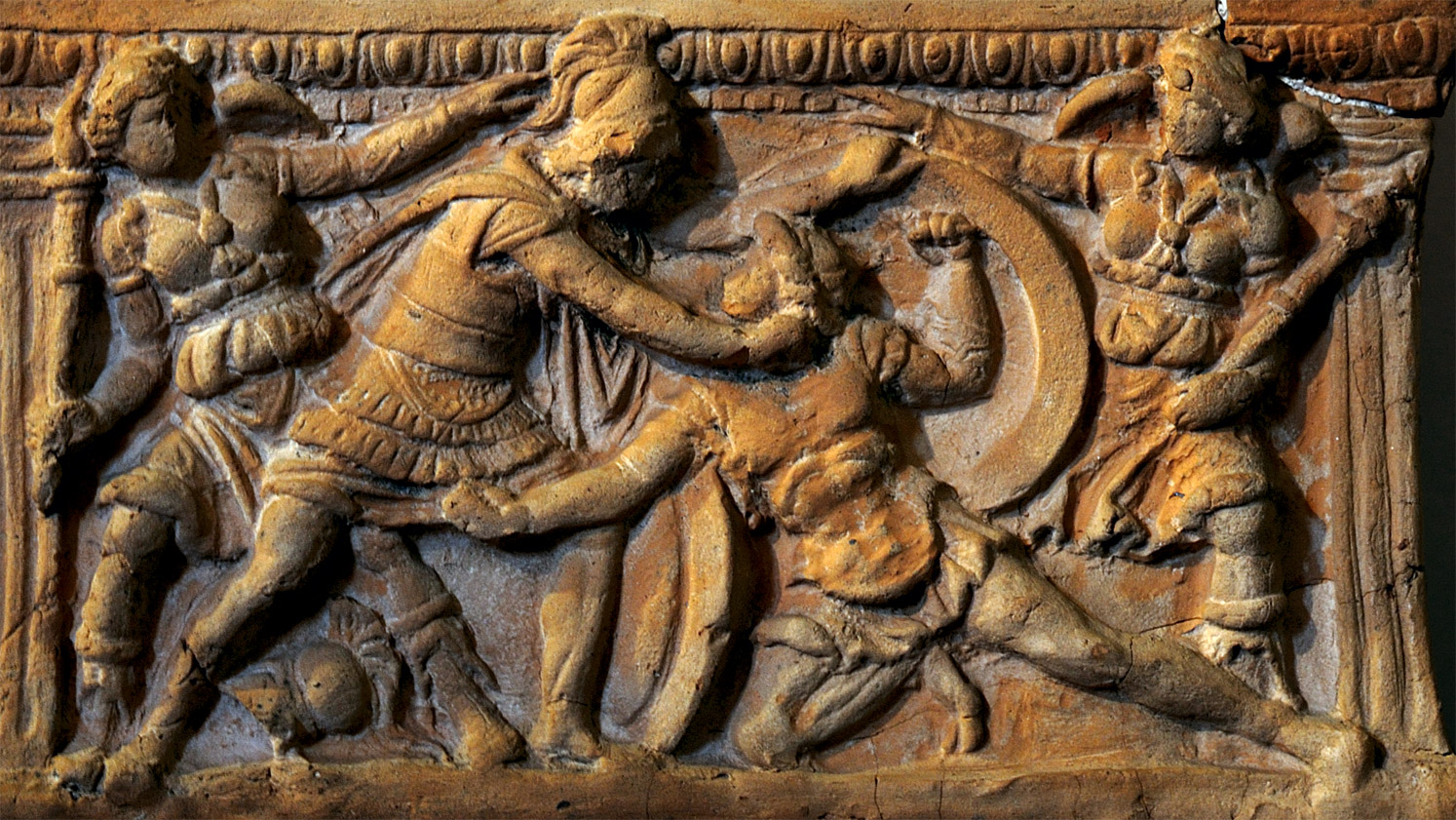
Etruscan funerary urn depicting a duel, 2nd century BCE
Thebaid 11.530-5 (simile describing dueling brothers)
Hot as blue blazes, like two wild boars, whose headlong rage
has made them square off and their back bristles stand on end:
pig eyes flash fire, pig snouts with crescent-shaped, upcurved
tusks squeal, while a hunter, watching the fight from a rocky ledge
nearby, goes pale and orders his dogs to hush. Greedy
as that, the two men attack.
- mutual slaughter & poet’s outburst: “... let one day alone have seen / this breed of foul deed, let this monstrous infamy fall / from memory—only kings should recall such a due” (11.577-9)

Per Wickenberg, Oedipus & Antigone, 1833
- grotesque family reunion: Antigone & Oedipus appear ("so late, Devotion [Pietas]? ... Is there clemency [clementia] deep in this old man's heart?", 11.605-6); Oedipus "gropes for a blade" over sons' bodies; Jocasta’s suicide reported
- Creon assumes kingship, forbids cremation of Argives (including Polynices), banishes Oedipus; nighttime falls
duels in film:
Finale of Sergio Leone's Once Upon a Time in the West (1968): https://www.youtube.com/watch?v=BdK0jaLuJL8
Final scene of The Good, the Bad and the Ugly (Sergio Leone, 1966): https://www.youtube.com/watch?v=aJCSNIl2Pls
Ben Kenobi vs
Darth Vader, Star Wars: Episode IV-A New Hope (1977): https://www.youtube.com/watch?v=sq51w34Hg9I
Showdown at the House of Blue Leaves, Kill BIll: Vol. 1 (2003): https://www.youtube.com/watch?v=EajaioMj-NA
Subway fight in The Matrix (1999): https://www.youtube.com/watch?v=7GSgWzmR_-c
Thebaid 12: focus on Argia & Antigone; Athenian intervention at Thebes
- Argia’s determined journey to Thebes: “in an upsurge / of unfeminine valor, Argia nerved herself / and ignoring her gender, contrived an immense task” (12.176-8)
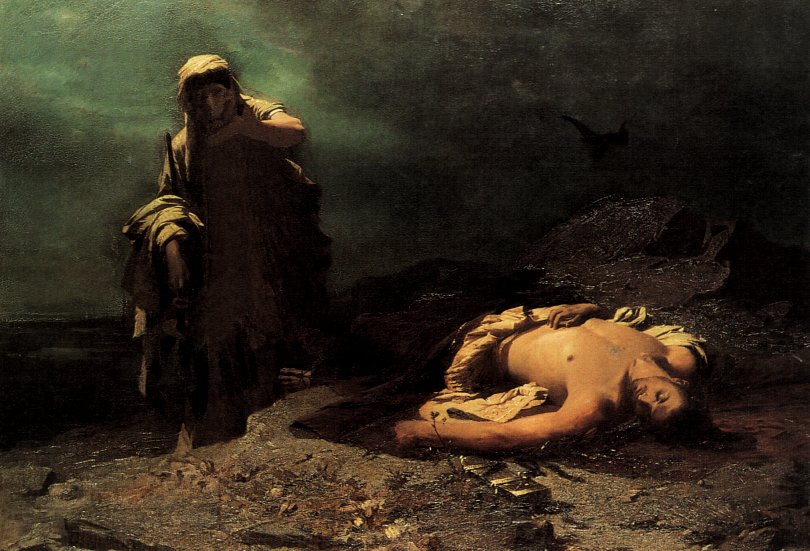
Lytras, Antigone in Front of the Dead Polynices, 1865
- Argia meets defiant Antigone; solidarity of sister & wife in shared grief for Polynices
Thebaid 12.416-36 (Argia & Antigone care for the body of Polynices; the hideous cremation)
When, cleansed by the stream, his limbs had regained glory
of death, then, after last kisses, the wretched women scoured
the burning-pits round them for embers, but all the ashes
were cold and lifeless, every bone-fire had died down.
Was it chance? or divine will? A pyre was still standing—the one
raised to roast Eteocles' savage carcess: either
Fortune was setting the scene once more for monstrosities, or
a Fury had kept these flames safe to further the conflict.
Here it was, among blackened logs, that the frantic pair
observed a feeble spark; at the sight, together they wept
tears of joy. Whose bone-fire they'd found was not yet clear.
They prayed that, whoever it was, gracious and gentle, he might
take in a guest and let their two souls and ashes combine.
Behold! brothers once more! As devouring fire first
licked his limbs, the timbers shook, pushing the newcomer off
the pyre. Flames billowed forth and, as a tip split in two,
each crown in turn glittered, each had its light torn away.
As though pallid Orcus had set two Eumenides’ brands
to brawling, each fireball threatened, each strove to outclimb
the other; the whole structure shifted its weight and moved
apart a little.
- Antigone & Argia arrested by Creon's guard: competitive bickering!
Thebaid 12.456-63
Courting savage destruction, they burned with a heartfelt desire
for death: one boasted she’s stolen her brother’s, one her husband’s
remains, vying in turns: “My proof is the corpse.” “Mine the flames.”
“I was led by devotion!” “And I by love.” They insisted
on harsh treatment and happily thrust their wrists into the cuffs.
Gone the respect that had colored their speech just now, replaced—you’d
swear!—by hatred and rage, so shrilly did these two women
wrangle, dragging their captors the while before the king.
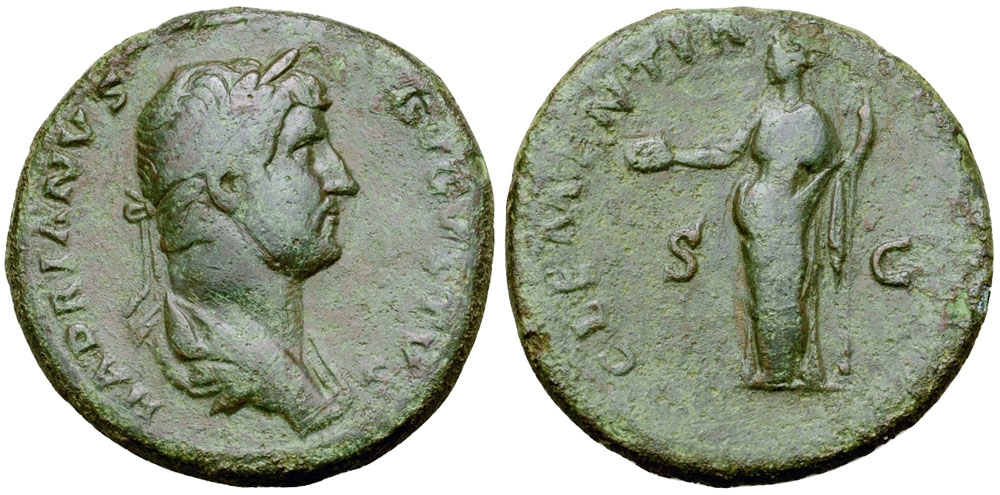
Clementia (R) performing a sacrifice on coin of Hadrian (L), 132-4 CE
- Argive mourners appeal to Athens: Altar of Clemency/Latin Clementia); Romanized Theseus returning in triumph over Amazons
- Theseus kills Creon, welcomed in Thebes; treaty & funerals; final image of Argive women grieving
- a secure peace? post-Thebaid Epigoni (Sons of Seven) restore son of Polynices to throne of Thebes; Statius & Roman imperial themes (family dynasties) > Theban curse a human condition (jealously, revenge, desire for power & domination, etc.)?
Thebaid 12.798ff. (the poet's exhaustion!)
Not if some God let my heart speak in a hundred voices
could I wish with my efforts to do justice to all those funerals ...
(Scare would new frenzy or oncoming Apollo fill those sails;
after so lengthy a voyage, my craft has deserved safe haven.)
- Epilogue: an epic-poetic confrontation with Vergil
Thebaid 12.810-19
WILL YOU LONG endure? Outliving your master, will you be read,
O my Song of Thebes, that I labored at late at night, for
twice six years? Surely present already, Fame has eased
your way and begun to show you, new-made, to the future;
already, magnanimous Caesar deigns to acknowledge you;
Italy’s eager schoolboys already recite you from memory.
Live on, I pray! Do not try to surpass the Aeneid divine,
but at a distance, follow and always revere Her imprint. [cf. Aeneid 2.711]
Soon, if some bruised Envy still spreads clouds before you, it will
set; after I’m gone, you’ll win your well-deserved honors.