CLAS 353
April 15, 2021
Lucretius > Ovid: Lucretius' idiosyncratic epic of atomic physics (6 books), hero Epicurus (slayer of ignorance, fear, religion) delivering answers to grand questions; Ovid's idiosyncratic epic (15 books), 250 independent stories linked by motif of metamorphosis
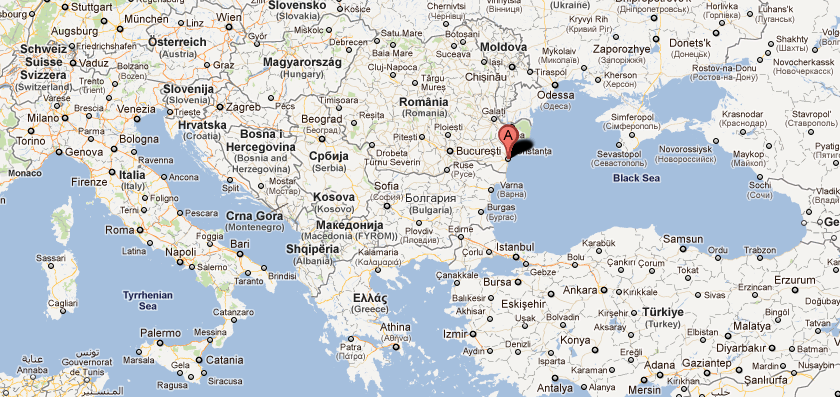
Publius Ovidius Naso: 43 BCE-17 CE, from Sulmo (east of Rome), studied in Rome & Athens; abandons law career for poetry; Latin love poetry celebrity (Amores, Loves, Ars Armatoria, The Art of Love), exiled to Tomis in 8 CE by Augustus for carmen (poem”) and error (“a mistake"; scandal?); remainder of life in exile (Tristia, My Sorrows)
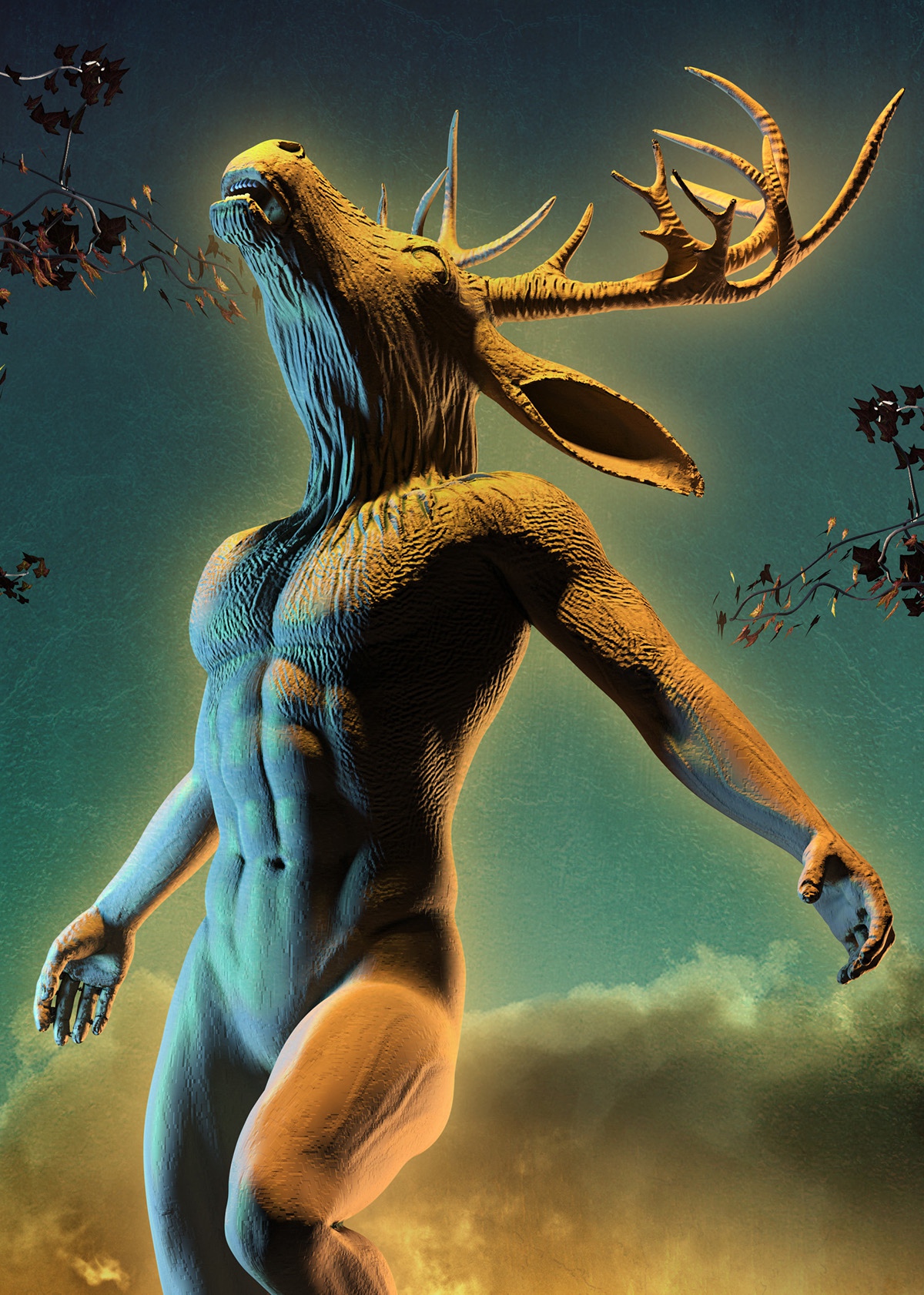
- Ovid's identification with Actaeon ("Looking")
.jpg)
L: Death of Actaeon, Apulian red-figure skyphos (400-350 BCE)
Metamorphoses 3.138-42 (Theban book)
Amid such happy times, Cadmus, your grandson
was first to cause you pain—strange antlers sprouting
from his brow, those dogs that drank their master's blood.
If you look closely, you blame the boy's Fortune,
not a crime. How can a mistake be a crime? [error]
Ovid, Tristia 2.103-10 (regret of exiled poet)
Why did I see anything? Why make my eyes guilty?
Why was mischief, unwittingly, known to me?
Actaeon, unaware, saw Diana unclothed:
nonetheless he became his own hounds’ prey.
Even fate must be atoned for, among the powers that be,
to a wounded god chance is no excuse.
On that day, when my unlucky error misled me,
my house, humble, without stain, was destroyed.
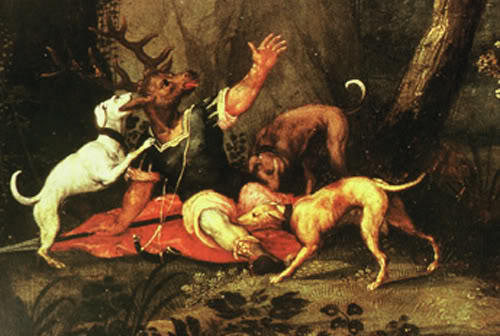
Pittoni the Younger, Diana & Actaeon (1721)
Metamorphoses 3.228-253 (the transformed Actaeon is attacked by his own hunting dogs) [Reader: Richard]
He runs through regions he's often hunted
and oh! he flees his own friends. He wants to cry out—
no words in his mind: the sky rings instead with baying.
Blackhair tears the first hole in his back,
Hunter is next, while Hiker fixes fangs in his flesh.
(they left home late, but a shortcut through gullies
let them catch up). As they pin down their master
the pack rushes in and sets teeth in his flesh.
Soon no place is left to rip; he groans a sound
that doesn't seem
human but could be cried [loss of voice]
by no stag and fills the hills he's known so well
with cries of grief, then on his knees he begs
not with pleading arms but with a silent face
His friends goad the frenzied pack with the usual
shouts, and they look for Actaeon, with no idea,
and bellow for Actaeon, as if he weren't there [loss of identity]
(at his name he lifts his head), and they're mad
the slacker's missed the show and will not see the prize.
He'd rather miss this but he's there; he'd rather
see than feel his own dogs' ravenous ripping.
They cluster upon him, muzzles deep in his flesh,
and tear apart master falsely figured as a stag.
Not until all his many wounds wane away his life
is the fury of quivered Diana appeased. [wrathful Diana]
- Metamorphoses (pre-exile poem, but later editions): dactylic hexameters, new direction for genre (cf. Vergil’s national epic focused on single hero's adventures/llimited scope & time frame & Ovid's distorted Aeneid, Metamorphoses 13.623-14.608); Ovid > creation of world to deification & catasterism of Julius Caesar (creation/myths/some Roman history in final books)
Metamorphoses 1.1-4 (Ovid's program)
My intention is to tell of bodies changed
To different forms; the gods, who made the changes,
Will help me—or I hope so—with a poem
That runs from the world's beginning to our own days. [(di) ad mea perpetuum deducite tempora carmen, "Gods, weave a continuous song" to my own time"]
- collection of ca. 250 independent stories linked by metamorphosis: cf. Callimachus’ (3rd BCE) Aetia, series of independent stories that are aetiological; cf. Nicander’s (lost, 2nd BCE) Metamorphoses; ultimate model for collective epic verse Hesiod’s Theogony (8th century BCE)
- Ovid & Augustus: Augustus the Jove/Jupiter of the Palatine in Metamorphoses 1; irreverent treatment of Julius Caesar's deification (Divus Iulius, 42 BCE: "We cannot think him mortal, our Augustus, / Therefore, our Julius must be made a god / To justify his son", 15.760-2); Ovid's bold self-prophecy in Metamorphoses 15
Metamorphoses, Epilogue [Reader: Jayme]
Now I have done my work. It will endure,
I trust, beyond Jove's anger, fire, and sword,
beyond Time's hunger. The day will come, I know,
So let it come, that day which has no power
Save over my body, to end my span of life
Whatever it may be. Still, part of me,
The better part, immortal, will be borne
Above the stars; my name will be remembered
Wherever Roman power rules the conquered lands,
I shall be read, and through all centuries
If prohecies of bards are truthful,
I shall be living, always,
- Metamorphoses: long poem of swift, fluid narratives: witty, entertaining, humorous, surprising, shocking; narrative complexity (nesting of stories to avoid catalogues or single narrative voice > non-linear narrative with multiple storytellers)
- Ovid the virtuoso: variety of tones, styles, genres (heroic epic, mock-epic, tragedy, comedy, elegy/love poetry, scientific/philosophical writing)
- running themes: appearance & reality, representation & reality (Arachne: "you'd think it's a real bull and the real sea", 6.104); universe of dynamic flux & change
- Jane Alison's selection (Change Me) of erotic tales ("Stories of Sexual Transformation from Ovid"): psychology of desire
- transformative effects of desire in Roman elite culture (male gaze, male ownership of less privileged bodies, rape, arranged marriages with older males, etc.): complexities? female agency? empathy?
- emotionally intense, visual narrative tapestry: Arachne & Minerva
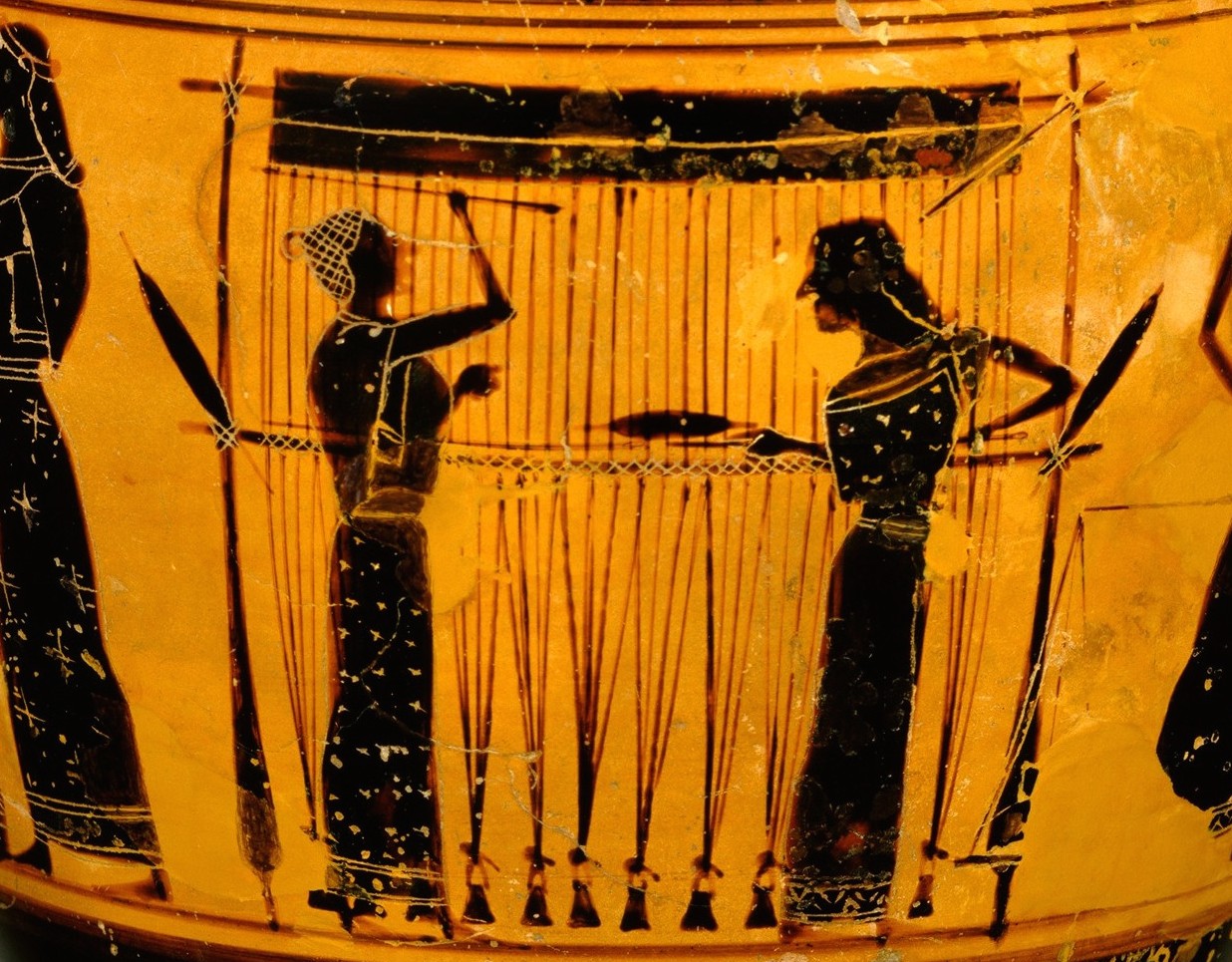
Loom Scene, black-figure lekythos (550-530 BCE)
Metamorphoses 6: Minerva's contest with mortal Arachne of Lydia (theme of impiety toward gods); Minerva's tapestry features contest of Athena & Poseidon, cautionary tales of divine challengers (6.85-102)
Metamorphoses 6.61-9 (Minerva's and Arachne's artistry > Metamorphoses' dazzling tapestry)
... Woven in purple concocted in Tyrian pots
and delicate shades that invisibly shift,
as when sunrays shine through a shower of rain
and a rainbow curves color across the wide sky;
in it glows the whole spectrum of hues,
but from one to the next a haze fools out eyes.
Each shade like the next, but the ends: so distant!
Woven in too is wiry gold thread—
and plottted into each web are old stories.
.jpg)
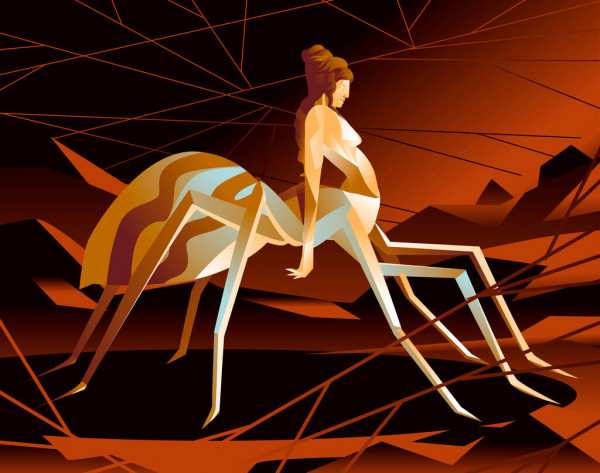
L: Houasse, Minerva and Arachne (1706)
Metamorphoses 6.103ff. (Arachne & her tapestry are "censored")
Arachne weaves Europa tricked by a make-believe
bull: but you'd think it's a real bull
and a real sea ...
[Arachne's stories?]
... Neither Minerva nor gnawing Envy could niggle
with her work. Her triumph pained the golden goddess:
she ripped that cloth colored with godly assaults
and, clutching her shuttle of Cytorian boxwood,
hit Arachne three or four times in the head.
The girl couldn't bear it and slipped a noose around
her pounding throat. But Minerva pitied and lifted
her, saying, "Live on, bold girl, but hang all the same.
So you'll be worried for the future as well,
may your line bear this punishment always." [metamorphosis & aetiology?]
- Metamorphoses 1: chaos & order > desires of the gods (Apollo & Jupiter)
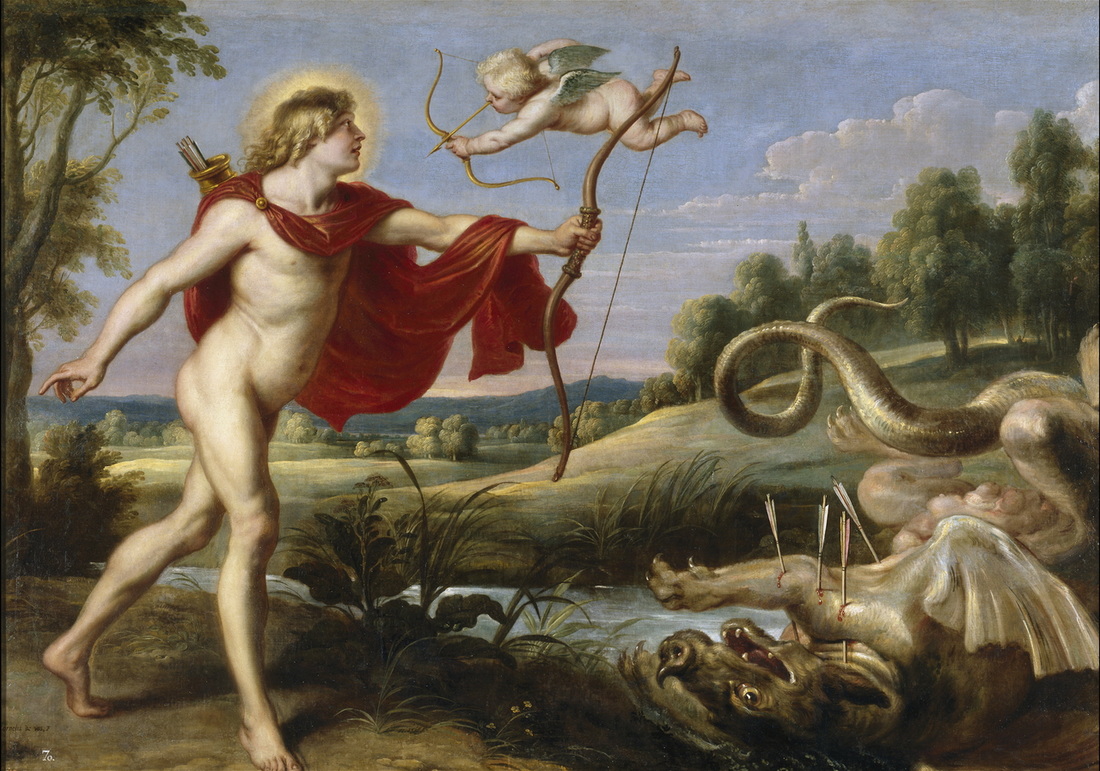
Cornelis de Vos, Apollo and the Serpent Python (ca. 1636)
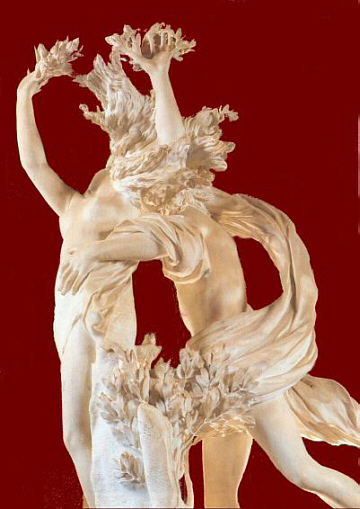
- first post-creation story: Apollo & Daphne: Apollo slays Python (Delphi), but yields to Cupid's arrows (epic > love poetry)
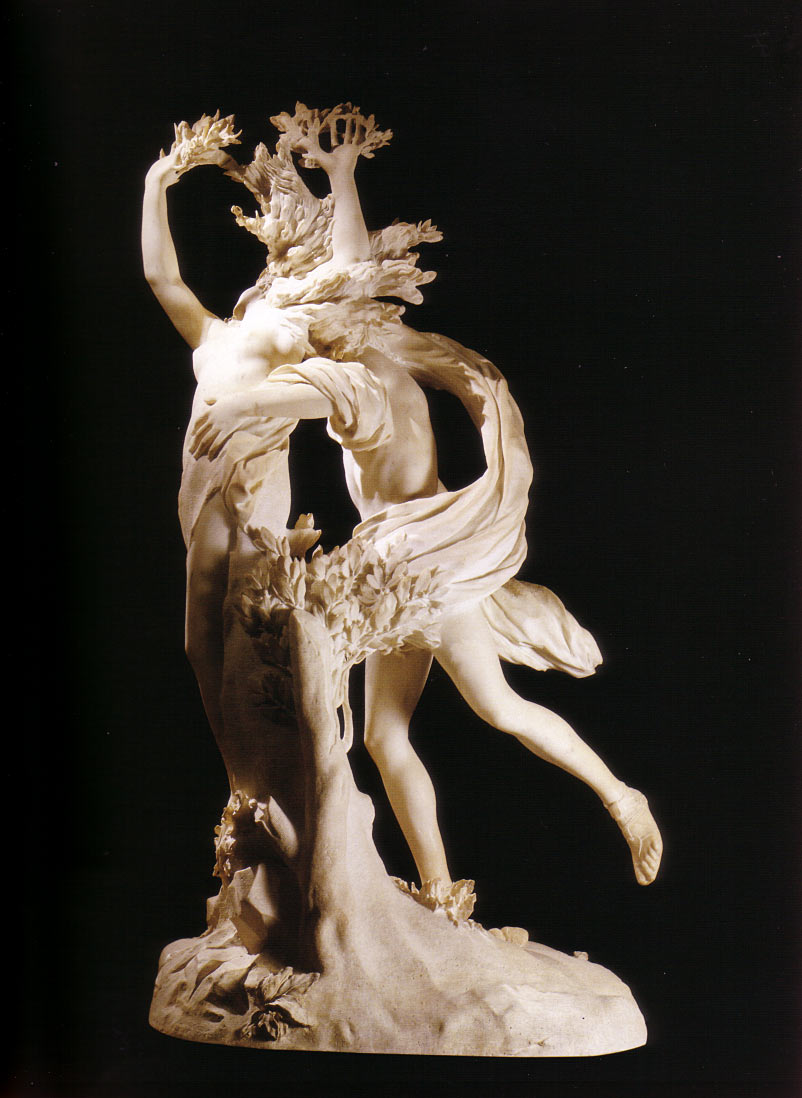
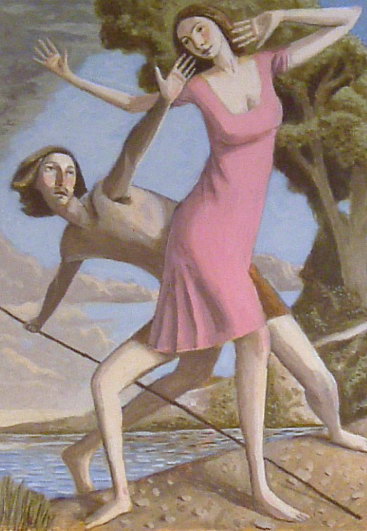
L: Bernini, Apollo and Daphne (ca. 1625)
- Apollo's powerful desire (gaze) vs. Daphne's (devotee of Diana): unimpressed by Apollo's resume, appeals to father Peneus
Metamorphoses 1.546-67 (transformation & Romanized conclusion) [Reader: Makayla]
"Help me, Father, if there's mystic strength in your stream,
destroy this form that's too pleasing: change me."
Words barely uttered when slowness seeps in her limbs,
delicate bark nestles around her soft breasts,
her hair fans into leaves, arms lengthen to branches,
the feet just so quick sink down sluggish as roots,
her face turns leafy crown: all that stays is splendor.
Apollo loves her this way, too, touches the trunk,
can feel the nymph's heart beating beneath the new bark.
Holding a branch like an arm in his own, he kisses
the wood, but even it shrinks away from that kiss.
So the god says, "Since you cannot be my bride,
you will be my tree, laurel, and your leaves
will twine about my hair, quiver, and lute.
You'll be with Roman leaders when the song of glory's
sung and the Capitol sees parades of triumph; [laurel on chariot]
you'll stand as faithful sentinel by the twin gates
of Augustus and guard the oak wreath hung between. [laurels before palace of emperor, "civic crown"]
And as my head is young, my hair's never shorn,
you too will have forever an evergreen grace."
The Healer was done. The laurel made a sign
with her branches, seemed to shake her leafy crown.
[immortality, compensation?]
"Our identities matter in core classrooms" (Columbia Daily Spectator op-ed)
- cf. Arethusa's metamorphosis (Greek nymph/hunter > spring in Siciliy); her story (told to Ceres)?
.jpg)
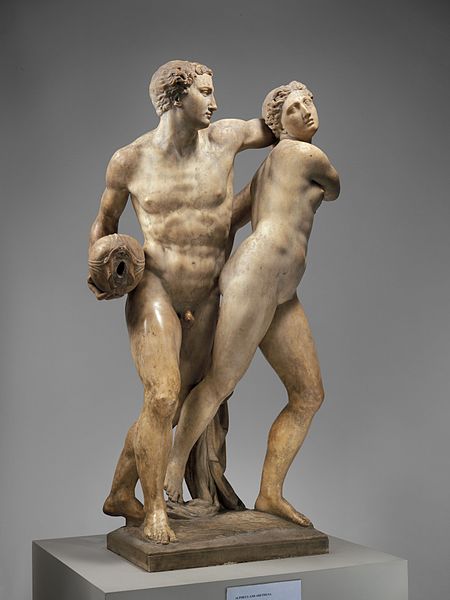
L: Lorenzi, Alpheus and Arethusa (1568-70); R: Head of Arethusa, Syracusan coin (405-400 BCE)
Metamorphoses 5.630-41 (Diana's cloud; Arethusa's terrifying transformation)
Alpheus stays put (for he saw no footprints
trailing off). He stood and watched my cloud, my spot.
A chill sweat seeped out of my haunted limbs;
deep blue drops slid from all over my skin.
Wherever I stepped turned into a pool, dew dripped
from my hair, and faster than I can tell this tale,
I'd become a stream. But the river-god knew me
even liquid, shed the man's form he'd assumed, turned
into his water-self so he could flow within me.
Then Diana tore open the earth. I drove through dark
caves and reached Ortygia, which I love because
it's Diana's name, too: here I burst into air." [freshwater spring, Sicily <> Alpheus River in Greece]
- Echo & Narcissus (Thebes, link through Tiresias: boy will live long "As long as he never knows himself", 3.348)
- theme of self-love (Echo's back story; failed pursuit of Narcissus and metamorphosis, "her bones became rock", 3.401)?
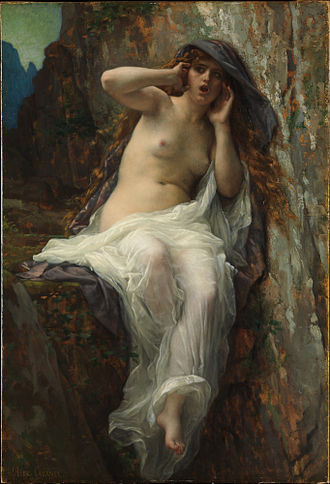
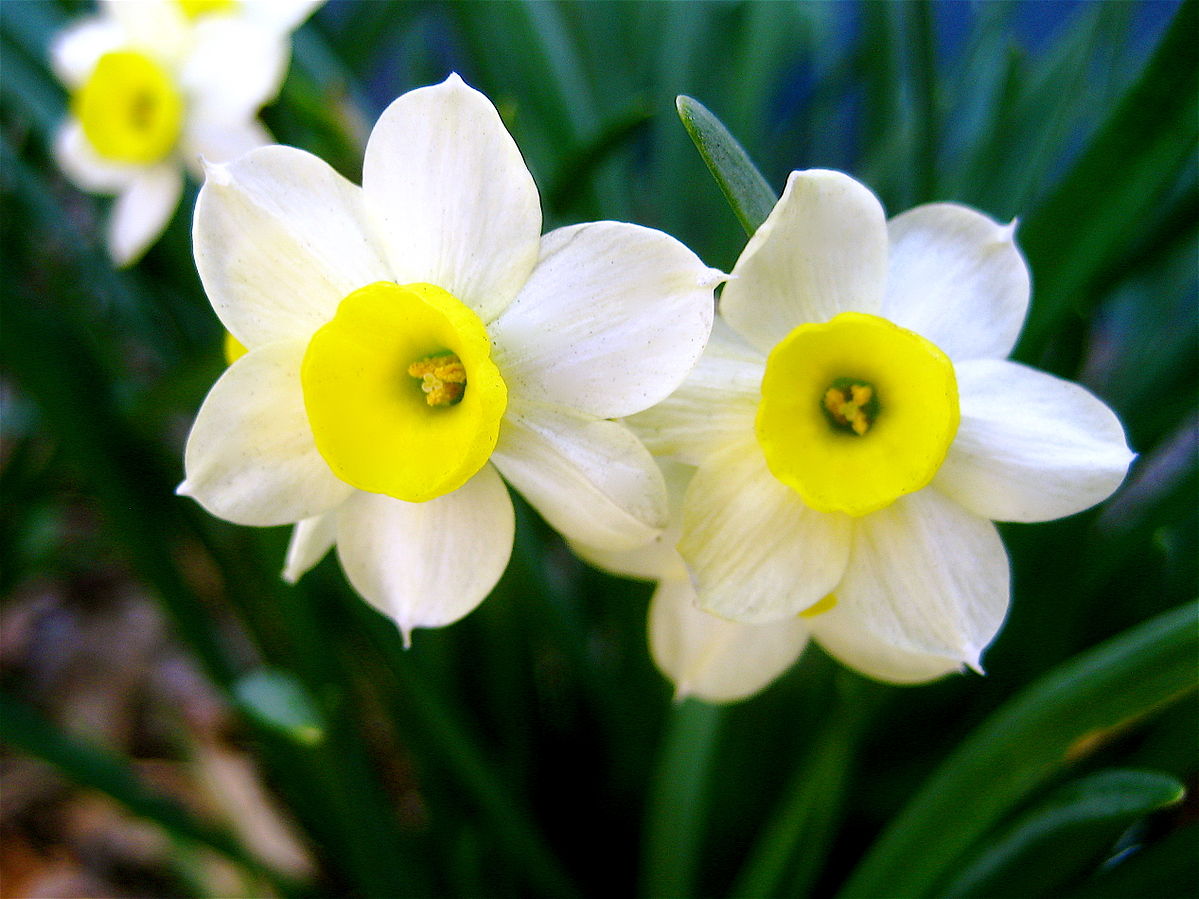 L: Alexandre Cabanal, Echo (1874); R: Narcissus flower
Metamorphoses 3.455-473 (Narcissus' realization; the fatal paradox of self-love) [Reader : ?]
"Surely my looks and age
can't repell you—even nymphs have adored me.
What hope your face offers I cannot quite read,
but when I reach for you, you reach for me, too;
when I smile, so do you; and I've spotted tears
on your face when I cry. You signal with nods
and I can guess by your sweet murmuring mouth
that you answer my words with yours—I can't hear.
I am he. I knew, my image doesn't delude me.
I burn with love for myself, fan and feel the same flames.
What do I do? Chase or be chased? Why chase at all?
What I want I have: needing nothing makes me poor.
Oh, if only my body and I could divide!
Odd wish for a lover: to want the loved one to go.
This hopelessness will kill me; I can't have long
to live and will be put out while still young.
But death doesn't disturb me—no more despair.
Only I wish the one I love could live longer.
Now the two of us will die with one breath." [his metamorphosis?]
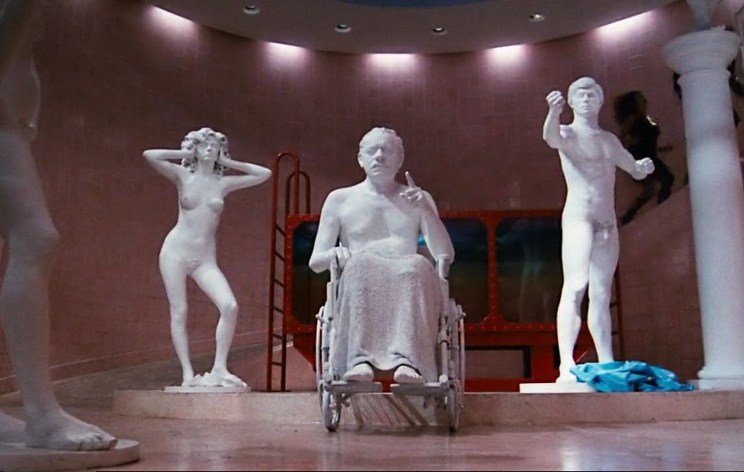
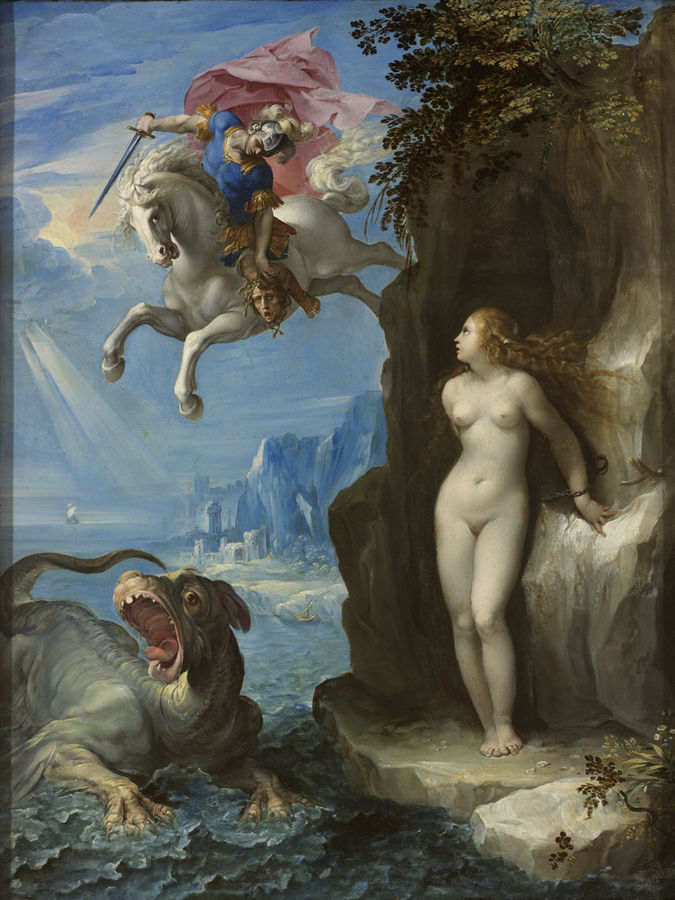
L: The Rocky Horror Picture Show (1975); R: Cesari, Perseus & Andromeda (1592)
- Peseus & Andromeda: rescue followed by pre-wedding party, story of quest for/conquest of Gorgon relegated to end of Ovid's account; Medusa's back story?

Böcklin, Medusa (1878)
- Metamorphoses 10 (misogynistic Orpheus narrates): Venus' Cyprus and the Propoetides, scorners of Venus & first prostitutes, "Pygmalion was sickened by the ingrained flaws / of the female mind and so lived alone" (10.244-5)
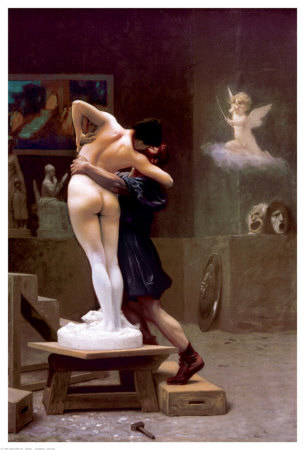
Gérôme, Pygmalion and Galatea, ca. 1890
- Pygmalion the sculptor: creation of his “ivory girl” (10.276, named "Galatea" in later texts); desire to mold beloved
Metamorphoses 10. 250-8 (Pygmalion contemplates representation and reality)
It looks like a real girl you'd think is alive
and longs to be moved, except shyness intrudes—
art masks his art so well. Pygmalion's in awe;
flames of love for the feigned body flick at his heart.
he touches it often with curious hands to see
if it's flesh or ivory—it can't be ivory.
He feels his fingers sink in the limbs and he strokes
and then fears where he's touched might bear a bruise.
Metamorphoses 10.280-94 (Pygmalion's statue comes to life after he prays to Venus)
At home, he hurried to his modeled girl,
leaned on a couch, and kissed her: Was she really warm?
He brushed her lips again and touched a breast;
when he stroked, the ivory gave, no longer firm
but soft to his touch, as when Hymettian wax
melts in the sun and, turned about one's thumb,
is molded to forms, more pliable with plying.
Amazed, thrilling nervously, afraid that he's wrong,
again and again the lover strokes what he's wished.
It is a live body; veins beat at his thumb!
Then indeed our Paphian hero bursts with words
of thanks for Venus and presses real lips at last
with his own. The girl feels the kisses he gives
and goes pink. Then, lifting shy eyes toward the light,
she sees at once both lover and sky.
Lars and the Real Girl (2007):
(trailer) https://www.youtube.com/watch?v=XNcs9DrKYRU
https://www.youtube.com/watch?v=lwltl2P5DJA