CLAS 353
September 6, 2023
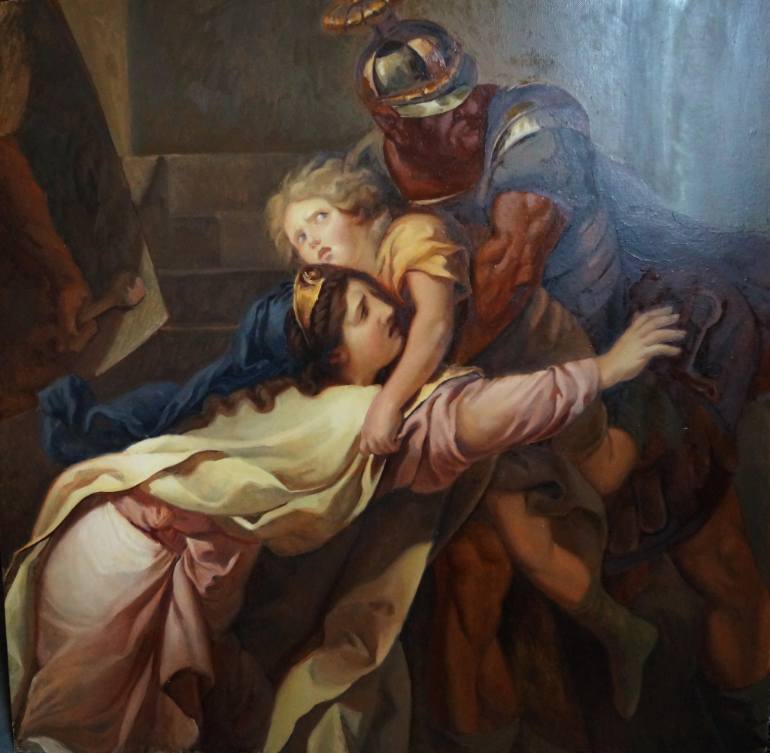
Doyen, Andromache Defends Astyanax (1763)
Aeneid 3 & Aeneas' Wanderings (cont.)
- Andromache's trauma: uncertain Aeneas is real/alive; what's she doing in "a place for tears" (3.306)? Andromache and Dido?
- Aeneas' reaction to Buthrotum: "I wept as I spoke my parting words: / 'Live well, you whose fate has been fulfilled / while we are called from destiny to destiny. / You've won your relief. There's no sea to plow, / no fields of Italy to seek as they recede'", 3.492-6 (Troy/past vs. Rome/future)

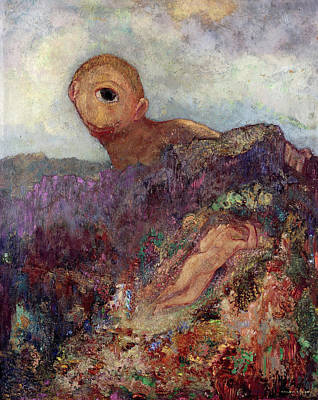
L: Odysseus blinds Polyphemus (7th century BCE vase); R: Odilon Redon, The Cyclops (1914)
- "Italy!" (3.524); story of lost Greek Achaemenides (Vergil's invention) in land of Cyclopes in Sicily (3.590ff.); death of Anchises at Drepanum, Sicily; Juno's storm drives Trojans to North Africa (Aeneid 1)
- internal narrative of Aeneas’ wanderings finished ("Ending it at last like this, he fell silent", 3.718)
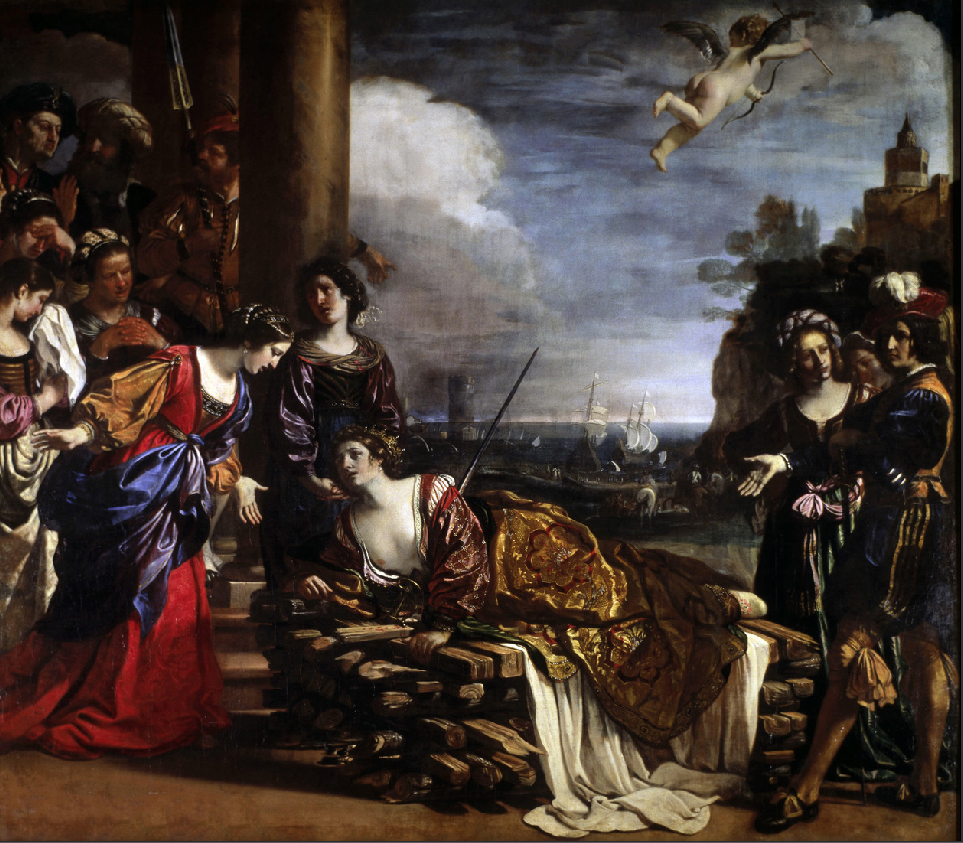
Guercino, Death of Dido (1631)
Aeneid 4: the tragedy of Dido (elaborated by Vergil); queen/leader/colonist turned tragic figure; story of female helper abandoned by ungrateful male hero (e.g. Jason, Theseus); Dido's descent into tragic madness/suicide (cf. uncompromising heroes of Homer & Greek tragedy, esp. honor/shame of Sophocles’ Ajax); Dido to Anna, "I just need time for peace and space for passion, / until fortune teaches me to bear my loss" 4.433-4)

Dido and Aeneas fresco (Pompeii, 1st century CE)
- meeting of Dido & Aeneas (traumatized exiles) in Aeneid 1
Aeneas: "O Queen, only you have ached for Troy's ordeal" (1.597, scene at Juno's temple)
Dido: "Fortune once
harassed me with hardships like your own. At last,
the fates let me settle in this land. Knowing
pain, I can learn to help the pain of others."
(1.627-30)
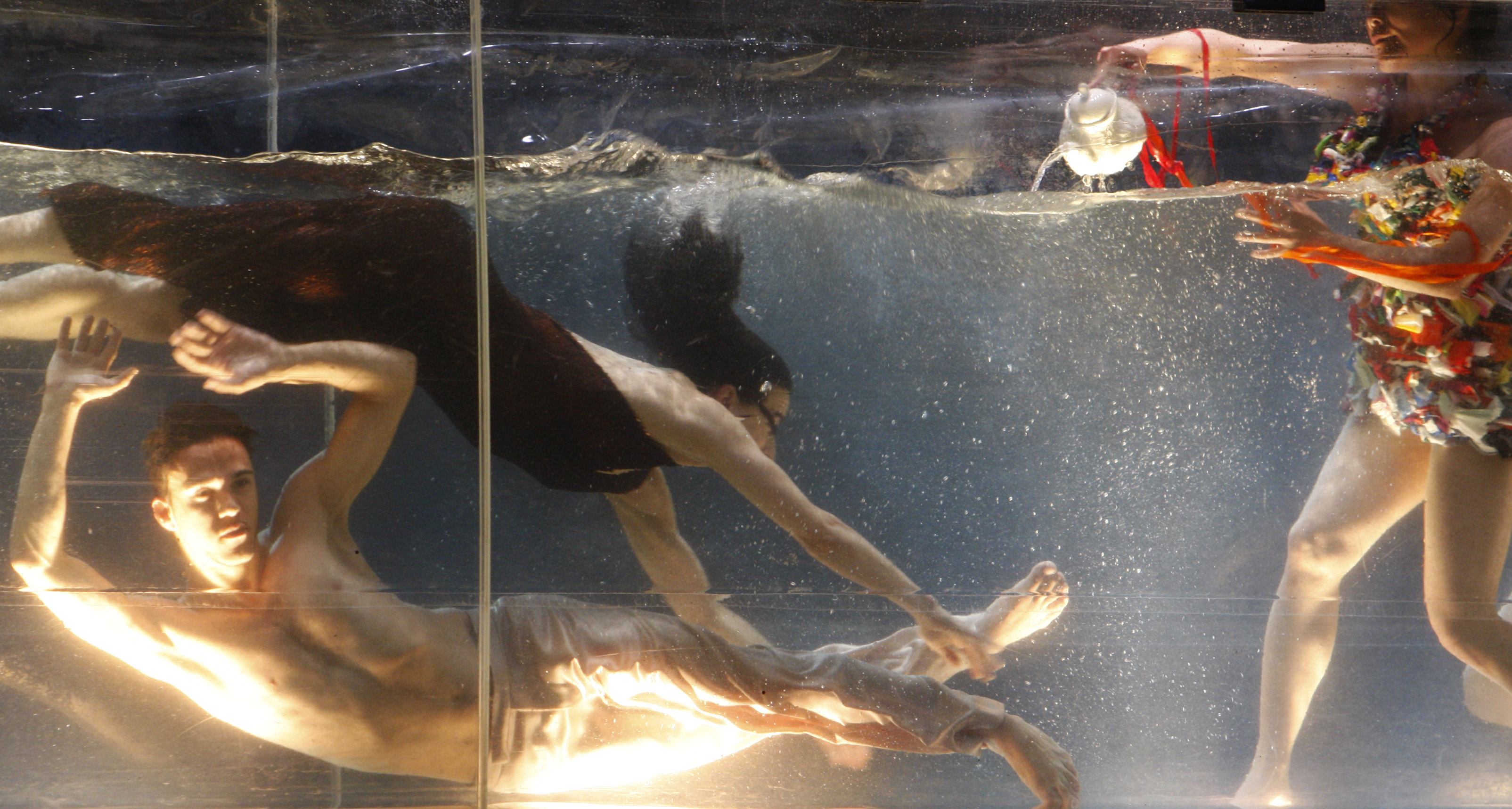
Underwater Performance of "Dido and Aeneas" opera (Germany, 2008)
- Dido's conflicted self (idealism v. pragmatism): Sychaeus' memory (univira, "women with one husband"), "The man who first married me / Still has my love. Let him guard it in his grave", 4.28-9; marble temple, 4.457ff. (cf. Andromache); fixation on Aeneas ("now she hosted the same banquet when night fell, / and madly begged to hear his hardships once again", 4.76-7)
Aeneid 4.68-73 (Dido/deer simile)
Mad with love, she wandered
through the city—like a careless doe pierced by
a shepherd's arrow from afar as he roams
the Cretan forest with his bow. Unknowing,
he leaves the shaft behind; she bolts through Dicte's
groves, the fatal arrow in her flank.
- Vergil's sympathetic treatment of Dido: subjective style vs. “objective” style of epic narrator; emotional engagement with characters (cf. Homer's apostrophes of Patroclus in Iliad 16); narrator may embed subjective viewpoint of a character ((narrative) focalization); narrator's/poem's "personal voice"
Aeneid 4.397-412 (Dido watches the Trojans' preparations from her tower)
Now the Trojans fell to work in earnest.
Eager to escape, they pulled the ships to shore,
set afloat the pitch-smeared keels, and brought in
leafy branches from the woods for making oars.
You could see them swarming all over the city:
like ants, when they pillage a huge heap of grain,
mindful of the winter, and store it in their home:
a long black stream hauls plunder through a narrow
pathway in the grass.
Some roll giant grains,
pushing with their shoulders; others mind the line
and chastise stragglers. The pathway teems with work.
What did you feel then, Dido, as you watched?
How did you grieve, seeing from your citadel
the bustle on the shore before your eyes,
seeing the bay alive with so much shouting?
Cursed love, you make us stoop to anything.
- narrator's moralizing, e.g. "Juno . . . saw Dido / in the fever's grip, saw her reputation / would be no block to passion", 4.90-1; "she [Dido] says / they're wed. With this word she masks her fault", 4.171-2 (narrator's/poem's "public voice"); civic consequences for Carthage (4.86-9)?
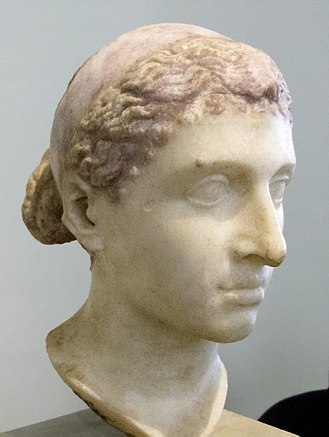
Sculpture of Cleopatra VII (mid-1st century BCE)
- cf. Cleopatra VII & Antony (defeated by Octavian at Battle of Actium, 31 BCE); Roman "Orientalizing"
Aeneid 4.259-67 (following Iarbas' complaint about "that Paris, with his retinue of half-men", Mercury confronts Aeneas)
As his winged feet lit down by the city outskirts,
he saw Aeneas building forts and homes.
The sword he wore was starred with tawny jasper,
the cloak clasped on his shoulders gleamed with purple dye,
a gift rich Dido wove for him, working his cloth
with golden thread. Mercury accosted him.
"So, you lay foundations for high Carthage?
Building a fine city, acting the good husband?
[Aeneas is uxorius]
You forgot your kingdom and your fate! . . . "
*GROUPS*
- mysterious (non-)marriage: motivations of the goddesses, Juno (marriage) and Venus (love/sex)
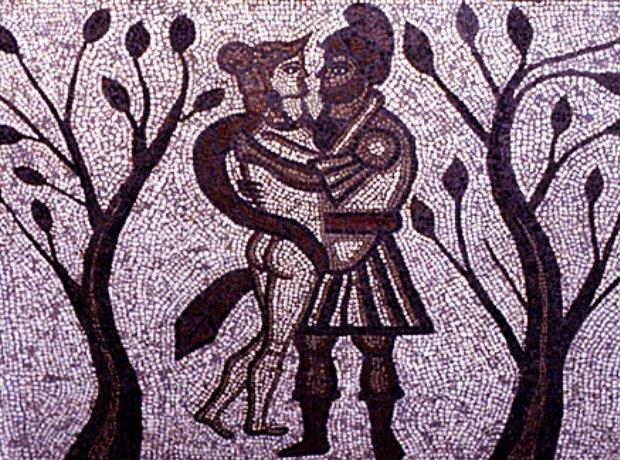
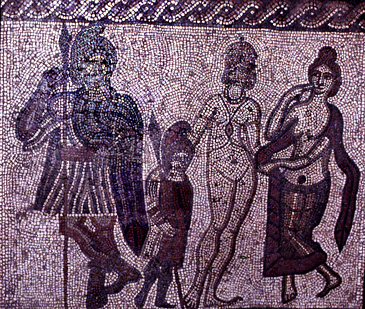
Low Ham, England, Dido and Aeneas Mosaic (4th century CE)
Aeneid 4.160-72 (the hunt)
Meanwhile the sky begins to change. Loud rumblings
bring on a sudden storm of rain and hail.
They scatter through the fields—the Trojan men,
the band of Tyrians, and Venus' Dardan grandson,
cowed and seeking cover; torrents run down the hills.
Dido and the Trojan prince reach the same cave.
Ancient Earth and Juno, goddess over marriage,
give the signal. Lightning flashes, nymphs howl
[ulularant; cf. the assault on Priam's palace (2.487-8)
from the hills, the sky is witness to the wedding.
This was the first day of death, the first cause
of ruin. She's unmoved by rumor or appearance
and no longer plans to hide her love: she says
they're wed. With this word she masks her fault.

Scenes from Aeneid 4 on Illustrated medieval manuscript of Vergil
- Dido's descent into tragic despair/insanity after Anna's appeal to Aeneas fails: ". . . she seemed to hear her husband's voice, / calling her when dark night held the earth . . . She always found herself / alone on a long road, in a frenzy, / looking for her Tyrians in desert lands, / like mad Pentheus . . ." (4.460ff.)

Pentheus dismembered (Attic red-figure vase, 480 BCE)
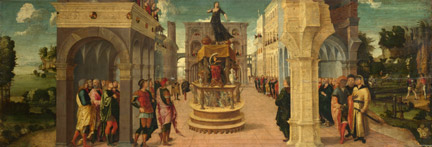
Liberale de Verona, Dido's Suicide (ca. 1500)
- "Fall of Carthage": Aeneas & Trojans (re)inflict their city's trauma on Carthaginians
Aeneid 4.667-71
Houses groaned with grief and women's wails,
and the sky echoed the clamor, as if Carthage
or ancient Tyre were falling, and the enemy
were in the city—raging fires rolling through
the homes of men and temples of the gods.
Scenes from Aeneid 4 on illustrated medieval manuscript of Vergil
- Dido's historical curse (aetiology for Punic Wars): “Rise up from my bones, unknown avenger, / hunt the Dardan colonists with flames and swords", 4.625-6)
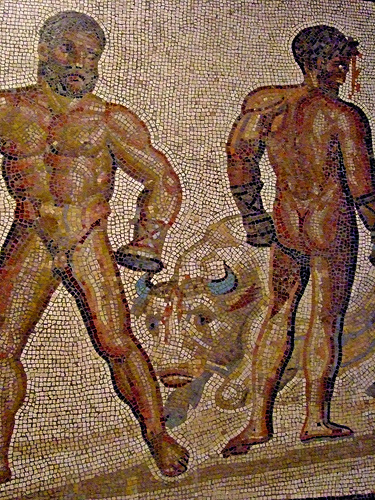
Aeneid Boxing mosaic, Roman France (2nd century CE)
Aeneid 5: calm book between Aeneid 4 and 6; Trojans' flight, sight of flames in Carthage (cinematic, Trojan misgivings, "No one knew what caused the blaze . . .", 5.4); year has passed in Carthage (Anchises' death in Sicily, funeral games)
.