CLAS 355
January 17, 2023
Roman Slavery (Introduction)
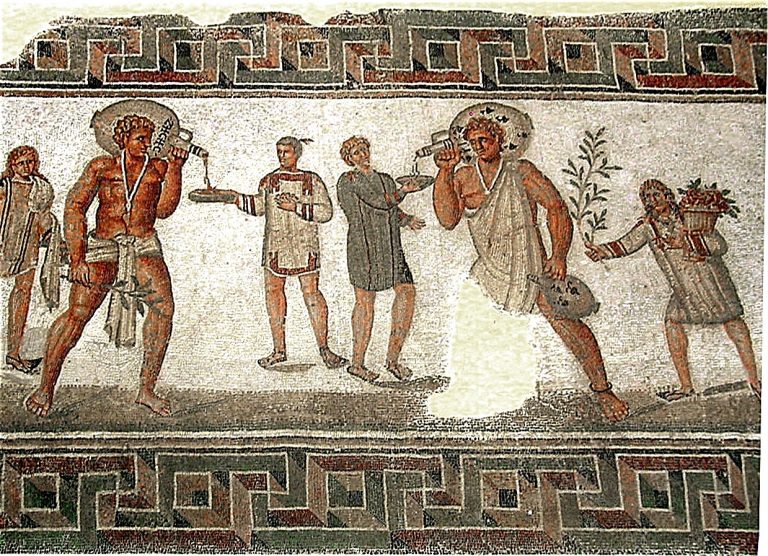
Slave Mosaic from Roman North Africa, 2nd century CE
Mapping Rome's History:
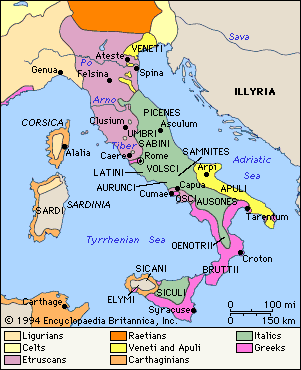
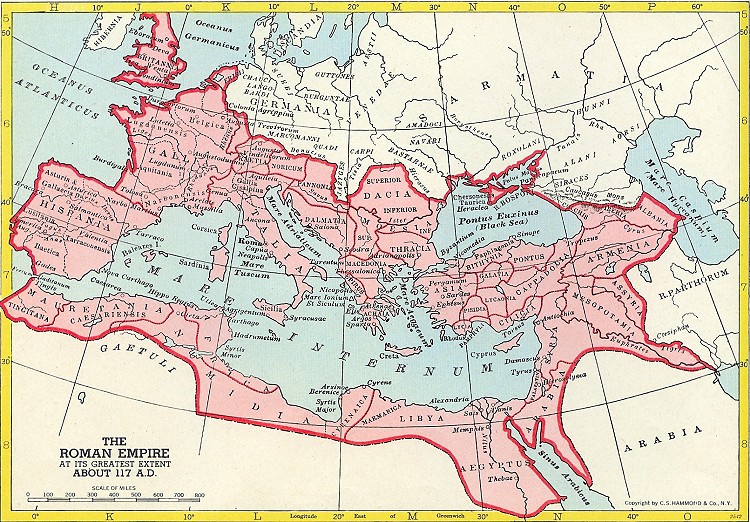
Overview of Roman Slavery
- legal ownership of persons as property ("chattel slavery"): slaves dishonored, powerless, dehumanized objects; denied legal rights, protections & privileges of free citizens, ownership of property, bodily integrity, deprived of family & history (cf. "slaves don't have parents" joke in comedy)
Cato, On Agriculture 2 (instructions for the farm's manager)
Give orders that whatever may be lacking for the current year be supplied; that what is superfluous be sold; that whatever work should be let out be let . . . Look over the livestock and hold a sale. Sell your oil, if the price is satisfactory, and sell the surplus of your wine and grain. Sell worn-out oxen, blemished cattle, blemished sheep, wool, hides, an old wagon, old tools, an old slave, a sickly slave, and whatever else is superfluous. The master should have the selling habit, not the buying habit.
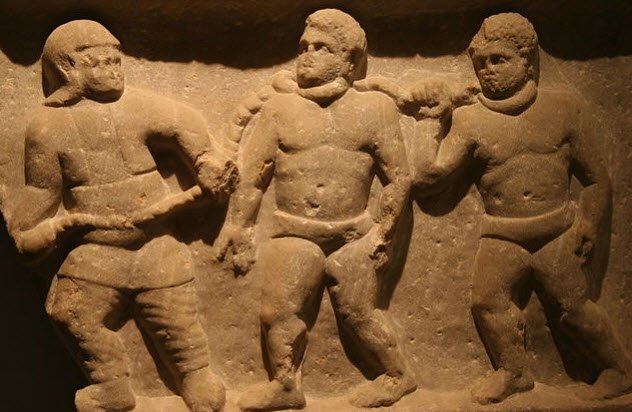
Relief sculpture depicting a chained slave, Smyrna, ca. 200 CE
- slavery's foundation of violence; slave's physical vulnerability & domination through violence (whipping & torture); iniuria ("outrage, injustice") constant over time
Inscription from Puteoli, S. Italy (on hiring torturers, 1st century CE)
Whoever wishes to exact a punishment from a slave-man or slave-woman privately, let that person exact punishment thus: if he wishes to have the slave crucified on a beam, let the contractor and floggers provide the poles, the shackles, the ropes for the floggers; and whoever exacts this punishment must pay four sesterces each to the individual laborers who bring the crossbeam and to the floggers, as well as to the executioner.


Artifacts: chained slave relief, 2nd-3rd centuries CE; R: Roman slave collar & tag ("I have run away: hold on to me")
- sources of slaves: prisoners of war (increases with conquests), pirates/kidnapping, exposed children; enslaved women & their children; slavery present from start of Roman Republic (509 BCE; Rome founded in 753 BCE), 2nd century BCE influx of slaves (Mediterranean empire); ethnic aspects, but not slavery by race/skin color
- functions of slaves: labor on country villas & corporate farms, in urban shops, masters' business agents, domestic & highly specialized "servants"; status symbols
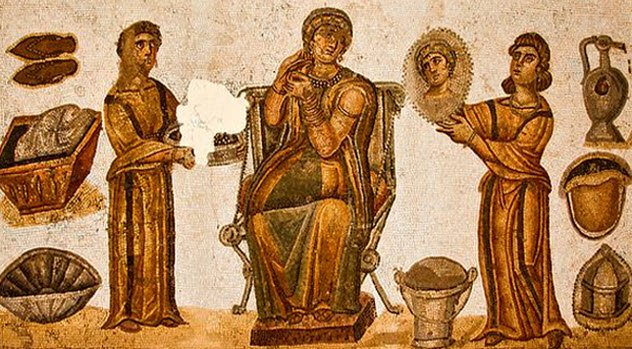
Mosaic representation of female slaves attending their mistress/owner
- slaves' position in Roman society (Republican oligarchy > Imperial autocracy from 27 BCE on): free citizens (hierarchically ranked), stigmatized freed persons (outsiders inside Roman society), slaves (outsiders): society of rigorous divisions and inequalities (power, status, duties, (dis)honor, rights & privileges)
- manumission an incentive to work (personal funds = peculium; reward of master in will); freed persons beholden to masters (client/patron), obligations & burdens (personal gratitude & service obligation)

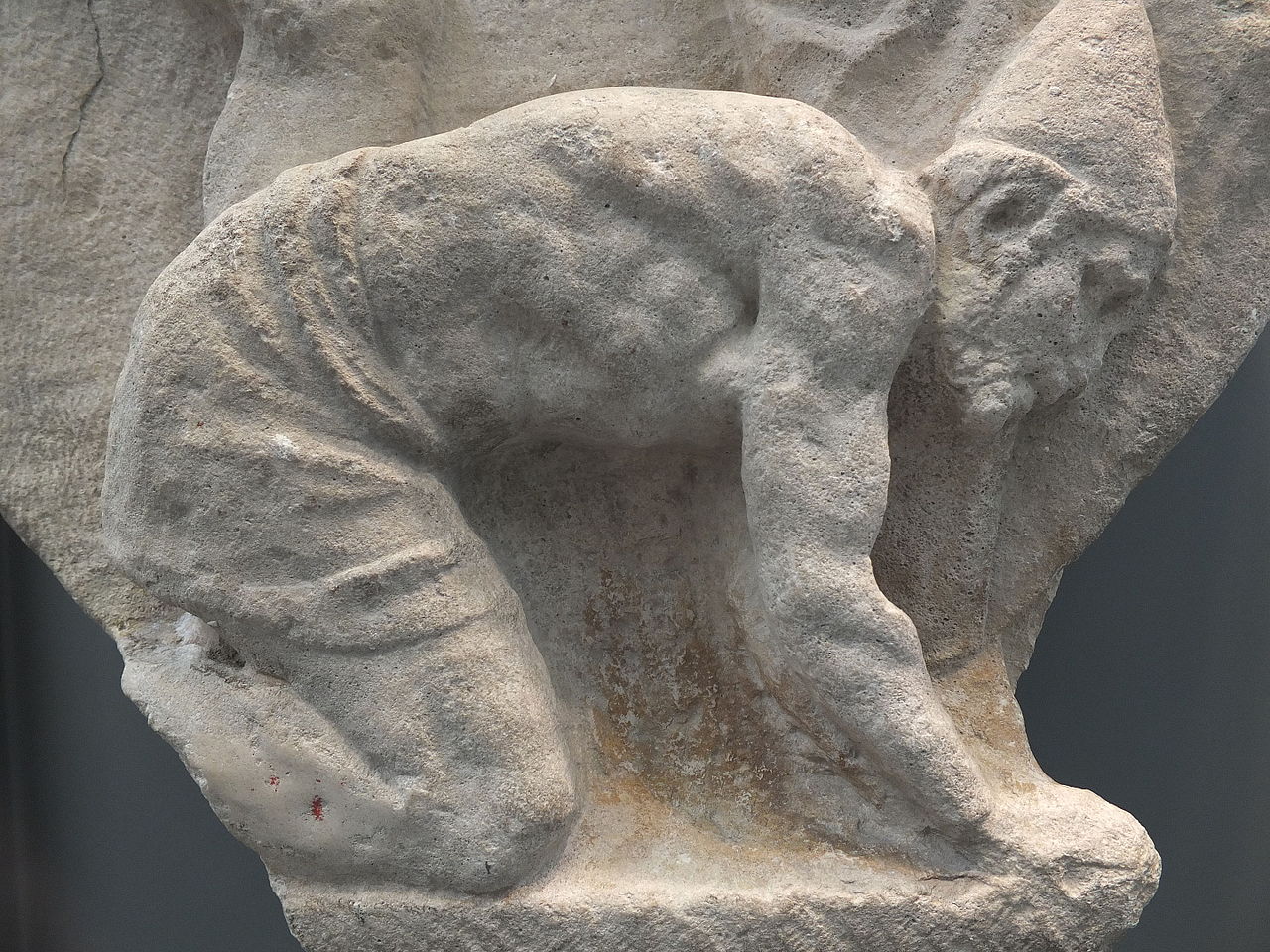
Relief sculpture depicting manumission ceremony, 1st century BCE
- overall stability/normalization of system: slave rebellions in late 2nd century BCE (Slave Wars in Sicily); challenges to Roman order; armies of slaves drawn from rural population by charismatic leaders vs. Roman legions (> further state investment & control, regulation)
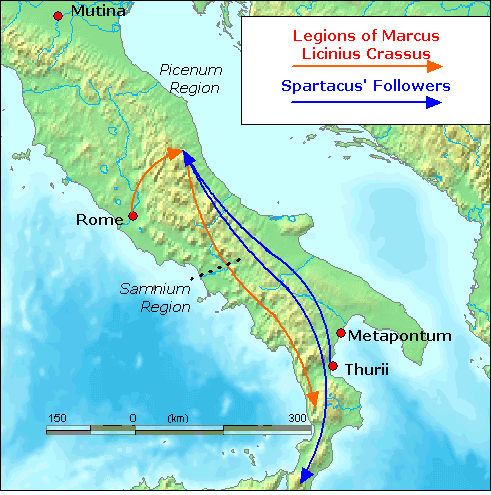
- Spartacus's revolt in 73 BCE (gladiator barracks in Capua); Spartacus's army of 70,000-120,000 finally defeated by Crassus in 71 BCE; 6,000 crucified along Via Appia (Rome to Capua); slaves' inability to effectively organize and arm themselves vs Roman armies & government; enforcement of slave system stabilizes (isolated cases of masters killed by slaves), esp. in imperial bureaucracy
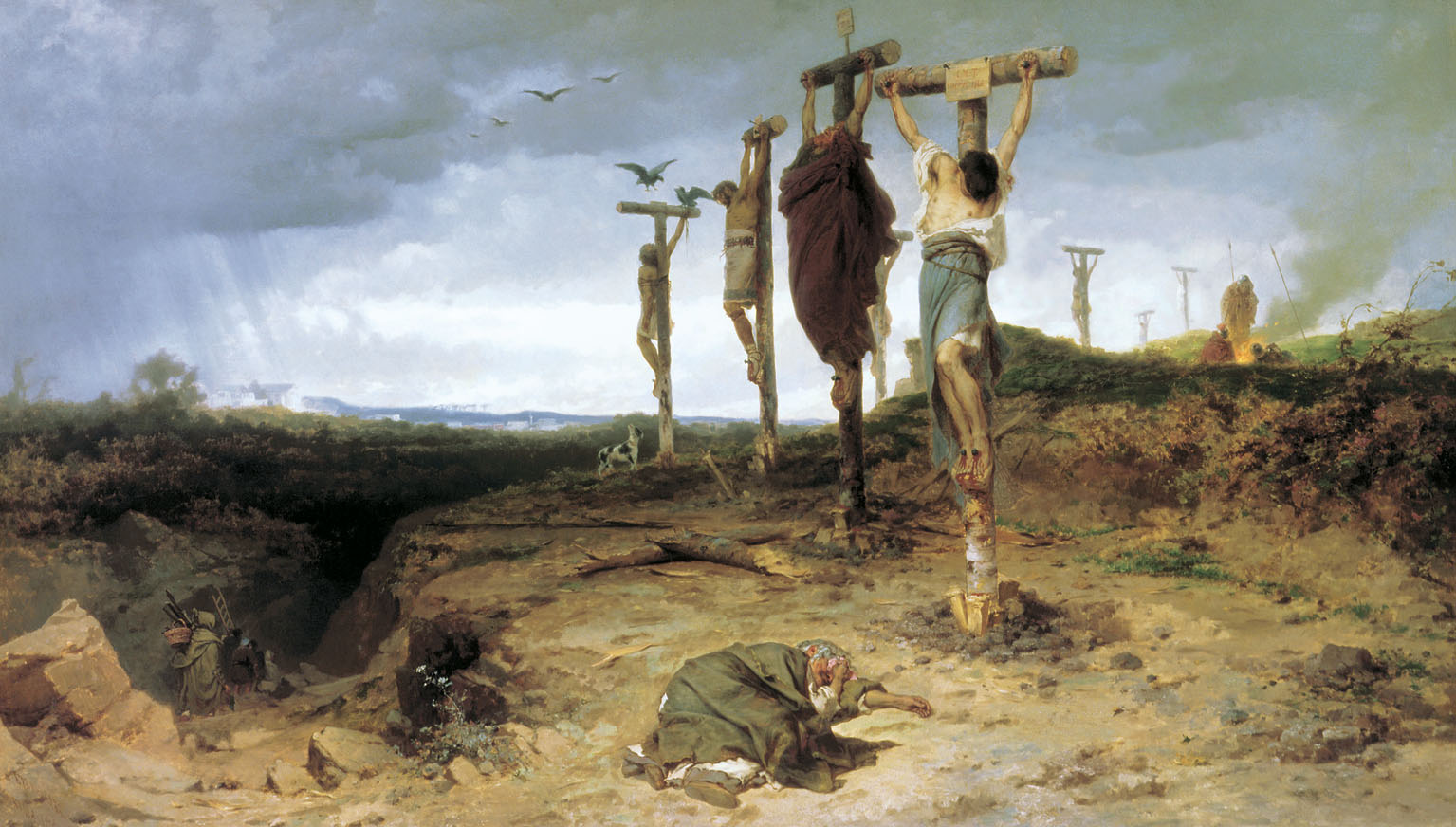
Fyodor Bronnikov, The Cursed Field, 1878
Stanley Kubrick, Spartacus (1960): gladiatorial fight at Capua: https://www.youtube.com/watch?v=251eT20NtOI
"I'm Spartacus" solidarity scene : https://www.youtube.com/watch?v=FKCmyiljKo0
Spartacus ("Blood and Sand", Starz, 2010-13) trailer: https://www.youtube.com/watch?v=yHxn8mTpAJU
- regulations to restrict master's cruelty & murder of slaves; institution persists, despite "equality movements", esp. Stoicism (Seneca, died 65 CE), Christianity (Constantine, emperor 306-337 CE)
- experience of slaves: individually variable within institution's harsh parameters (lived social reality)
- contradictions in slavery (slave = "a tool with a voice"): slaves human (speech, emotions, needs, desires, etc.); enslaved by birth, chance, law; slave's humanity/subjectivity to be controlled (Plautus, Phaedrus)
GROUPS