CLAS 355
Masters' Practices, Lived Experience of Slaves
January 24, 2023
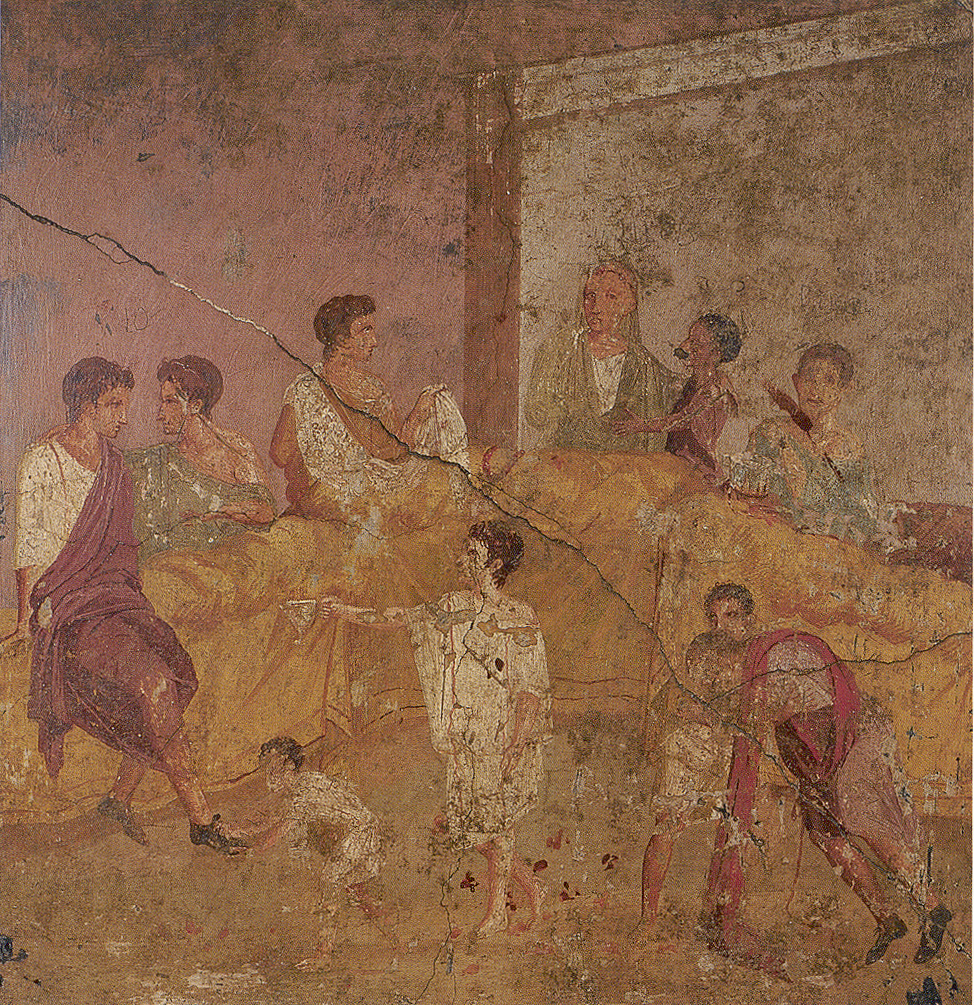
Dinner Party, House of the Triclinium, Pompeii, 1st century CE
Slaveholders' Practices (mostly rural slavery today; urban Thursday; today is the Inclusive Access Program's opt-out deadline)
Marcius Porcius Cato/"Cato the Elder" (234-149 BCE): Consul, Censor; arch-traditionalist
- On Agriculture (ca. 160 BCE): farming instruction manual during transition from family farms to Italian estates (latifundia) utilizing slave labor in wake of Roman imperialsim
On Agriculture, Introduction (trade & the landed aristocracy)
It is true that to obtain money by trade is sometimes more profitable, were it not so hazardous; and likewise money-lending, if it were as honorable. Our ancestors held this view and embodied it in their laws, which required that the thief be mulcted double and the usurer fourfold; how much less desirable a citizen they considered the usurer than the thief, one may judge from this. And when they would praise a worthy man their praise took this form: "good husbandman, good farmer"; one so praised was thought to have received the greatest commendation. The trader I consider to be an energetic man, and one bent on making money; but, as I said above, it is a dangerous career and one subject to disaster. On the other hand, it is from the farming class that the bravest men and the sturdiest soldiers come, their calling is most highly respected, their livelihood is most assured and is looked on with the least hostility, and those who are engaged in that pursuit are least inclined to be disaffected. And now, to come back to my subject, the above will serve as an introduction to what I have undertaken.

Roman Patrician Portrait, 1st century BCE
- Cato’s values? ("no gadding about!")
- villa a reflection of elite owner (morality, status, power, character, identity):
On Agriculture 1
See that it be equipped as economically as possible, and the land be not extravagant. Remember that a
farm is like a man—however great the income, if there is extravagance but little is left.
On Agriculture 3
It is well for the master to have a well-built barn and storage room and plenty of vats for oil and wine, so that he may hold his products for good prices; it will redound to his wealth, his self-respect, and his reputation.

Winemaking mosaic from the Church of Santa Constanza, 4th century CE
- human capital: slaves' care to ensure productivity & longevity ("[The overseer] must see that the servants are well provided for, and that they do not suffer from cold or hunger", On Agriculture 5); inventory of equipment for small vineyard (16 persons, 3 pruning hooks, 5 axes, 6 spades, 1 wash tub, 1 bath tub, 4 beds & mattresses, 1 chamber-pot, etc., On Agriculture 11)
On Agriculture 2 (chastising the overseer = vilicus for inefficiencies)
If it has been a rainy season, remind him of the work that could have been done on rainy days: scrubbing, hauling out manure, making a manure pit, cleaning seed, mending old harness and making new; and that the hands ought to have mended their smocks and hoods. Remind him, also, that on feast days old ditches might have been cleared, road work done, brambles cut, the garden spaded, a meadow cleared, firewood bundled, thorns rooted out, spelt ground, and general cleaning done. When the slaves were sick, such large rations should not have been issued.
On Agriculture 5 (controlling & managing slaves to maximize efficiency & production)
Let him keep them busy with the work—he will more easily keep them from wrongdoing and meddling. If the overseer sets his face against wrongdoing, they will not do it; if he allows it, the master must not let him go unpunished . . . [The overseer] must see to it that he knows how to perform all the operations of the farm, and actually does perform them often, but not to the point of becoming exhausted; by doing so he will learn what is in his servants' minds, and they will perform their work more contentedly.
On Agriculture 54-9 (allotment of provisions)
There is nothing more profitable than to take good care of cattle . . . Rations for the hands [grain/bread, wine, olive paste, salt, vinegar] . . . Clothing allowance for the hands: A tunic 3½ feet long and a blanket every other year. When you issue the tunic or the blanket, first take up the old one and have patchwork made of it. A stout pair of wooden shoes should be issued every other year.
- Roman slaveholders' ideological rationales for enslavement of human beings > normalizing & naturalizing slavery
Varro, On Agriculture 1.17.1, 1st century BCE (categorizing three types of instruments that till land on a villa)
. . . the class of tool which is articulate and that which is inarticulate and the mute; the articulate comprises the slaves, [instrumentum vocale, "tool with a voice"]; the inarticulate comprises the cattle, and the mute comprises the vehicles [cf. Aristotle, Nicomachean Ethics 1161b4, slaves as organa empsycha or "animate tools"]
1. slaves naturally inferior: foreigners, barbarians, enemies of Roman security/"civilization": inferiority of character (lack of reason, self-control, dishonesty vs. master's reputed values of honesty, loyalty, hard work, etc.); master's moral superiority justifies control of otherly slaves
2. paternalism, power, privilege: "father knows best"; the slaveholder's household as orderly socio-political hierarchy/microcosm of state; corporate body serving master's interests & preserving general social order (not individuals with basic freedoms, unalienable rights, etc.); cf. McCarter, "Seneca's 'Lost Cause'"
3. slaveholders' self-interest & narcissism: slave an extension of master, serves his will; slaves denied subjectivity, agency, their own inner experience; master entitled to slaves' devotion and loyalty; ideal slave (Edict of Aediles) obedient, loyal, hardworking, thrifty, etc.
- Roman slavery fundamentally an institution based on violence; whipping, chains, restraints, torture, ergastula = slave prisons, confinement to mills
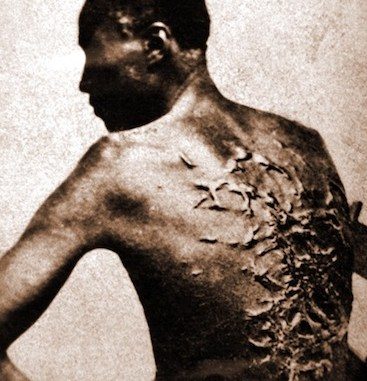
Photo of Union soldier & former slave
12 Years a Slave (2013), Oscar winning film based on Solomon Northup's memoir Twelve Years a Slave (1853); trailer: https://www.youtube.com/watch?v=z02Ie8wKKRg; whipping scene: https://www.youtube.com/watch?v=AO_DS2azJWU
Roman Slaves' Lived Experience
- adaptation, resilience & remediation of HTVT: families & unofficial marriages (contubernales, "tent-mates"), acting as legal families; acquisition of property (peculium) & entrepreneurship; supportive communities of conservi ("fellow slaves"), esp. commemorative burial societies (collegium/a) > the columbarium ("pigeon's nesting box")
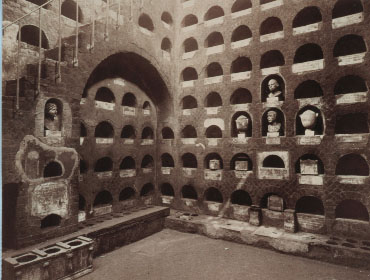

L: Roman columbarium; R: Etruscan columbarium
Dedicatory plaques in the columbarium of the Statilii Tauri, Rome, 1st century BCE
Sophro, slave of Sisenna Statilius, bookkeeper. Psyche his sister, and Optata his wife made this, CIL 6.6358
Optata, slave of Pansa, doorkeeper. Her friends made this, CIL 6.6326
Messia, Dardanian, spinner. Iacinthus, masseur, Dardanian, made this,
CIL 6.6343
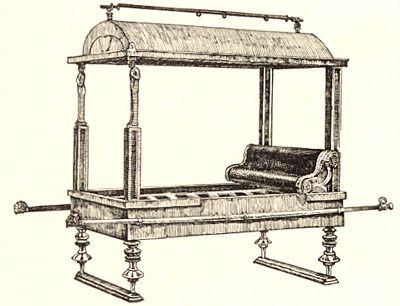
Iucundus, slave of Taurus, litter-bearer. While he lived, he was a man (vir) and acted on behalf of himself and others. While he lived, he lived honorably (honeste). Callista and Philologus dedicated this, CIL 6.6308
- slave resistance (assertions of power, personhood, agency & willfulness): range of actions to control labor, e.g. insolence, disobedience, duplicity/doublespeak, creating own walkways, stealing, lingering, witholding labor, escape, damaging property (including themselves!), killing masters**
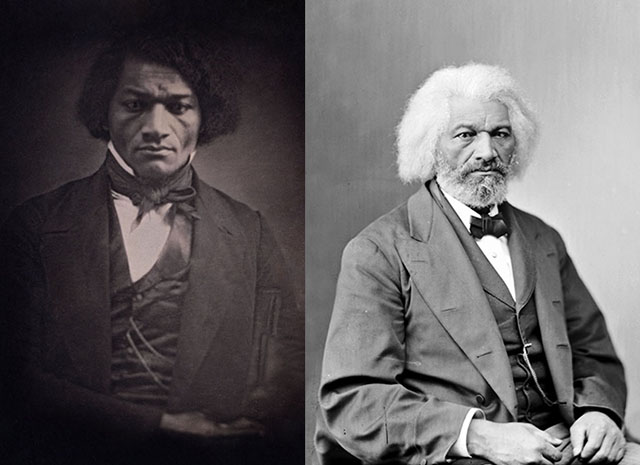
Frederick Douglass
" ... we were, therefore, reduced to the wretched necessity of living at the expense of our neighbors. We were compelled either to beg, or to steal, and we did both. I frankly confess, that while I hated everything like stealing, as such, I nevertheless did not hesitate to take food, when I was hungry, wherever I could find it. Nor was this practice the mere result of an unreasoning instinct; it was, in my case, the result of a clear apprehension of the claims of morality. I weighed and considered the matter closely, before I ventured to satisfy my hunger by such means. Considering that my labor and person were the property of Master Thomas, and that I was by him deprived of the necessaries of life, necessaries obtained by my own labor—it was easy to deduce the right to supply myself with what was my own. It was simply appropriating what was my own to the use of my master, since the health and strength derived from such food were exerted in his service. To be sure, this was stealing, according to the law and gospel I heard from St. Michael's pulpit; but I had already begun to attach less importance to what dropped from that quarter, on that point, while, as yet, I retained my reverence for religion. It was not always convenient to steal from master, and the same reason why I might, innocently, steal from him, did not seem to justify me in stealing from others." (My Bondage and my Freedom, 1855)
"Frederick Douglass on how Slave Owners Used Food as a Weapon of Control" (NPR story): https://www.npr.org/sections/thesalt/2017/02/10/514385071/frederick-douglass-on-how-slave-owners-used-food-as-a-weapon-of-control
"Mount Misery", home of slave-breaker Edward Covey, purchased by former Secretary of State Donald Rumsfeld: https://www.baltimoresun.com/news/bs-xpm-2006-08-20-0608200162-story.html
[cf. James C. Scott, Domination and the Arts of Resistance: Hidden Transcripts (1990)]
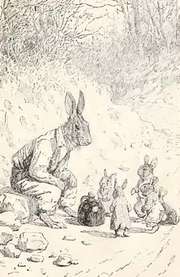
Brer Rabbit, the clever trickster (Uncle Remus)
- Plautus's clever slave, e.g. Pseudolus & creative/covert resistance in fiction (fables & folktales)
**Appendix on Hostius Quadra, killed by his slaves (Seneca, Natural Questions 1.16.1)
There was a certain Hostius Quadra who turned his obscenity into a dramatic spectacle. The deified Augustus judged that this rich, miserly man, a slave to his own hundred millions, did not deserve to be avenged after he had been killed by his slaves; he virtually declared that he had been lawfully executed. His impurity was not confined to one sex, but he lusted after men as well as women. He made mirrors of the type I have just described, giving off greatly magnified images, to which a finger appeared longer and thicker than an arm. He arranged them so that, when he was submitting to a man with his back to him, he could see his partner's very movement in a mirror; and then he delighted in the illusory size of his member as though it were real. He used to go recruiting in all the bath-houses and selected men after sizing them up; but all the same he used to thrill his insatiable vice with deceptions as well. Go on, tell us that mirrors were discovered so that we could look presentable! It is disgusting to speak of what that monster, who ought to have been torn to pieces by his own mouth, said and did when mirrors were placed all around him, so that he could be a spectator of his own enormities and could fill not just his mouth but his eyes with things that burden the conscience even when kept secret, things that anyone would deny having perpetrated even to himself . . . he surrounded himself with mirrors in which he could distribute and exhibit his shocking acts; and because he could not watch so attentively when he had lowered his head and fastened onto someone else's groin, he displayed his efforts to himself in images. He watched the lust of his own mouth; he watched the men whom he admitted at all points simultaneously; sometimes he shared himself out between a male and females, and so he passively submitted his whole body to them, he watched those unspeakable acts. What on earth did that impure man leave to do in the dark? He was not afraid of the daylight, but he exhibited to himself, he commended to himself, those monstrous couplings. Would you not expect that he even wanted to have his picture painted in art? . . . that monster had turned his own obscenity into a spectacle, and he exhibited to himself things that no night is dark enough to hide. "I submit," he said, "to a man and a woman at the same time. Nevertheless even with the part of me that is so far redundant I act the man for someone's humiliation. All my members are occupied in acts of debauchery; let my eyes have a share in my lust as well and be its witnesses and inspectors. Even the things that are kept out of sight by the structure of our bodies should be made visible by technology, so that no one can think I do not know what I am doing . . . I shall surround myself with the kind of mirror that gives off incredibly large inages. If I could, I would make them real; since I cannot, I shall feed on the illusion. Let my obscenity see more than it is capable of; let it be astonished at things it submits to." What an outrage! He was perhaps killed too quickly, before he could see it: he ought to have been sacrificed in front of his own mirror!