CLAS 355
Slave Labor
January 26, 2023
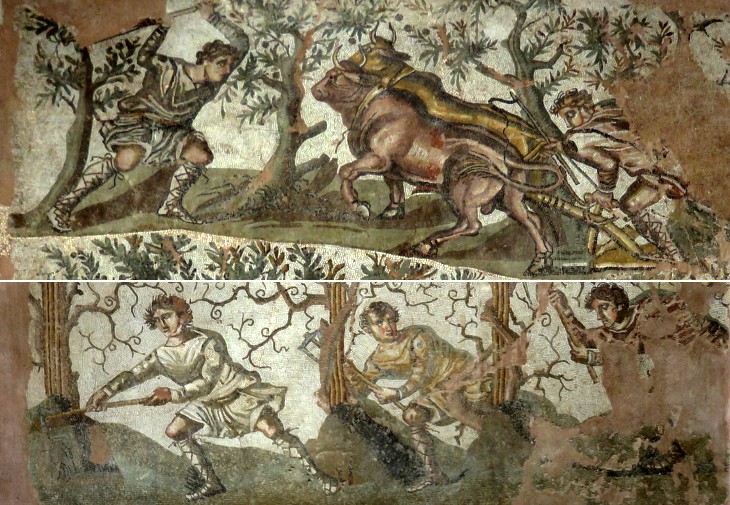
Farming mosaic from Cherchell, Algeria, 3rd century CE
[piece in today's New York Times about The 1619 Project and onging debates about US slavery's legacy]
The Work of Slaves (city vs. country)
Digest of Justinian 32.1.99pr. (essentializing slave-identity in law)
Where urban slaves have been bequeathed, some authorities distinguish them not by their place but by their work, so that even if they are on country estates but do not do country work they are held to be urban slaves . . .
Columella 1.8 .1-2 (Roman Spain, 1st century CE agricultural writer, De Re Rustica)
. . . my advice is not to appoint an overseer from the sort of slaves who are physically attractive, and certainly not from that class which has busied itself with the voluptuous occupations of the city. The lazy and sleepy-headed class of servants, accustomed to idling, to the Campus, the Circus, and the theatres, to gambling, to cookshops, to bawdy-houses, never ceases to dream of these follies.
(1) rural slaves (cont.): villa's crops, animal husbandry, olive oil & wine production, domestic duties; little known of individual experience; distanced from slaveholders (Columella 1.8.15 paternalistically calls for some worker contact/input)
- vilicus: Cato & Columella demand modest & moral life of vilicus, an extension of master; subject to orders of dominus/domina; wife (uilica) oversees domestic farm life (food, clothing)
Columella 1.8.7 (the ideal overseer & control of spaces)
He must have no acquaintance with the city or with the weekly market, except to make purchases and sales in connection with his duties. For, as Cato says, an overseer should not be a gadabout; and he should not go out of bounds except to learn something new about farming, and that only if the place is so near that he can come back. He must allow no foot-paths or new crosscuts to be made in the farm; and he shall entertain no guest except a close friend or kinsman of his master.
- male rural slaves' highly specialized work (e.g. "shepherd", "tree pruner", "bird catcher", "oil presser", "pig herder", "animal doctor", etc.)
- women: some work in fields & with animals; most assigned food-related and woolworking jobs; "production" of children (Columella 1.8.19: 3 sons = work-exemption, 4+ sons = freedom)
- daily labor, even on holidays (Cato); Saturnalia (7 days festival of Saturn in December; festivity, temporary liberties & social inversions)
- chain-gangs & ergastulum ("prison"); Columella 1.8.16-18, part of master's inspections of villa (". . . inspect the inmates of the workhouse, to find out whether they are carefully chained, whether the places of confinement are quite safe and properly guarded, whether the overseer has put anyone in fetters or removed his shackles without the master's knowledge")

Relief depicting a chained slave, Smyrna, ca. 200 CE
- Columella's farm: limited socio-economic mobility & agency
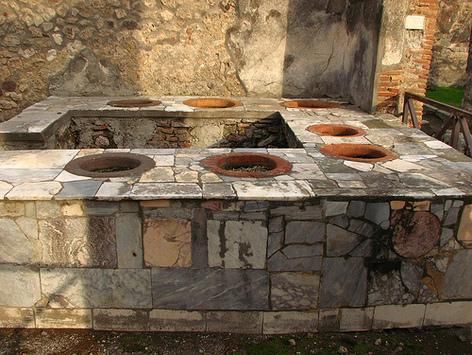
Cafe in Pompeii, 1st century CE
(2) urban slaves: basic household & administrative tasks, epitaphs with job titles show vast specialization in wealthy houses ("litter bearer", "bedroom slave", "cook", "meat carver", "mirror holder", literary secretaries, accountants, etc.) or working outside household (artisans in workshops, service providers, street sales, etc.); children specially trained for sale
- visible, public status symbols > slaveholders' power and wealth (numbers, clothes, skills, origins, etc.): e.g. the pretentious doorkeeper/bouncer; the paradox of dependence
Petronius, Satyricon 27 (1st century BCE novel; the wealthy freedman Trimalchio at the baths)
Two eunuchs stood in the circle facing Trimalchio. One was holding a silver chamber-pot; the other was counting the balls, not as they sped from hand to hand as they were thrown in the course of the game, but as they dropped to the ground . . . Trimalchio clicked his fingers, and at this signal the eunuch supplied him with the chamber-pot as he continued playing. The host voided his bladder, demanded water for his hands, and after perfunctorily washing his fingers, wiped them on the slave's hair.
 S
S
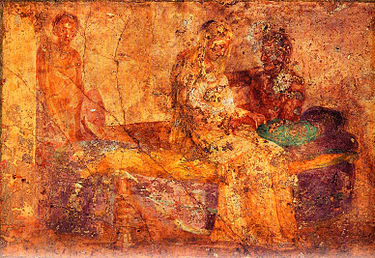
Slave & honeymoon scene, Villa Farnesina, Rome, ca.19 BCE; cf. Ralph Ellison, Invisible Man (1952)
- invisibility of slaves in masters' private lives (e.g. masturbating slaves)
- consequences of urban slaves' proximity to master?
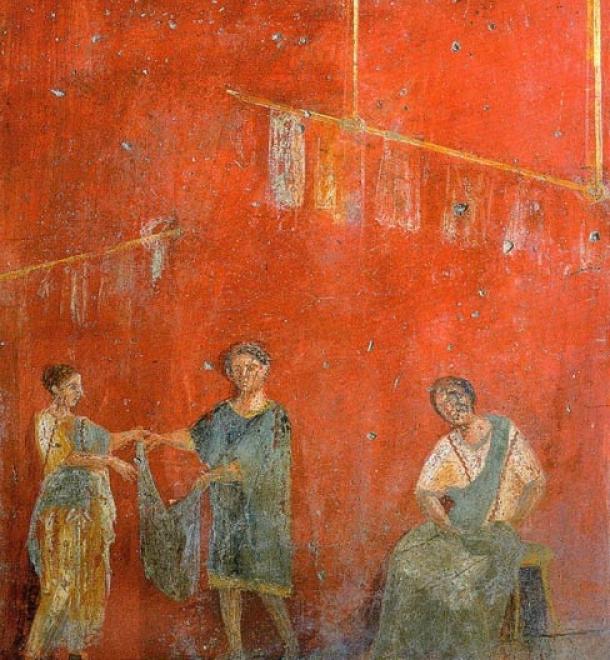
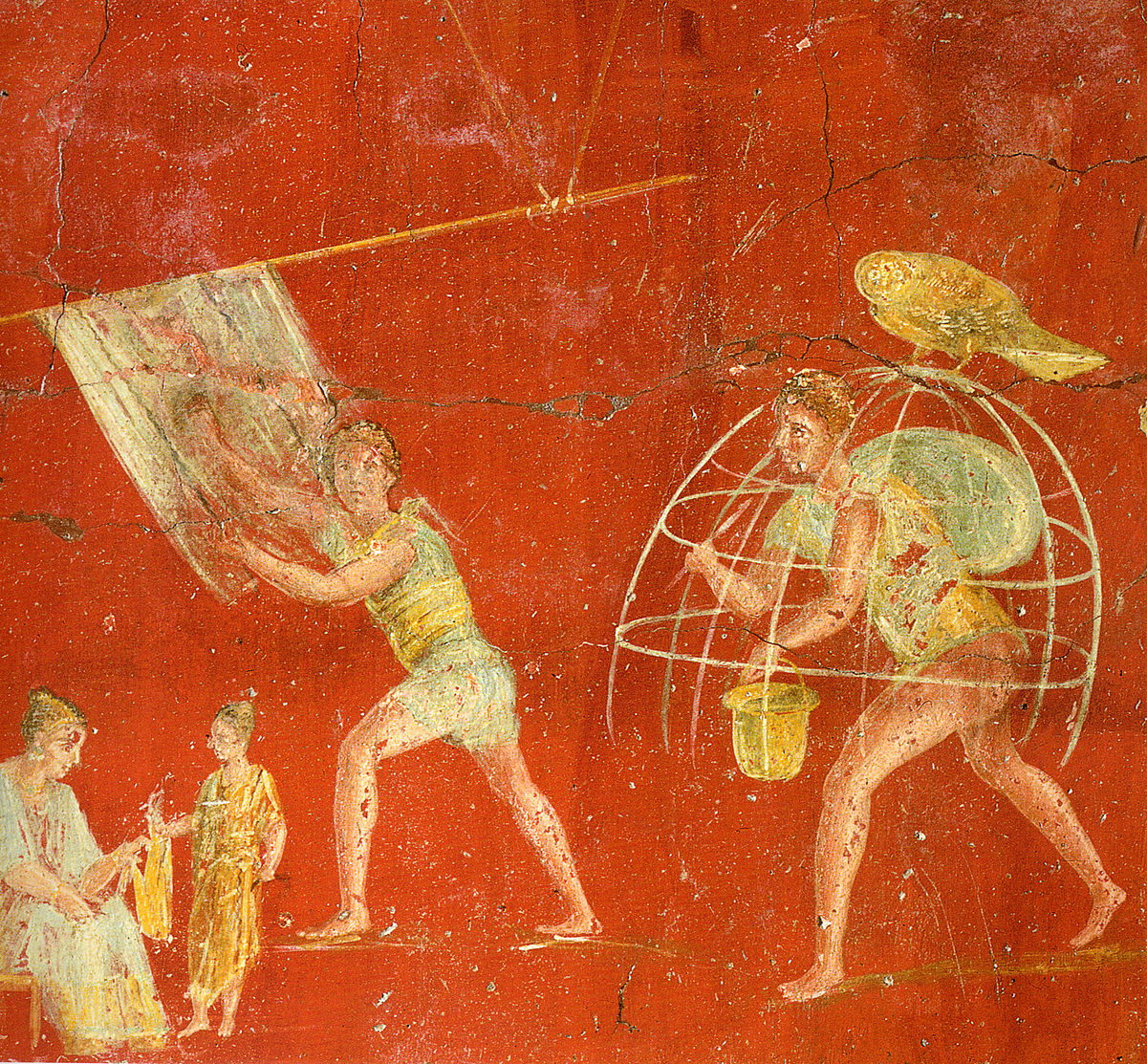
Fuller's shop scenes from Pompeii (shop of Veranius, 1st century CE)
- increased "opportunity" for urban slaves:
(a) entrepreneurship: business agents of aristocrats shunning "vulgar" & "slavish" occupations & small-scale commerce; acquisition of property (peculium; ownership of slaves (!), i.e. a vicarius)
(b) working side-by-side with low status business owners: service & craft industries, e.g. bakeries, fulleries, taverns > manumission, freedman status, free children (social mobility)
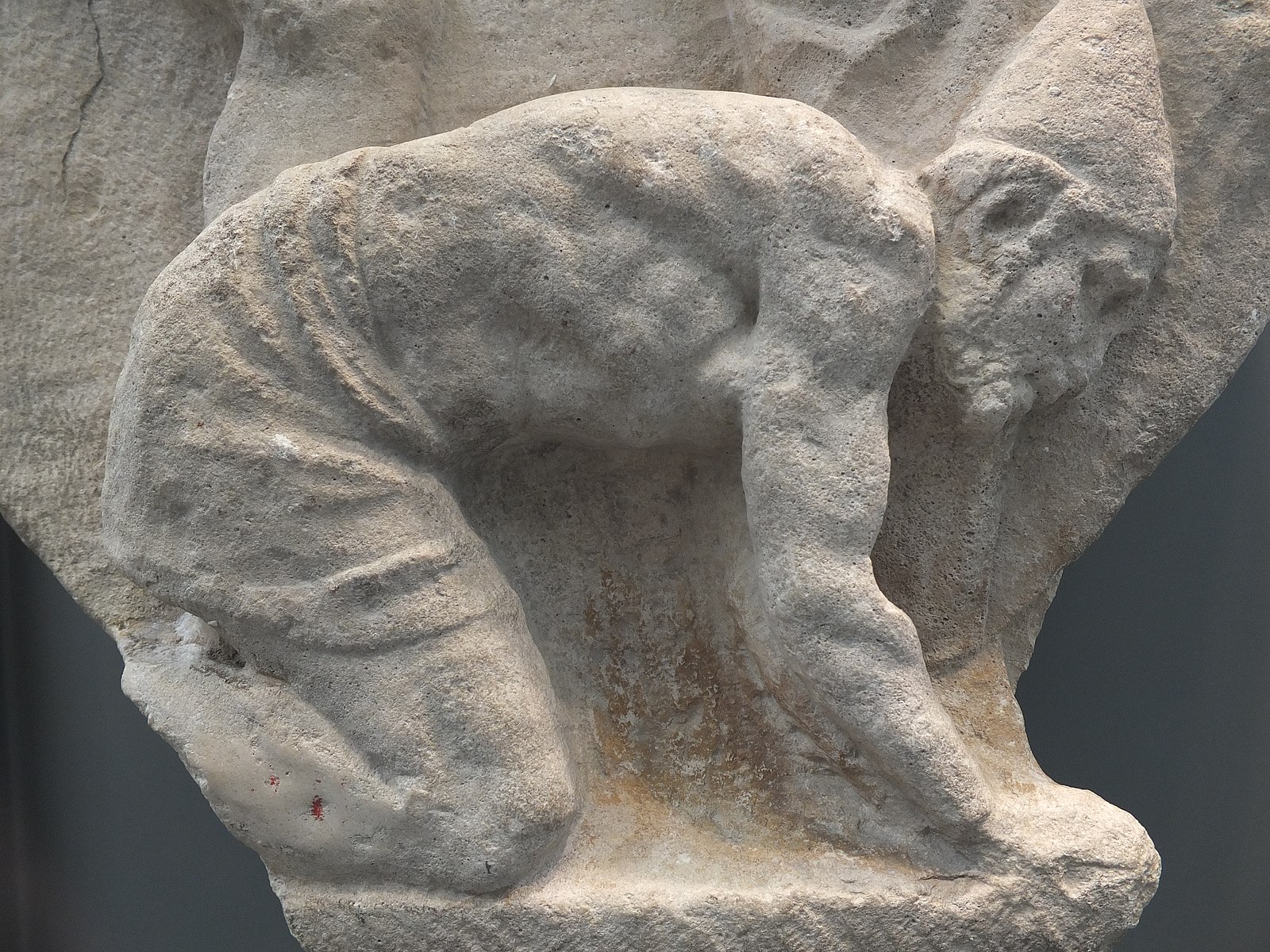
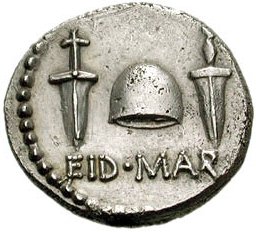
L: relief of manumitted slave with pilleus; R: coin minted by assassins of Julius Caesar
- experience of males vs. females (some gender-specialized household tasks, e.g. spinners, hairdressers, nurses, midwives); massive sexual exploitation
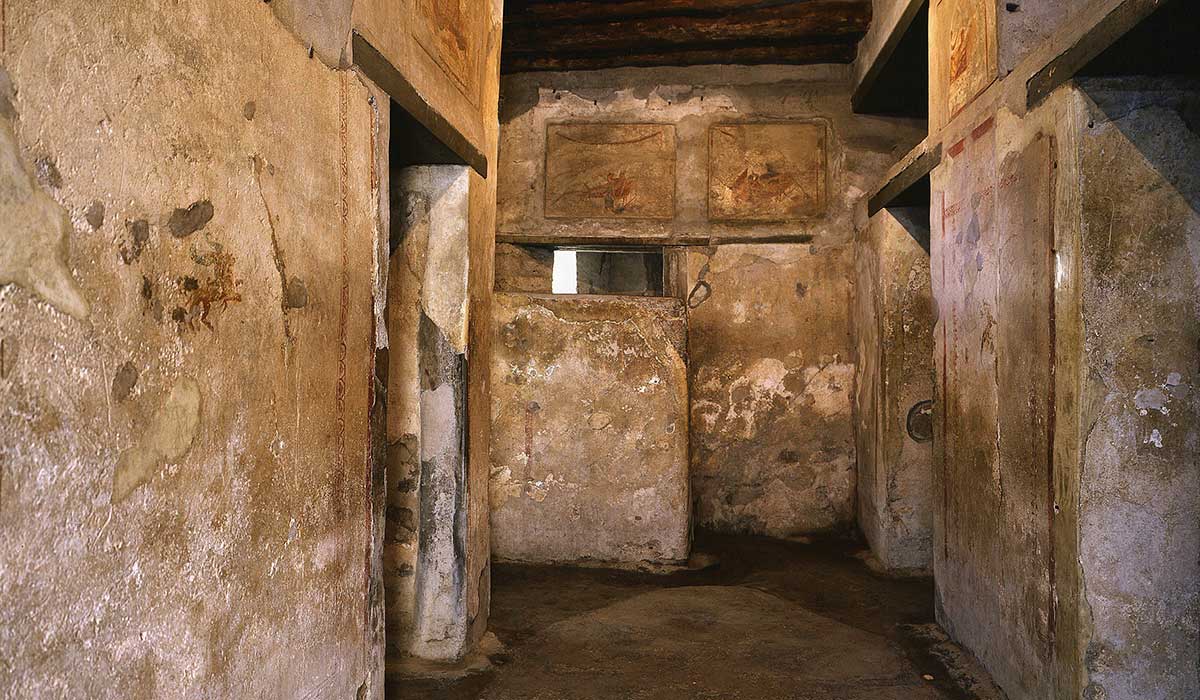
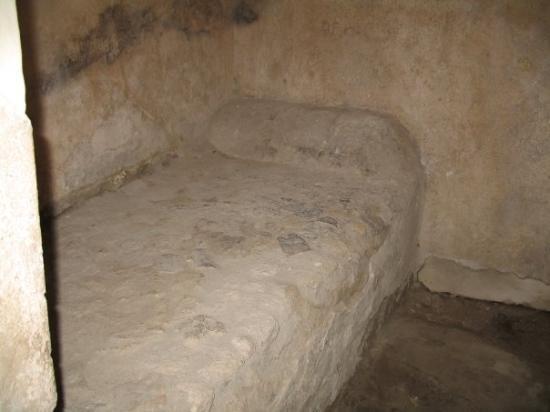
L: Brothel with sex scenes on walls, Pompeii; R: small room in brothel, Pompeii

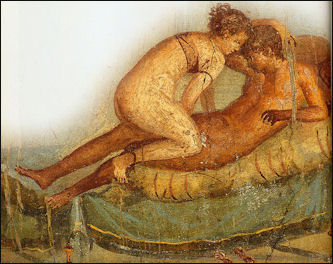
L: bath mural sex scene, Pompeii; R: Sex scene on house wall fresco, Pompeii