CLAS 355
Spectacles of Violence (Hunts & Executions)
March 14, 2023

We rode out into old ruined Rome . . . to take our leave of the Colosseum. I had seen it by moonlight before (I could never get through a day without going back to it), but its tremendous solitude that night is past all telling. The ghostly pillars in the Forum; the Triumphal Arches of Old Emperors; these enormous masses of ruins which were once their palaces; the grass-grown mounds that mark the graves of ruined temples; the stones of the Via Sacra, smooth with the tread of feet in ancient Rome; even these were dimmed, in their transcendent melancholy, by the dark ghost of its bloody holidays, erect and grim, haunting the old scene; despoiled by pillaging Popes and fighting Princes, but not laid; wringing wild hands of weed, and grass, and bramble; and lamenting to the night in every gap and broken arch – the shadow of its awful self, immovable!
--Charles Dickens, "Pictures from Italy" (1846)
*Examination #2: Thursday (Study Guide)*
Hunts & Executions in the Roman Amphitheater
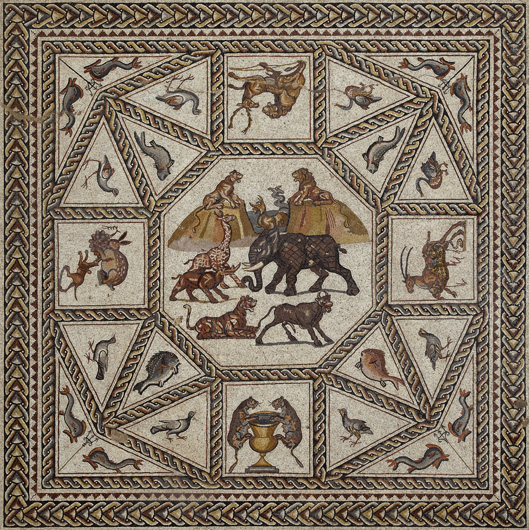
Animal Mosaics from Lod, Israel, ca. 300 CE
- spectacula ("things to look at"): other Roman spectacles associated with gladiatorial contests in the amphitheater/(h)arena (or sometimes circus)
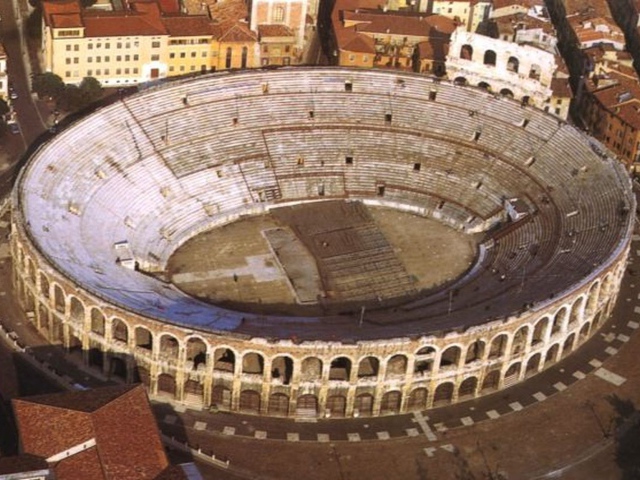
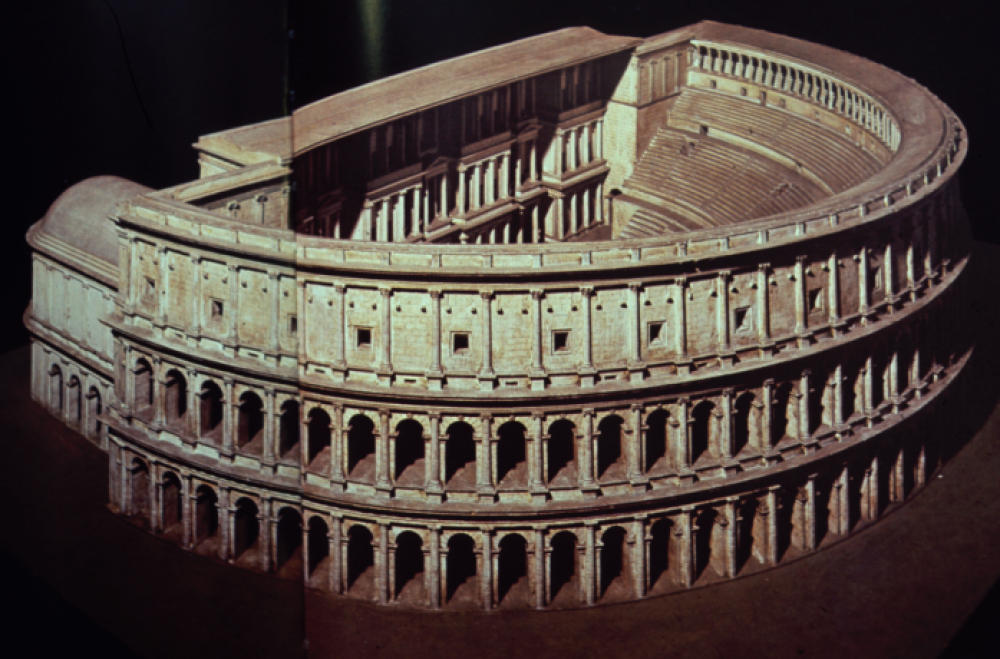
L: Amphitheater at Verona, Italy (today) R: Theater of Marcellus, Rome, 13 CE
- amphitheater ("theater in the round" vs. theater for plays): main venue for gladiator fights, hunts & executions
- Flavian Amphitheater (189m x 156m, 48m high; arena is 83m x 48m; inaugural ludi in 80 CE (Titus, emperor 79-81 CE); gift to Roman people ("Rome has been given back to Rome. Under your direction, Caesar, what was once the master's delight now belongs to the people"; "wonder of the world", international celebration ("The people speak with one voice in many different languages: you are the true Father of everyone's country", Martial, Book of Spectacles 2-3)
Suetonius, Titus 7 (dedication of the Flavian Amphitheater)
. . . he gave a splendid, most lavish munus there. he also put on a naval battle in the place that had been used for this before, and in the same place had gladiators and in one day 5,000 beasts of every kind.

- Colosseum's arcades (arches with columns & statues), awnings (retractable roof), seats & vomitoria; underground chamber = multi-level, underground network of tunnels & chambers (vertical shafts & elevators)
- strict seating arrangements at ludi: hierarchical (emperor's box, best seats for senators & knights, e.g. elaborate rules & fines at the Colony of Julia Genetiva in Spain, ILS 6087)
Suetonius, Augustus 44 (spectacle seating & "public morality")
He seated soldiers separately from the people. He assigned specific places for married plebeians, gave the boys their own section with their paedegogi next to them, and ruled under penalty of religious sanction that no one in mourning could sit in the middle rows. He would not permit women to watch even the gladiators, which had formerly been permitted at the annual ritual ludi, except from the highest rows.
- sparsio (“scattering”) of gifts or tokens in missilia ("projectiles") = pulley & basket device; also sparsio of water & sprays of perfume (dust & blood)
Suetonius, Nero 11 (Nero's Ludi Maximi)
On each day of this spectacle he scattered all kinds of things to the people from the missilia: on any given day there were a thousand birds of all types, many different kinds of food, tokens for the grain distribution, clothes, gold, silver, gemstones, pearls, paintings, slaves, farm animals, even trained wild animals, and finally ships and apartment buildings and farms.
- popular demand for spectacles
Juvenal, Satires 10.78-81, early 2nd century CE (satirist's nostalgia for lost Roman Republic)
The Roman people which once dispensed power, consulships, legions, everything, now sits on its hands and anxiously waits for just two things: bread and circuses.
Fronto, Elements of History 17, 2nd century CE (defense of Trajan's sending actors to Syria)
The emperor was not careless even about actors or other people concerned with the stage, the circus, or even the arena. since he knew that there are two things that especially grip the Roman people: the price of grain and the spectacles.
Virtual Colosseum tours:
https://www.youtube.com/watch?v=-oOgkPv6j6M
https://www.youtube.com/watch?v=8sLy5VCMuKM
https://www.youtube.com/watch?v=bAWTJO6oz-o
venatio ("hunt"): hunting of animals by humans
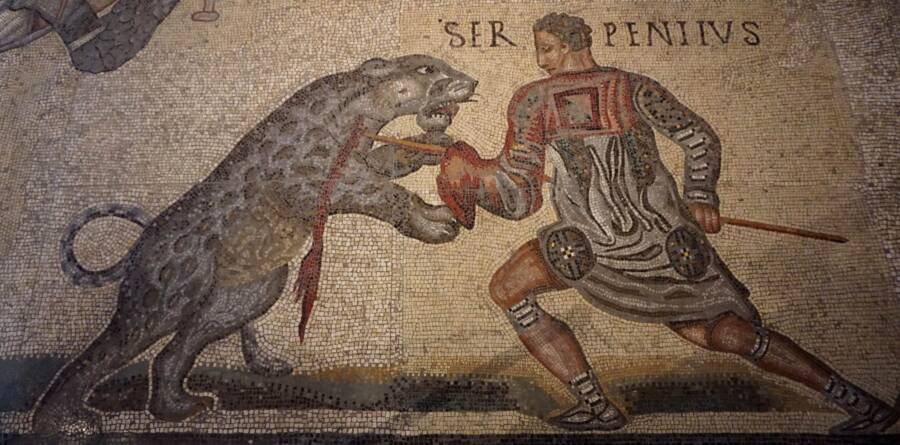
Amphitheater hunt mosaic detail from a villa near Rome, 4th century CE
- usually in morning ca. 9am (vs. afternoon gladiator shows, noontime executions); training in ludus matutinus ("morning school")
- bestiarii (“hunters”): mostly low-status volunteers, chance for remuneration & celebrity
CIL 4.1989 (advertisement, Pompeii)
There will be a venatio here on 28 August and Felix will fight bears.
Martial, Book of Spectacles 17, 20 (Carpophorus the bestiarius)
The highest glory of your reputation, Meleager, was the death of the boar, and it was not as much as Carpophorus the bestiarius had. He lodged his hunting-spears in a charging bear . . . he laid out a huge lion who would have done Hercules credit; and he stretched out a swift leopard with a wound. Thus he could have both praises and prizes . . . The glory of Hercules may be counted in 12 labors—but it is a greater thing to have conquered wild beasts 20 at a time.

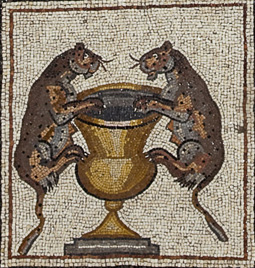
Martial, Book of Spectacles 11 (beast vs. beast)
The rhinoceros was shown off for you throughout the arena, O Caesar, and offered more battles than he had promised. O what a terrible rage burned as he lowered his head! Such a bull was he that a bull was a football for him.
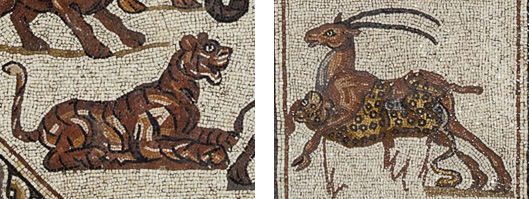
- increasing scale of animal hunts from early 2nd century BCE (more Roman territory = more beast shows):
Pompey (55 BCE; dedication of first stone theater in Rome): 20 elephants, 600 lions, 410 leopards + 1st lynx & rhinoceros
Julius Caesar (46 BCE): 400 lions + bulls, 20 elephants, 1st giraffe
Augustus (31 BCE-14 CE; Res Gestae): 3,500 total animals during reign; 420 leopards, 400 bears, 300 lions + elephants at one show
Titus (80 CE, dedication of Colosseum): 9,000 animals
Trajan (107 CE, celebration of triumph): 11,000 animals

Animal transport mosaic from Villa del Casale, Piazza Armerina, Sicily, 4th century CE
- procurement of animals: vast supply network of private hunters & transporters, a state enterprise in empire (legions)
- political function & significance of animal hunts: motives of sponsor? messages about Roman power? Ancient Mediterranean discourse on power, nature, culture & empire (e.g. staged royal hunts in Egypt & Near East); symbolic trophies > reach of imperial power, control & suppression of threats, affirmations of security ("civilization" over chaos, lawlessness, disorder)
Martial, Book of Spectacles 20 (naturalizing imperial power)
How dutifully the elephant kneels and adores you, Caesar, though just now he was such as object of fear for the bull. He does not do this on orders, and no teacher schooled him. Believe me, even he recognizes our god.
Hunting of humans by animals: damnatio ad bestias ("condemnation to the beasts")
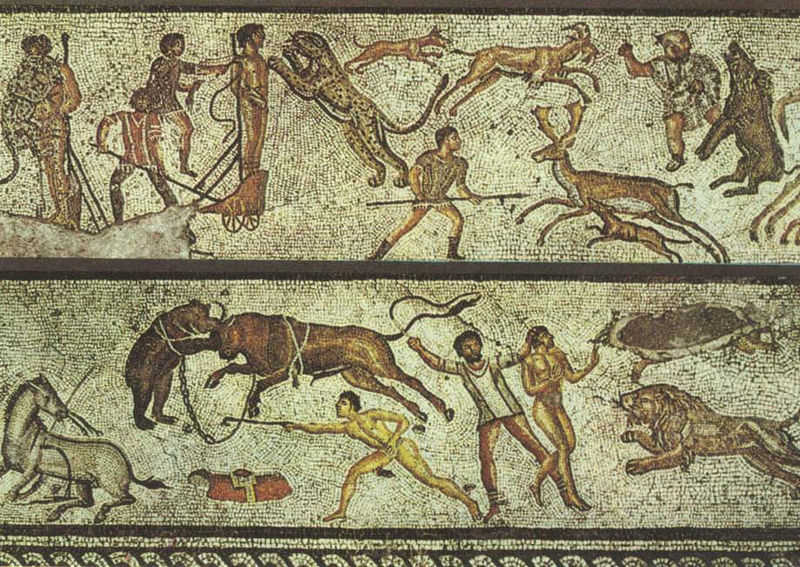
Amphitheater Scenes on mosaic, Tripoli, Libya, 1st century CE
- Roman crime & punishment: tradition of public execution (crucifixion, burning alive in a tunica molesta, "troublesome tunic"); chained or roped criminals dragged into arena for execution, dragged out on hooks, disposed of in pits
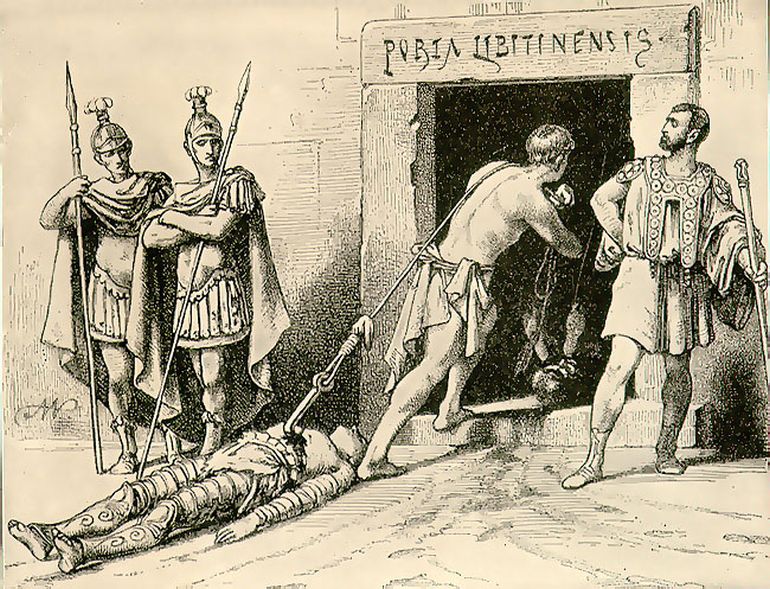
Representation of the porta libitinensis/Gate of Libitina (goddess of death)
- public execution by beasts in arenas > punishments as elaborate entertainment spectacles
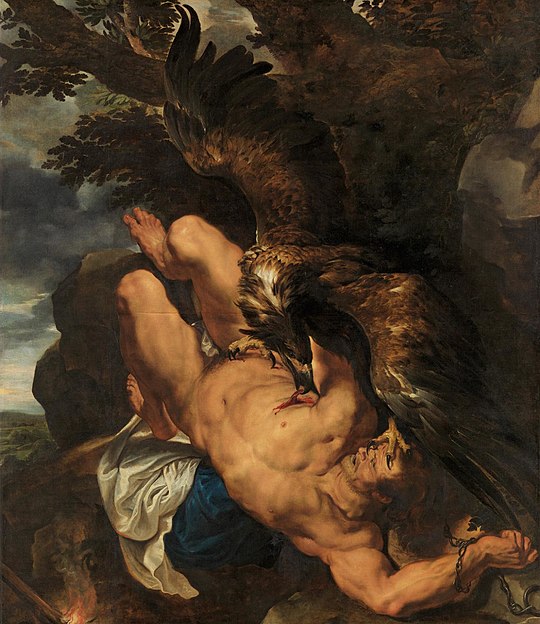
Rubens, Prometheus Bound, 1611
Martial, Book of Spectacles 9 (entertainment & execution)
Just as Prometheus, tied to his Scythian rock, fed the bird constantly pecking at his breast, so Laureolus, hanging on a genuine cross, offered his naked guts to a Caledonian bear. The torn-off limbs were still alive and dripping, but in the entire body there was no body. He had a suitable punishment: the wicked man had pricked his master’s throat with a sword, or, crazy, had stolen the hidden gold from a temple, or had put savage torches up to you, Rome.
- myths made real, mythological reenactments: theatricalized performance-aesthetics of violence & artful execution (artificial forests, hills, pools, props, etc.); death by wild beasts = condign punishment for those outside "civilization"
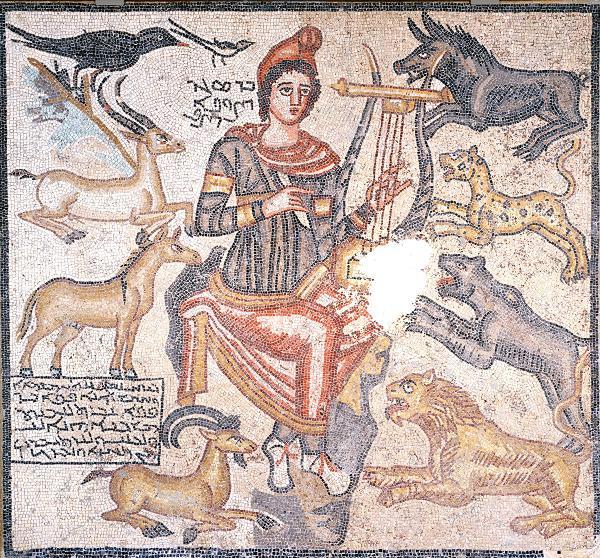
Orpheus mosaic, Edessa, Greece, ca. 200 CE
Martial, Book of Spectacles 24 (Orpheus the master poet/musician)
Whatever they say was shown to Rhodope in Orpheus's theater, Caesar, your arena has shown to you. Rocks crawled and trees miraculously ran . . . All kinds of beasts, wild and domestic together, were there, and many a bird hovered over the bard, but he himself fell, mauled by an unappreciative bear. This was the only thing that contradicted the story.
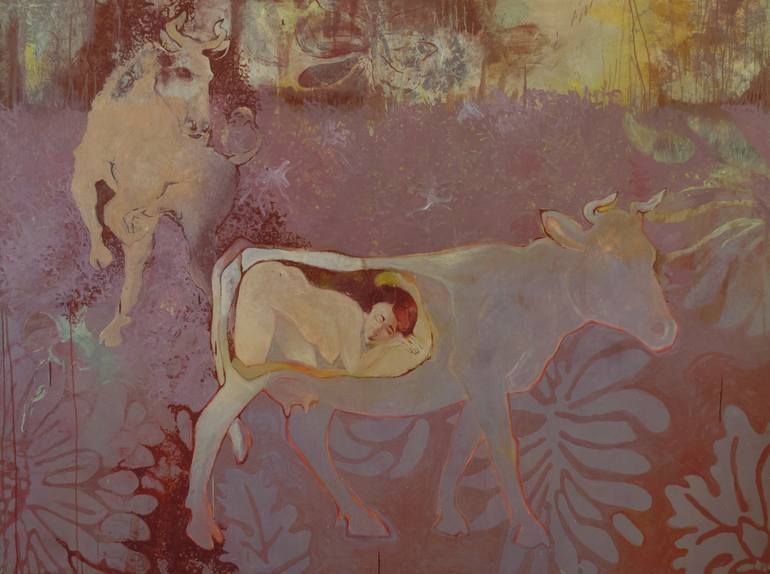
Peter Goettler, Pasiphae, 2022
Martial, Book of Spectacles 6
Believe in Pasiphae joined to the Cretan bull: we have seen it; the old story is believable.
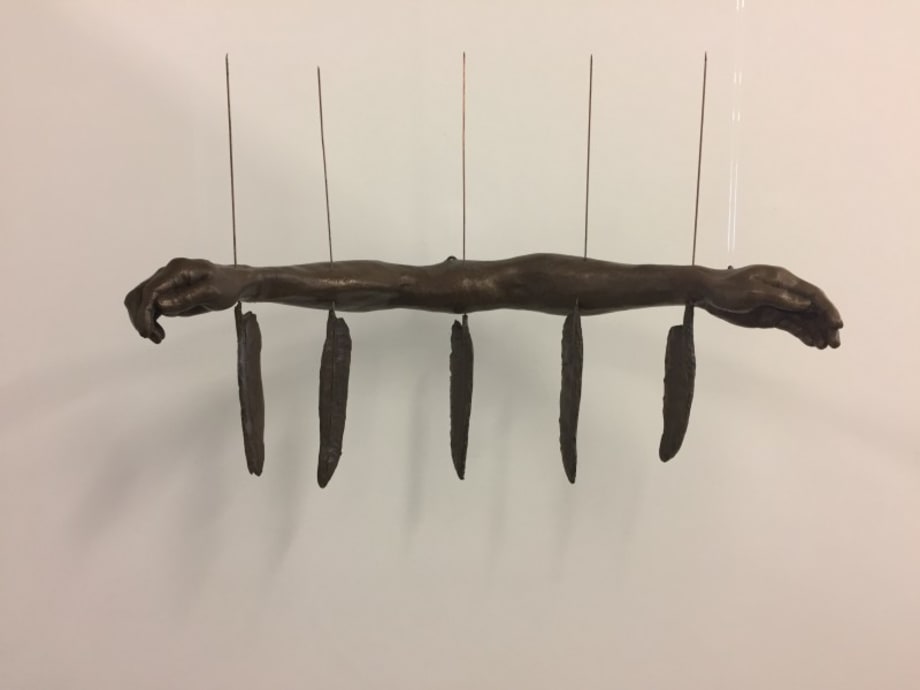
Michael Richards, Winged, 1999
Suetonius, Nero 12 (Daedalus & Icarus)
Icarus, on the first try, fell next to Nero's seat and splattered him with blood.

naumachia engraving by Charpentier, 1782
- naumachia ("naval battle"): reenactments of historical battles by condemned criminals
- elite critiques of spectacles: morality, (in)humanity, dehumanization, etc.
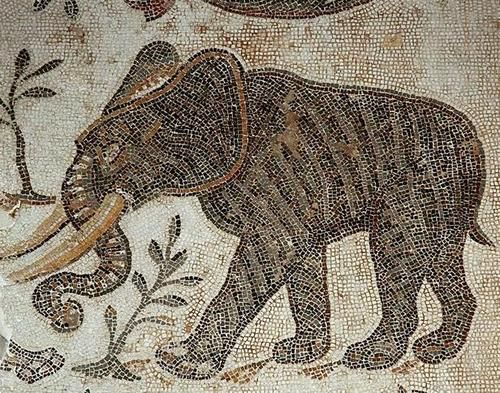
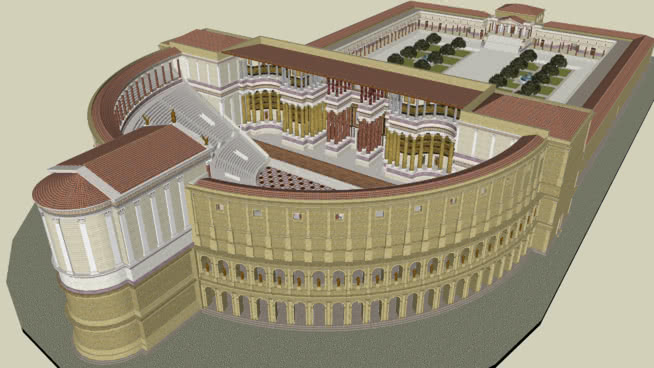
L: Mosaic from House of the Laberii, Uthina, Tunisia, 4th century CE; R: Model of Pompey's Theater
Cicero, Letters 7.1, 55 BCE (Theater of Pompey inaugural ludi)
There were venationes, twice a day for five days; magnificent, no one denies that; but what possible pleasure can there be for a civilized man in watching some weak man shredded by a very strong beast, or a strikingly beautiful animal run through by a hunting spear? And if you’ve seen one venatio, you’ve seen them all; we who saw this one certainly saw nothing new. The final day belonged to the elephants. The common crowd had great admiration for them and no pleasure at what they saw. No, indeed, they pitied the elephants, and felt that there was a kind of community between those beasts and the human race.
Seneca, Letter 7, 1st century CE (dehumanizing effects of spectacles)
And nothing is more damaging to good morals as to hang around at some spectacle. There, through pleasure, vices sneak in more easily. What do you think I’m saying? I come back more greedy, more desirous of honor, more dissolute, even more unfeeling and cruel, because I have been among people. By chance I happened to be at a spectacle at noontime, expecting some witty entertainment and relaxation, to rest men’s eyes from the gore. It was the opposite. Whatever fighting there was before was comparative mercy. Now there was pure murder, no more fooling around. They have nothing to shield them, and with the whole body exposed to the blow, no one ever misses. Many people prefer this to the ordinary pairs and the fighters people ask for. Why wouldn’t they? No helmet or shield pushes the sword away. Where is the defense? Where is the skill? These things are just to delay death. In the morning men are thrown to lions and bears; at noontime, to the audience.
Seneca, Letter 70 (a German prisoner becomes a Stoic example)
Not long ago in a school for bestiarii there was a German who was being trained for the morning spectacles. He went aside to relieve himself; there was no other place he could be alone without a guard. There he took the wooden stick with a sponge attached, used for what is most unclean. He stuffed the whole thing down his throat, closed his mouth, and gave up his spirit. This was an insult to death. It was not a pretty or proper way to die; what is stupider than to die daintily? What a strong and worthy man, who should have been allowed to choose his own fate! . . . Though he was completely destitute, he found the ways and means of his own death; from this you should know that nothing needs to delay death except willpower. Let everyone judge this case on its merits, provided he agree that the vilest death is to be preferred to the most elegant slavery . . . This spectacle was so much more beautiful, in which men learned how much more honorable it is to die than to kill.
Martial, Book of Spectacles 21
A tigress,
a rare glory from a Caspain mountain, who would then lick her fearless master's hand, tore a wild lion violently to pieces with her savage teeth—a new thing, not known to any era. While she lived in the forest she never dared do such a thing, but since she has been with us she has become more fierce.