CLAS 355
Senecan Tragedy (Thyestes)
March 21, 2023
.jpg)
Goya, Saturn Devouring his Children, ca. 1820
Examination #2 Key
*GROUP PRESENTATIONS*: Thursday, March 30 & Tuesday, April 4 (15 mins. per group); comparative analysis of a modern HTVT topic; Presentation Guide
Course Units:
Part I: Everyday Horror, Terror, Violence & Trauma - Roman Slavery, e.g. comparative study of some aspect of American or some other historical instance of slavery (violence & punishment, manumission & freedpersons, rebellions, deracination, slave markets, labor, paternalism, etc.), slavery in film & television
Part II:
Cultural Catastrophe: Epic Trauma & Memory of Civil War, e.g. comparative analysis of a film or television show about civil war or a traumatic cultural memory (as represented in Lucan)
Part III: The Terror of Autocracy - Roman Emperors, e.g. comparative study of a historical or contemporary autocrat or autocratic personality with Nero and/or Caligula
Part IV: Spectacles of Violence - Theater & Amphitheater, e.g. comparative analysis of some aspect of HTVT in modern entertainment with Roman spectacles; film, television show, etc., with Senecan themes (violent family dysfunction, destructive emotional extremes)
Seneca (Seneca the Younger)
- Seneca: influential family (Lucan's uncle) of Cordoba, Spain (born. ca. 4 BCE-1 CE) > Rome; perilous career in imperial court (sentenced to death under Caligula, exiled under Claudius); Nero’s tutor & political advisor, isolated from emperor in last years; suicide described in Tacitus Annales 15.62-4 ("Conspiracy of Piso", 65 CE)
Seneca: On the Creation of Earthquakes (2023) trailer
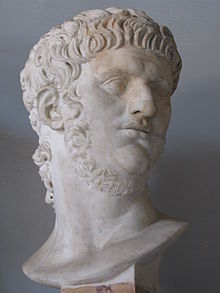
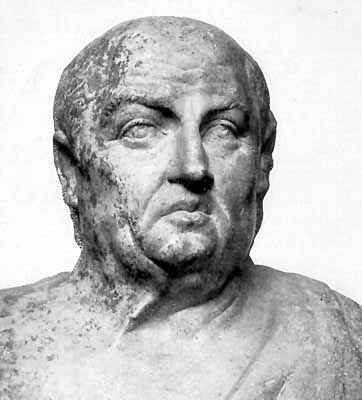
L: Bust of Ner0; R: Bust of Seneca
- Stoic philosopher (essays & philosophical letters, e.g. Letter 47): reason as universal principle = discovering what is good & rational to live tranquilly in accord with nature, dedicated to virtue & search for truth
- Stoic values: self-reliance, self-sufficiency, freedom from ambition & passion, strength in hardship, imperviousness to fortune
- traces of Stoic doctrine in Seneca's tragedies:
Thyestes 344ff. (Chorus at end of Act 2 celebrates Thyestes's return; Stoic kingship)
Wealth does not make the king,
nor robes of Tyrian purple,
nor the diadem on the brow . . .
. . . From a place of safety,
He looks down on everything,
and willingly meets his fate.
He does not complain of dying . . .
. . .
A king is a man without fear,
A king is a man without desire.
Everyone makes this kingdom for himself.
- Thyestes as (failed?) Stoic (cf. Seneca)
Thyestes 412-419 (Thyestes returns to Mycenae with 3 sons)
Go back to your exile in the woods,
the thickly tangled groves, and the life you led in the wild,
with animals, and like them. No reason to be dazzled
by the false, flashy brightness of royal power.
When you look at the gift, look at the giver too.
Just now, I had the kind of life that everyone would pity;
but I was brave and happy. Now, on the other hand,
I am dizzy with fear.
Thyestes 459-470 (Thyestes reflects on his exile & poverty)
I need no fleet to catch my fish, I do not need
to drive away the sea away with piles of rocks,
nor glut my greedy belly with imported goods.
No distant field in Parthia or Geta need be ploughed
to feed me; I need no worship with incense or altars,
replacing Jupiter with myself. No treetops sway
up high upon my roof; no steaming baths that take
many hands to heat. My days are not passed in sleep,
I do not stay awake to drink all night.
Nobody fears me; I have no need of weapons to keep my house safe:
Deep peace comes to those in modest circumstances.
The ability to do without a kingdom is a kingdom.

Model of Theater of Pompey, Rome (55 BCE)
- Roman tragedy: plays adapted from classical Athenian tragedy (Aeschylus, Sophocles, Euripides); civic educational institution (protagonists face moral conflicts & personal distress, make ethical choices, experience HTVT; effects of acute stress on spectators?)
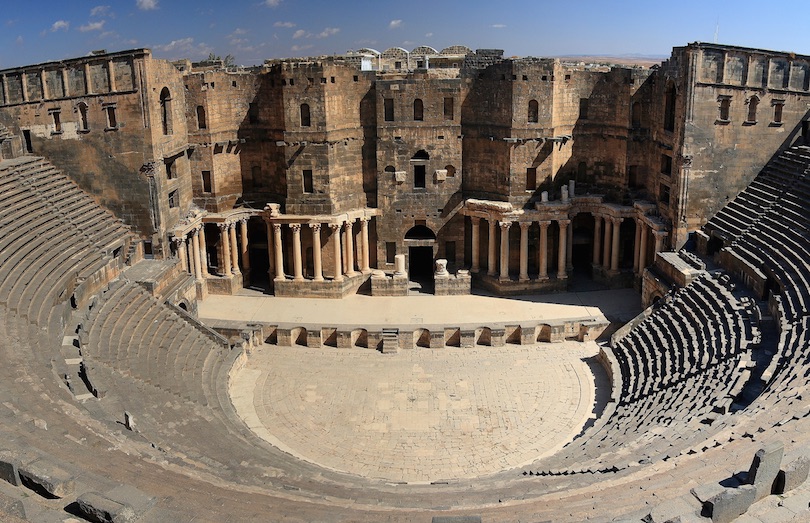
Roman theater in Bosra, Syria (2nd century CE)
- Roman tragedy mostly lost, but popular; Senecan performances (public theater? court performances? specific dates of plays unknown)
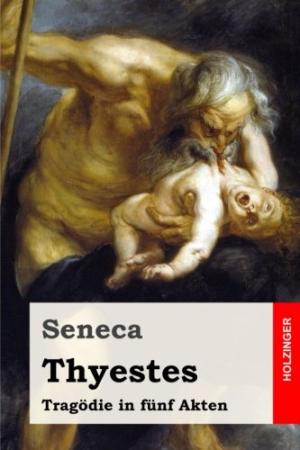
- Seneca's (psychological) themes of passion & emotional excess, i.e. anger, tyranny, ambition, family dysfunction (competition); human capacity for cruelty & viciousness

Assereto, Tantalus (ca. 1640)
- autocratic Atreus: continues family history of insatisfiable desire for power; self-destruction & revenge ("I do not care if this great and glorious house / falls to ruin and kills me, as long as it kills him too", 190-1); Tantalus (Ghost in Thyestes), Pelops & sons (Atreus & Thyestes)?
Thyestes 205ff. (Atreus to "Servant" on rule & morality)
The best thing about being king
is making folks accept whatever you do,
and even praise you . . .
. . . only the powerful
can get praise. Let them want what they do not want.
. . . Only weak kings kill. Under my rule, people beg
for the favour of death.
. . . My heart is swollen with some greater thing,
something extraordinary, more than human.
- conflicted (?) Thyestes: has he learned from suffering in exile?
- Act 3 reunion of brothers (491ff.), Thyestes's confession & apology; agreement to share power & wealth (534ff.); tragic doublespeak/irony, e.g. Thyestes: "Take these sweet children / as pledges of my faith" (520-1); Atreus: "I will sacrifice the designated offerings to the gods" (545)
GROUPS (Acts 4 & 5)
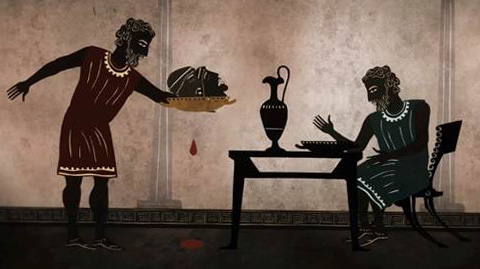
- is Atreus satisfied?
Thyestes 1056ff.
My impatience cheated my rage. I used my sword
to stab them. I rushed at the altars. I satisfied
the holy fires with slaughter. Chopping up
their lifeless bodies, I pared the limbs
to little scraps . . .
—But all of this
could have been better done by their own father.
My vengeance is a failure. The wicked father
munched his sons, but did not know it; nor did they.
- final affirmation of the cycle of violence & revenge (Atreus): “I know your complaint: you mind me doing it first! / You are not hurt because you gulped that ghastly meal, / but because you did not serve it” (1104-6); paternity issue raised again (1108-9)
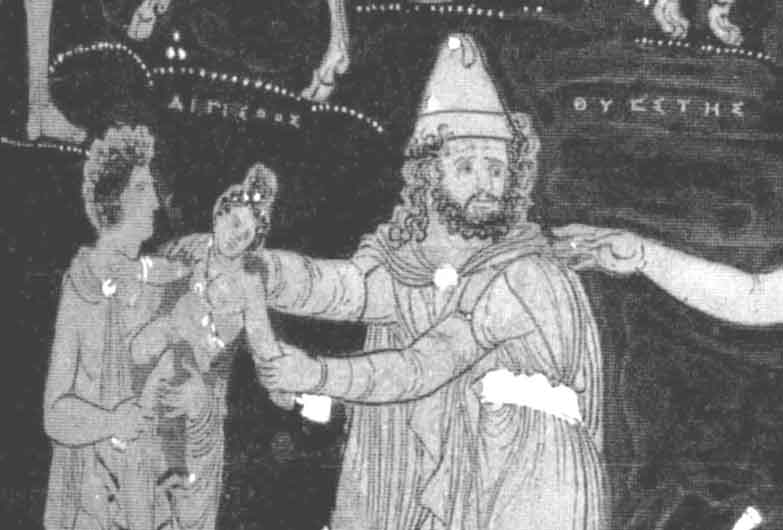
Dareios Painter, Thyestes and baby Aegisthus (ca. 340 BCE)
- aftermath of Seneca's Thyestes: Thyestes mates with daughter (oracle) and produces Aegisthus who kills Atreus, hooks up with Agamemnon’s wife Clytemnestra; family curse ends with Agamemnon's son Orestes (Aeschylus's Eumenides)
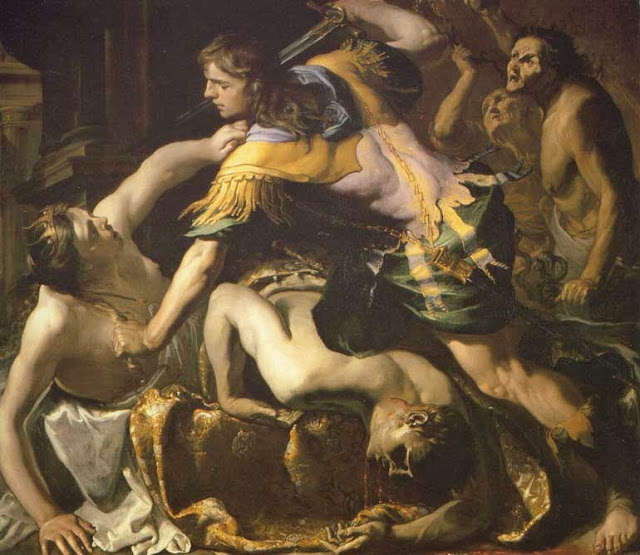
Bernardino Mei, Orestes Slaying Clytemnestra & Aegisthus (1654)