CLAS 355
Senecan Tragedy (Medea)
March 23, 2023

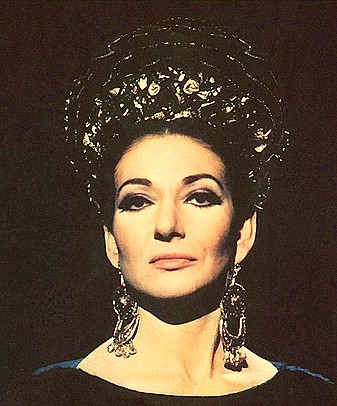
L: Maria Callas in Cherubini's opera Medea (Milan, 1953): R: in Pier Paolo Pasolini's Medea
Trailer to Pasolini's 1969 film; Return voyage of the Argonauts
GROUP PRESENTATIONS: Thursday, March 30 & Tuesday, April 4 (15 mins. per group); comparative analysis (similarities & differences) of a modern HTVT topic versus some course material; Presentation Guide
Course Units/Areas for Possible Presentation Topics:
Part I: Everyday Horror, Terror, Violence & Trauma - Roman Slavery, e.g. comparative study of some aspect of American or another historical instance of slavery with Roman material (e.g. violence & punishment, manumission & freedpersons, rebellions, deracination, markets, labor, paternalism & nostalgia, creative resistance, etc.); slavery in film & television, etc. (historical/legal or thematic)
Part II:
Cultural Catastrophe: Epic Trauma & Memory of Civil War (as represented in Lucan), e.g. comparative analysis of a film or television show about civil war or some other fracturing of society, or a traumatic cultural memory
Part III: The Terror of Autocracy - Roman Emperors, e.g. comparative study of a historical or contemporary autocrat or autocratic personality with Nero or Caligula, life under autocracy (real or fictional)
Part IV: Spectacles of Violence - Theater & Amphitheater, e.g. comparative analysis of some aspect of HTVT in modern entertainment with Roman spectacles (gladiators, etc.); public executions; film, television show, etc., with Senecan themes (violent family dysfunction, destructive emotional extremes, war's non-combatants)
**GROUPS**
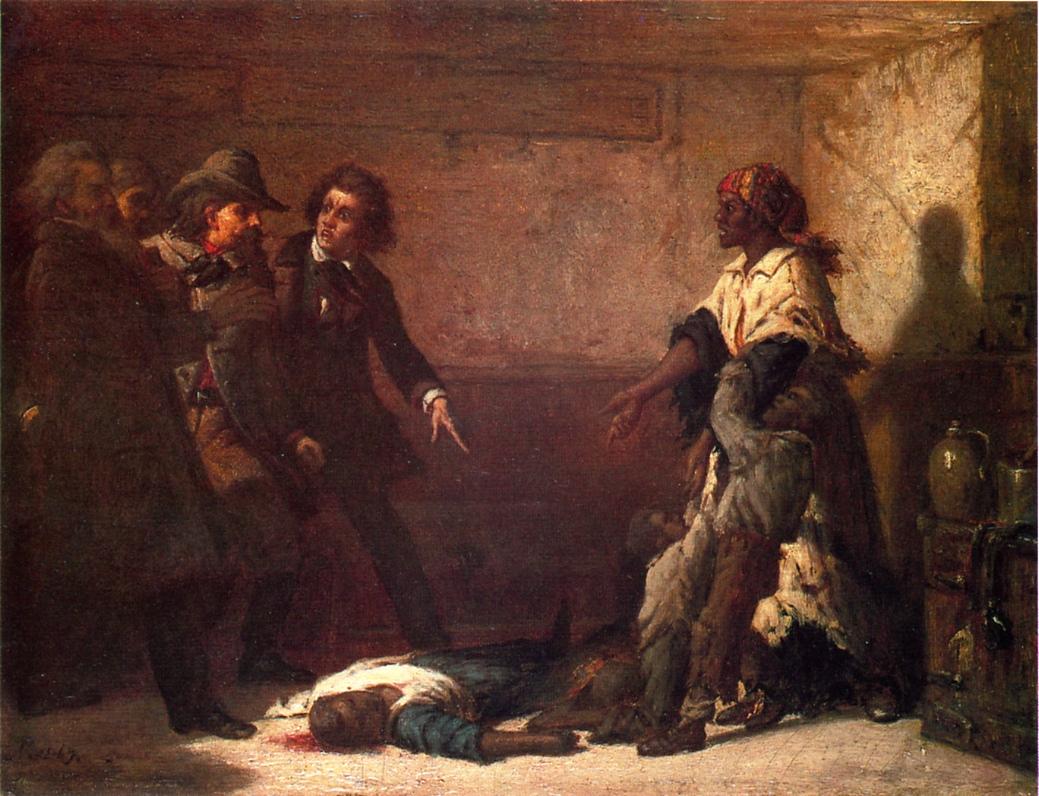
Noble, Margaret Garner or The Modern Medea (1867)
Medea: female-helper abandoned by ungrateful male-hero she has rescued (cf. Dido ~ Aeneas); her revenge, “Medea Syndrome”/“Parental Alienation Syndrome”, e.g. Susan Smith (1995 murder of two sons), Chris Watts (2018 murder of wife and two daughters)
- mythic background
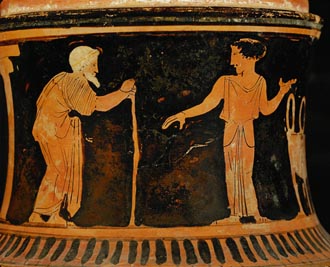
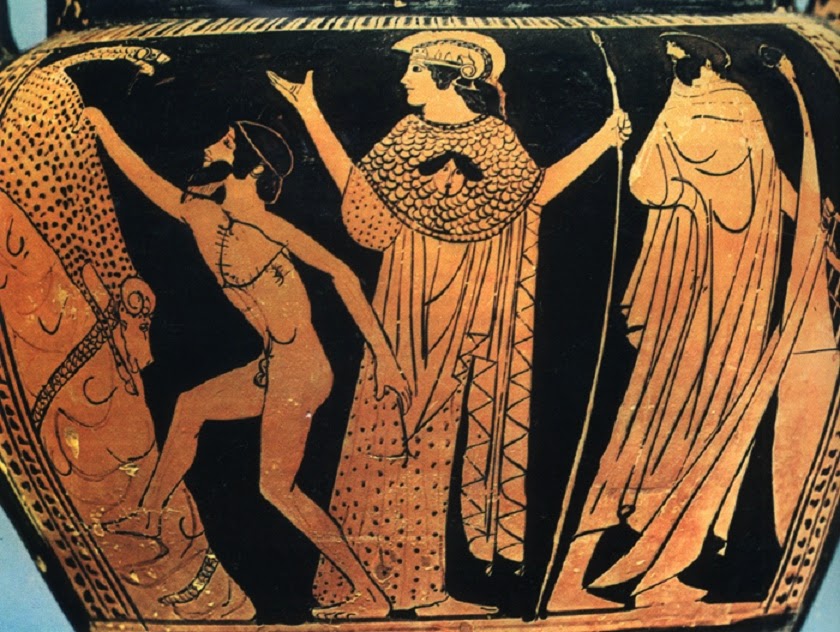
L: Medea and Pelias, pyxis, late 5th century BCE; R: Jason & Golden Fleece, Attic vase, 470-460 BC
-Jason, son of Aeson, nephew of Pelias: dispute over kingship of Thessaly, Argonauts & Golden Fleece in Colchis (modern Georgia)
-Medea, daughter of Aeetes (King of Colchis), granddaughter of the Sun/Helios, brother Apsyrtus; her powers (Jason's tasks)?
-Corinth, Greece: post-Colchis, killing of Pelias, threat of revenge of Pelias's son Acastus, King Creon & his daughter (Creusa/Glauce)
- Seneca's Chorus: Medea as non-Greek outsider, female threat to male authority (cf. Creon, "you have a woman's wickedness; your daring / shows masculine strength", 267-8); celebrate royal wedding in Corinth (Act 1 Chorus), Medea a barbarian monster ("When will this Colchian monster / leave the lands of Greece / and release from fear / the kingdom and royal family?", 870-3); Jason an innocent Greek hero (Act 3 Chorus on Argo & crew's suffering, "Jason acted on orders", 669); nostalgically lament multiculturalism & globalism of Roman empire (Argo's voyage as colonialism)

Medea 329ff. (Argo & Romanization, 1st century CE anxieties of empire)
Glorious were the ages our forefathers saw
when deception was far distant.
Each person lived an unambitious life, at home,
then growing old on ancestral farmland,
rich with little, they knew no wealth
except what their native soil brought forth.
The world was once divided into strict partitions,
but those were broken by the pinewood ship,
which ordered the ocean to suffer a beating
and the sea, once inviolate, to turn into
one of our reasons to fear . . .
. . .
[Now] Any old skiff can wander the deep.
All boundaries are gone and the cities
have set up their walls in new lands:
the world is a thoroughfare, nothing remains
where it was.
The Indian drinks from the chilly Araxes,
the Persians can drink from the Elbe and the Rhine.
- Medea self-aware of her barbarian Other status, ". . . Away with feminine fears, / dress up your mind like your own cruel home", 42-3; fulfilling expectations?
- Medea's case to Creon ("Jason is clean, / as long as he is not tainted by your company", 264-5): her crimes for Argonauts/champions of Greek civilization, "I am their saviour . . . Should that girl stay a virgin, / obey her father? Then the whole Greek land / is lost . . .", 228ff.)
- Jason a co-conspirator in Medea's crimes & opportunist ("My luck is always bad, and fate is always cruel", 431)
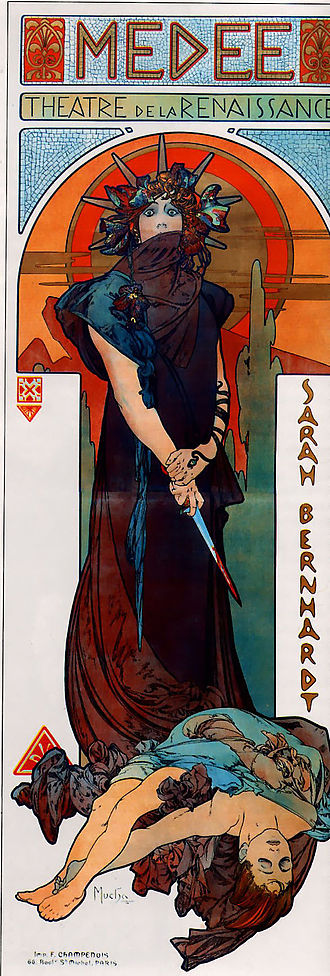
Poster by Alfons Mucha for 1898 Paris performance of Medea/Medee
- Medea’s initial perception of her development from a child to a woman; "birthing" crime ("Now it is born, my vengeance is delivered: / I mothered it", 25-6)
Medea 44ff.
All the horrors witnessed back home by the Black Sea,
Corinth will see now. Evils to make
heaven and earth both shudder equally
are what my mind revolves:
wounding, murder, death
creeping through the limbs. But all this is too slight;
I did those as a girl. Let weightier rage swell up:
now I have given birth, my crimes ought to increase . . .
. . . A family formed by crime must be broken by more crime.
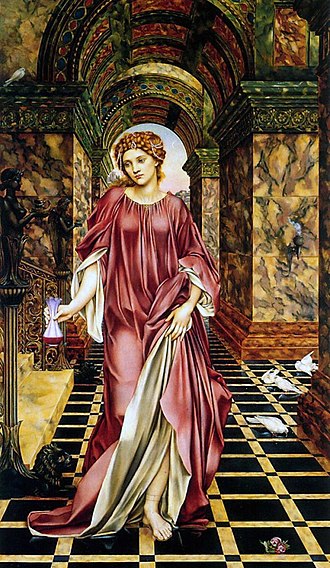
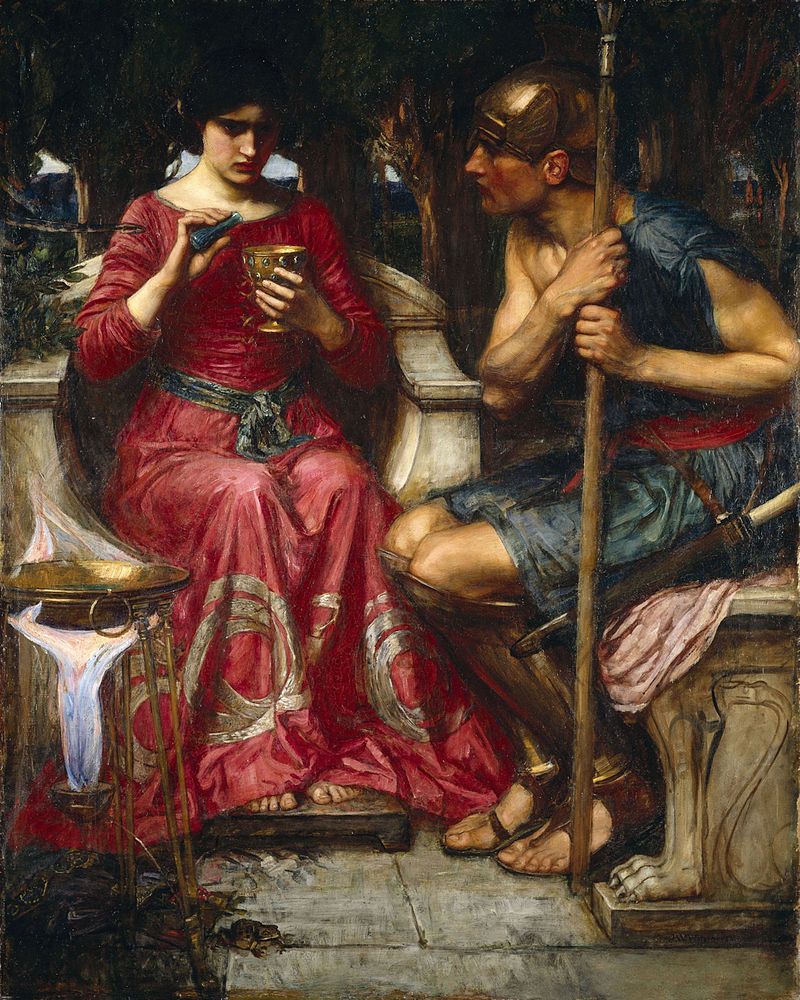
L-De Morgan, Medea, 1889; R-Waterhouse, Jason and Medea, 1907
- Medea's moment of cruel insight: meeting with Jason (Act 3) & refusal of custody, "Does he love his children so much? / Good! I have him trapped: there is a place to hurt him" (549-50)
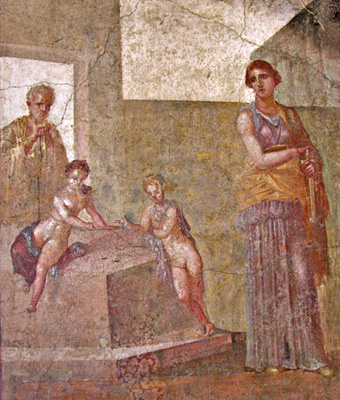
Medea Fresco, Casa di Dioscuri, Pompeii, 1st century CE
- Medea’s perceived development from a girl to a woman and back to a child by un-marrying Jason/un-doing motherhood?
Medea 903-912 (royal family now destroyed)
. . . Whatever I did before,
Name it dutiful love. Come now! I will reveal
how trivial and ordinary they were,
those crimes I did before. With them my bitterness
was only practicing: how could my childish hands
do something truly great? Could the rage of a girl do this?
Now, I am Medea. My nature has grown with my suffering.
I am happy that I ripped my brother’s head away,
I am glad I sliced his limbs . . .
Medea 982-986 (just before killing first child)
Now, now I have regained my throne, my brother, and my father.
The Colchians keep the treasure of the Golden Ram.
My kingdom comes back to me,
my stolen virginity returns.
O gods, you favour me at last, O happy day,
O wedding day!
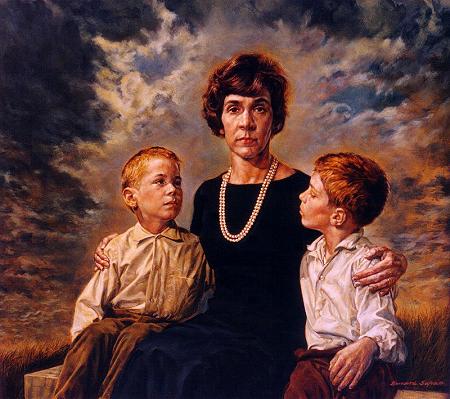
Safran, Medea, 1964
- Medea's emotional complexity: self-awareness, regret, guilt, anger, criminal insanity (?)
Medea 919-921 (after royal murders; cf. Atreus)
Fool! I went too fast.
I wish my enemy had some children
by that concubine of his.
Medea 934ff. (conflicted monologue: mother vs. spouse)
Let them die, they are not mine.
Let them die; they are mine. They did nothing wrong, they are blameless,
they are innocent: I admit it. So was my brother.
Why, my soul, do you waver? Why are my cheeks blotched with tears,
why am I led in two directions, now by anger,
now by love?
. . . Let their father lose their kisses,
their mother has already lost them.
- dehumanization of the children (implicated in crime against royal family, 844ff.); arithmetic of revenge, "Children—once my children— / you must give yourselves as payback for your father's crimes", 923-4
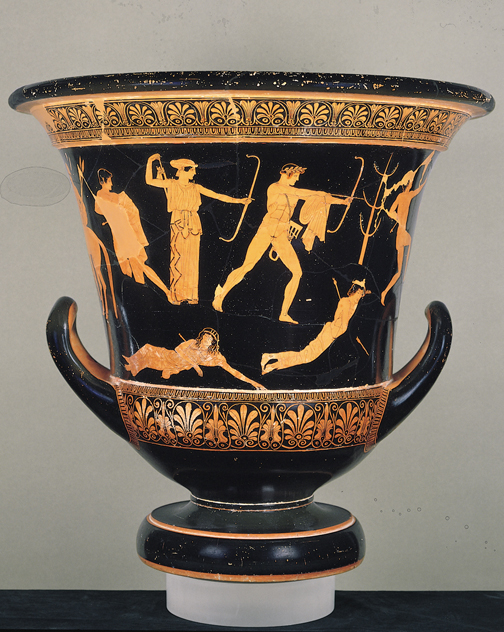
Death of Niobids, Attic red-figure, ca. 450 BCE
Medea 954-957 (now resolved to kill children)
I wish as many children as proud Niobe bore
had come from my womb, I wish I had
twice-seven sons! I was infertile for revenge:
but my two are just enough to pay for brother and father.
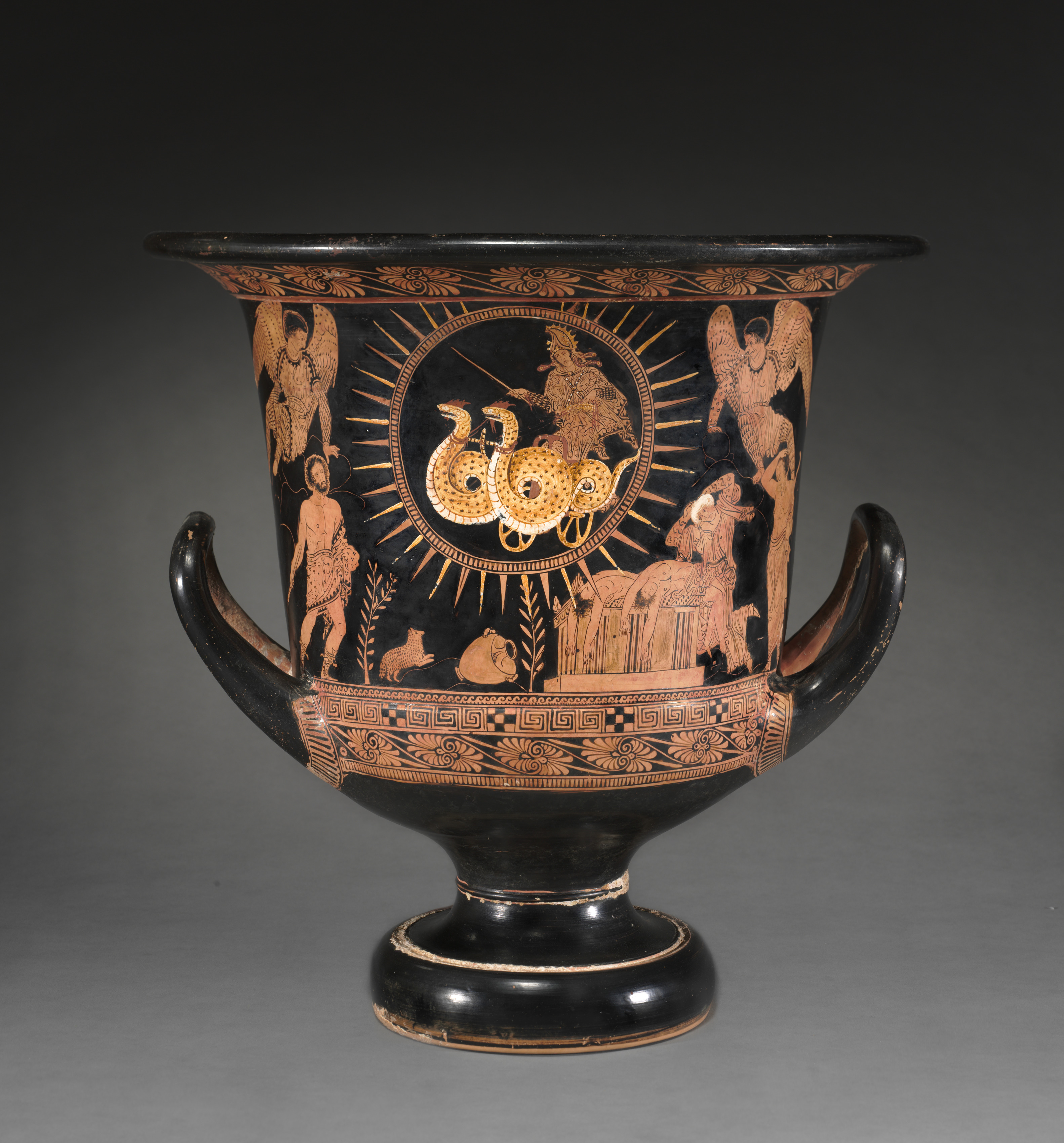
Medea's Chariot, Lucanian krater, 4th century BCE
- final grim (metatheatrical) spectacle (top of palace)
Medea 991ff. (after killing first child)
I have done it. Great pleasure steals over me against my will,
and see! now it grows. This was all I was missing,
that Jason should be watching. I think I have so far done nothing:
crimes committed without him were wasted . . .
(after killing second child)
. . . This is the way I always leave a country. The way in the sky lies clear.
Twin serpents lower their head, their scaly necks
accept the yoke. Now, Daddy, take your children back.
But I will fly amid the winds on my chariot with wings.
(Jason's last angry words)
Go, travel on up high through the deep expanse of the heavens,
prove that there are no gods wherever you go.