CLAS 355
April 6, 2023
Nature's Traumas (Earthquakes & Volcanos)
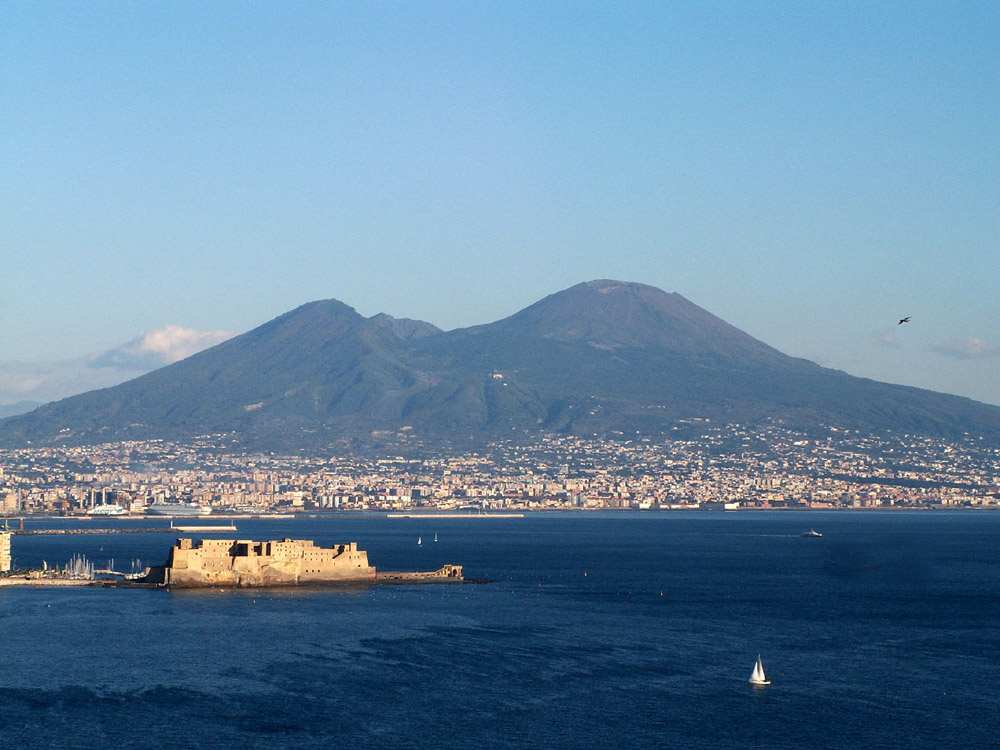
View of Bay of Naples with Mt. Vesuvius in background
Award winning National Geographic documentary, Fire of Love (2022) trailer
Response #2: due April 21, (optional) draft due April 14; Topics
Creative Project: due April 25
Earthquakes & Volcanos: cultural catastrophe (death, destruction, displacement), HTVT (cf. psychosocial stressors & PTSD of hurricanes, e.g. 2015 The Atlantic piece, "Recovery from PTSD after Hurricane Katrina")
- ancient mythic explanations: Neptune (Poseidon) "the earthshaker" strikes ground with trident (instrument of terror & revenge); Vulcan (Hephaestus), blacksmith under Mount Etna, Sicily, or monsters (Typhon, Giants) caged in earth
- scientific inquiry (Seneca, Pliny the Elder): ancient theorizing re Mediterranean/Trans-Asian earthquake belt ("pneumatic theory"/vapors in earth's cavities); modern science?
Earthquakes 101 (National Geographic)
"How are Earthquakes & Vocanos Interrelated?" (Australian Museum)

Street in Pompeii today with Mt. Vesuvius in background
- scope of natural disasters increases with Roman imperial expansion; recognized as cultural castrophes by government > imperial aid (public funds & tax exemptions), e.g. Vespasian's (emperor 69-79 CE) aid for 62 CE Campanian earthquake (Seneca's dead sheep, etc., 6.27), Titus's (emperor 79-81 CE) senatorial commission after eruption of Vesuvius in 79 CE; "the emperor as saviour" (Stabiae rebuilt within 40 years, Hadrian, emperor 117-138 CE)
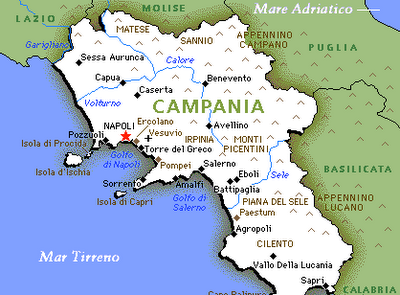
- evidence of earthquake preparation/prevention (construction methods & site selection: Pliny the Elder's Natural History 2.197-8); cf. astrology, magic, religion
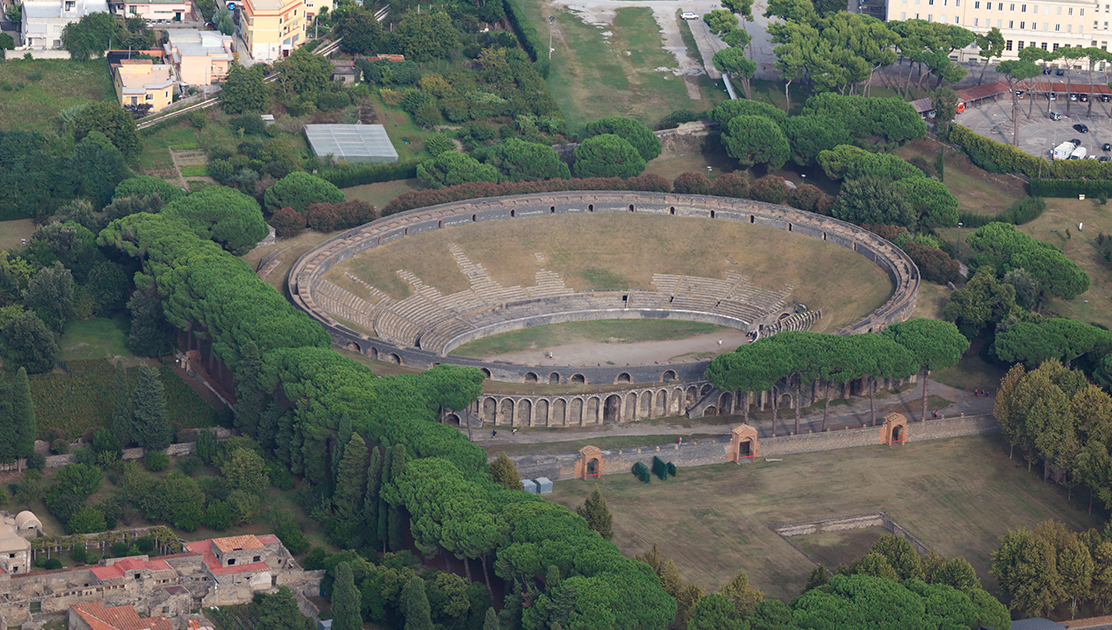
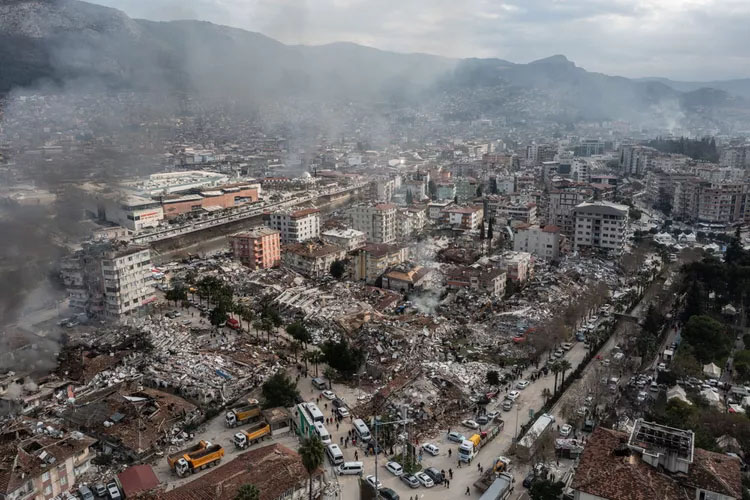
L: Amphitheater at Pompeii; R: Devastation of 2023 Turkey & Syria earthquake
- Mount Vesuvius: stratovolcano (lava, tephra) with cone height ca. 4,200ft. on Gulf of Naples in fertile & scenic Campania, ca. 6 miles from Naples; collision of African and Eurasian tectonic plates behind 79 CE eruption; ancient cities of Pompeii (15-20,000 inhabitants) & Herculaneum, Roman villa sites of Oplontis, Boscoreale and Stabiae buried (August 24-25, 79 CE); people flee as far away as Misenum (20+ miles); "a calamity shared by communities and cities" (Pliny, Letters 6.16.2)
.jpg)
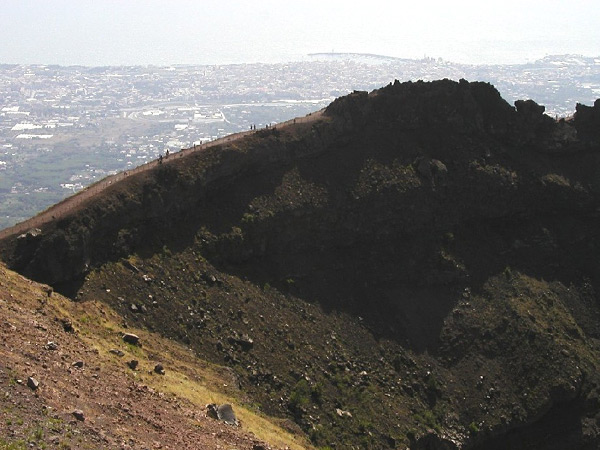
L: Crater-wall of Mount Vesuvius; R: Seated Woman Fresco, Villa Arianna, Stabiae, 1st century CE
- Vesuvius's cloud to 21 miles: ca. 1-2,000 died in Pompeii (ashes, volcanic gases, molten rock, pulverized pumice, magma, mudslides, mild tsunami in Bay of Naples); Mt. Vesuvius active today (ca. 3,ooo,ooo people)
"A Day in Pompeii" (full-length animation)
Pompeii Walking Tour, Part 1 (2017)

Fresco of Bacchus with Vesuvius in background, Pompeii
Martial Epigrams 4.44 (ca. 10 years after the great eruption)
Here is Vesuvius, recently verdant with shading vines—
here the noble grape had loaded the dripping vats:
these were the hills Bacchus loved more than Nysa—
On this mountain the Satyrs not so long ago led their dance.
Here was the home Venus considered more pleasing than Sparta.
This place was famous because of its Herculean name.
All of this lies drowned in flames and sorrowful ash.
Not even the gods wished for this to be their right.

- Seneca's project: applying Stoic reason to natural catastrophes, esp. earthquakes; science > eliminating fear & terror
Seneca, Natural Questions 6.1.4-5 (the fundamental problem)
Comfort needs to be found for the fearful, and their great terror needs to be eradicated. For what can anyone regard as sufficiently secure, if the world itself is shaken, and its firmest parts crumble; if the one thing in it that is immovable and fixed, so that it supports everything that converges on it, starts to waver; if the earth has lost its characteristic property of standing still? . . . What hiding place can we see, what help, if the earth itself cracks, and the very thing that protects and supports us, that cities are built on, that some call the foundation of the world, gapes open and trembles?
Seneca, Natural Questions 6.1.7 (the scale of cultural trauma & obliteration of a place's memory)
But this disaster [an earthquake] spreads far and wide, inescapable, greedy, harmful on a national scale. For it does not swallow up just individual homes or households or cities: it overwhelms entire peoples and regions, sometimes covering them in ruins, sometimes burying them in deep chasms. It does not even leave evidence to show what exists no more did once exist, but the soil spreads over the noblest cities without any trace of their former state.
- preempting trauma (cf. pretraumatic stress disorder) > Stoic therapeutic reflection on human mortality/fear of death: means & timing of death irrelevant, world itself impermanent ("Not only we humans, who are born short-lived, frail creatures, but cities, and the coasts and shores of the land, and even the sea, are enslaved to fate", 6.1.14)
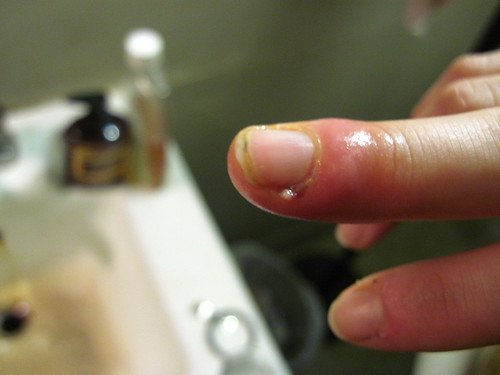
Paronychia (nail infection)
Seneca, Natural Questions 6.2.5 (death's omnipresence in ancient world)
Pain in a fingernail, and not even all of it, but a cut at the side of it, can finish us off! Should I be afraid of earth tremors when thickened saliva can suffocate me?
- Seneca's cosmic view of natural disaster: death universal ("It makes no difference to me how great a commotion surrounds my death; death amounts to the same thing everywhere", 6.1.8)
Seneca, Natural Questions 6.32.9-11 (humility & non-ownership of borrowed time, etc.)
You will face all that [earthquakes and lightning bolts] without flinching if you consider that there is no difference betwen a short time and a long one. What we lose are only hours. Suppose they are days, suppose they are months, suppose they are years: we lose them, but they are going to be lost anyway. What difference does it make, I ask you whether I live that long? Time flows on and abandons those who are greediest for it . . . Even when we see that we are counting the years we have lost, can we still understand that our life is essentially something we cannot cling on to, that the time allocated to us is never in our possession?
- scientific knowledge: therapeutic study of nature captivating to curious; rejects supernatural explanations ("It will also help to realize in advance that the gods are not responsible for any of this, and neither the sky nor the earth is shaken by the anger of divinities", 6.3.1)
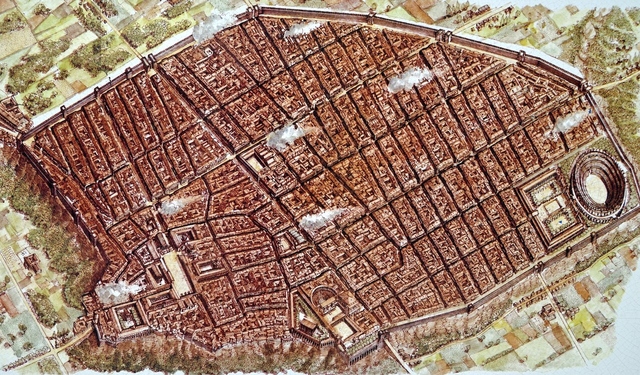
Reconstruction of Pompeii before the eruption of Mt. Vesuvius in 79 CE
- Seneca's testimony to massive human & cultural catastrophe of 62 CE earthquake at Pompeii
Seneca, Natural Questions 6.29.1-3 (a Stoic's judgment)
A number of people ran off as though mad or stupefied: this was the result of fear, which causes mental disturbance when it is private and moderate; so what happens when there is terror on a public scale? When cities are collapsing, peoples are being destroyed, and the earth is quaking, is it surprising that minds deprived of support in the midst of grief and fear become deranged? It is not easy to stay sane in the midst of great disasters. So the weakest temperaments generally reach such a pitch of terror that they soon lose their heads. No one can panic without some loss of sanity, and anyone who is afraid resembles a madman. But fear soon restores some people to their normal selves, while it disturbs others more deeply and drives them mad. That is why in time of war people wander around distraught, and nowhere will you find more cases of people prophesying than when panic blended with religion has attacked their minds.
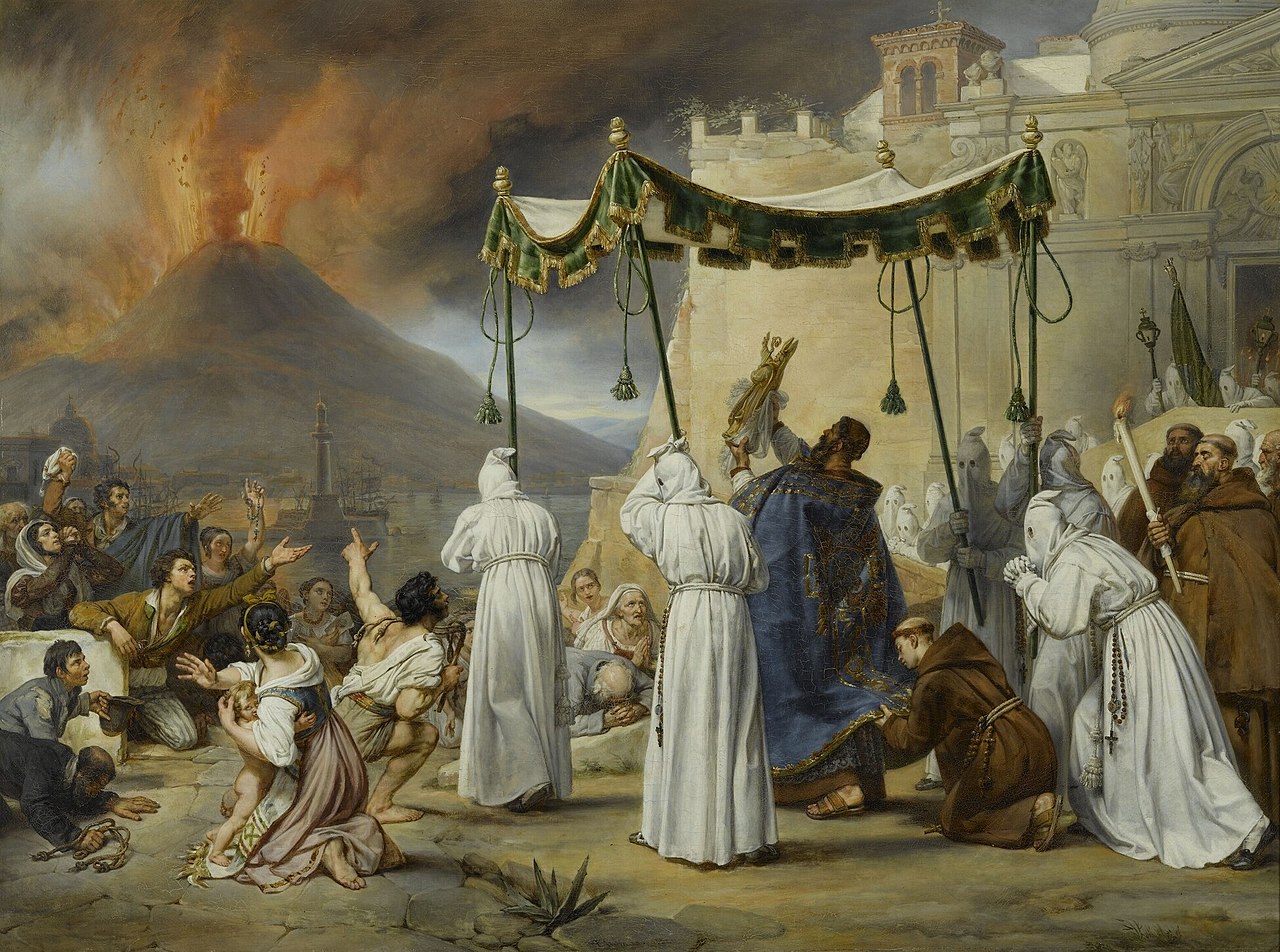
Thomas, Processsion of the Relics of Saint January, 1822
- Pliny the Younger (ca. 60-112 CE): earliest surviving eyewitness account of a volcanic eruption, ca. 30 years after eruption of Mt. Vesuvius; Letters 6.16 in response to Tacitus's request (Histories) re Pliny the Elder (18 yrs. old Pliny the Younger had to study, 6.16.7); Letters 6.20 gives more information about Pliny & his mother at Misenum—Pliny's studied modesty ("These details are in no way worthy of your history", 6.16.20)
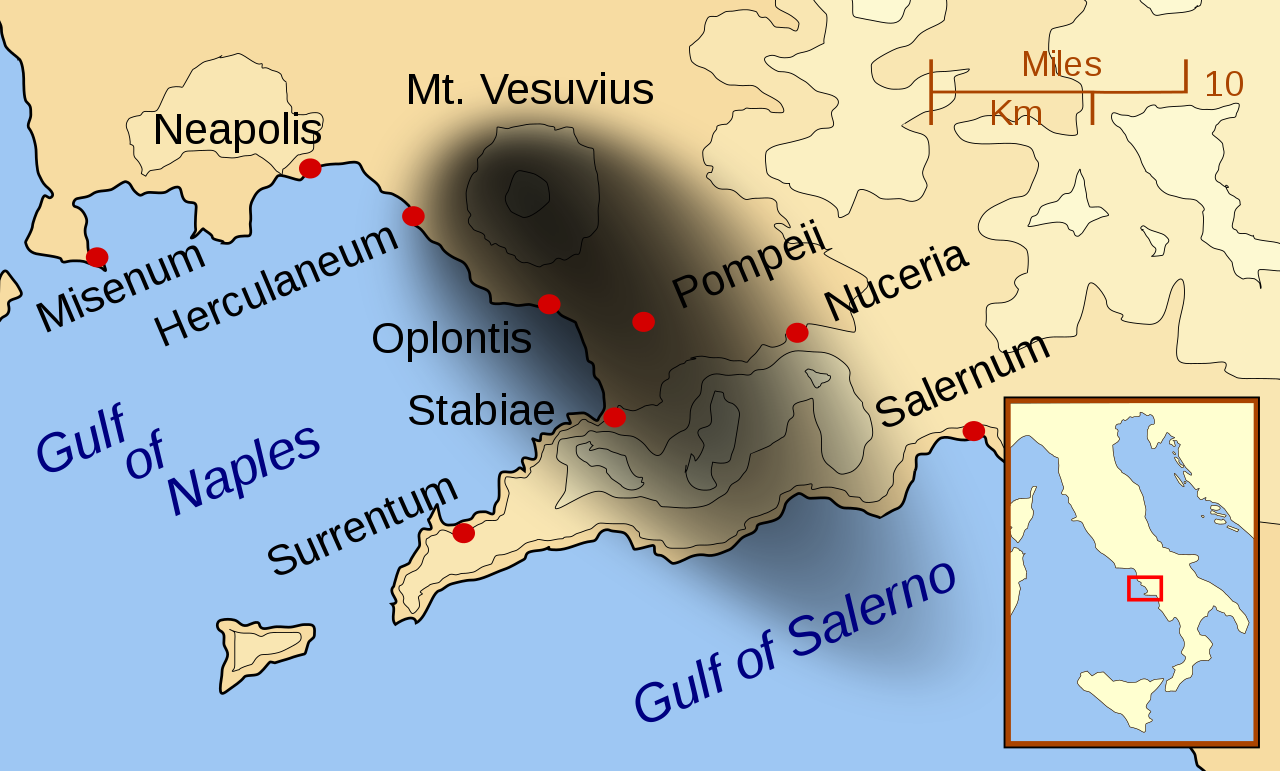
- Pliny the Elder (23-79 CE): commander of fleet at Misenum, author of Natural History; Pliny the Younger visting uncle when called to help friend Rectina at Herculaneum; uncle dies at Stabiae (at Pomponianus's house) on August 25, 79 CE
- Pliny's description of eruption-cloud as "pine tree" (6.16.6)
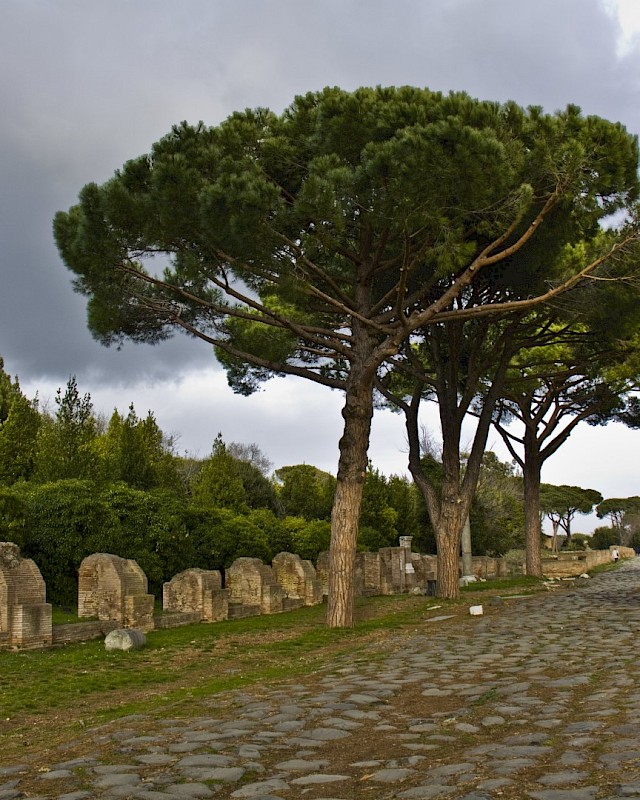
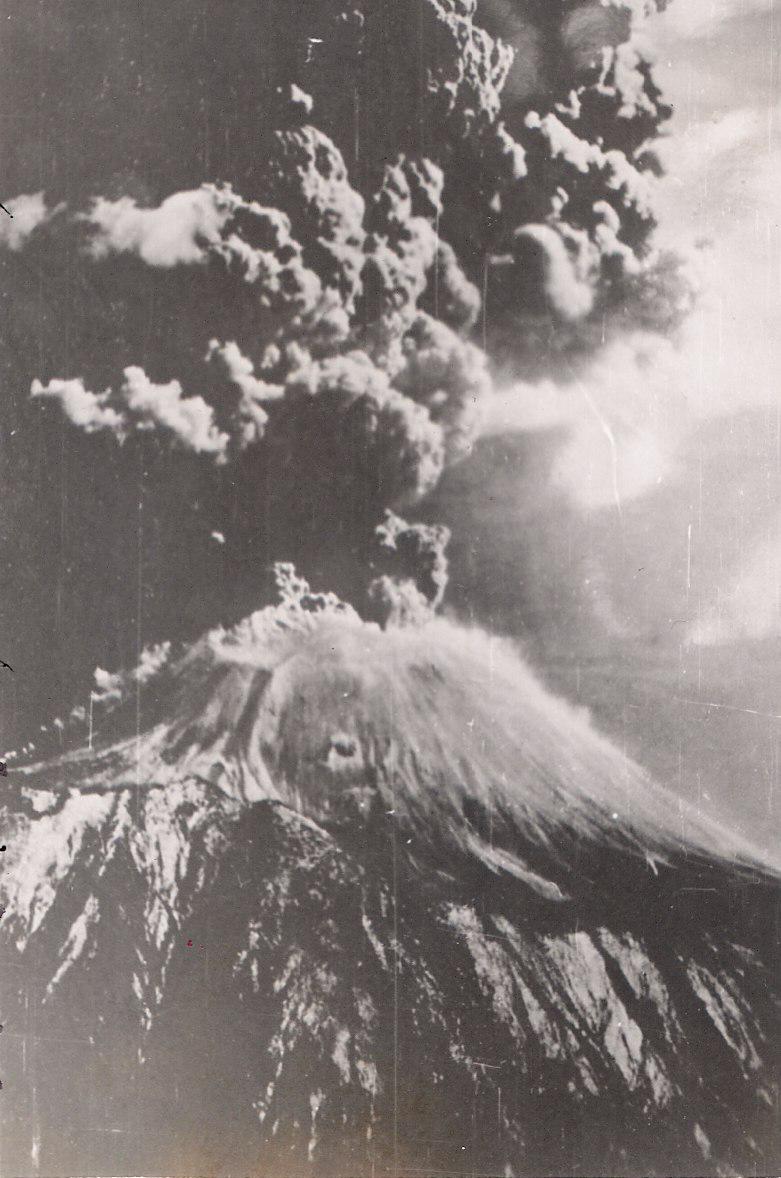
L-Italian Stone Pine (pinus pinea); R-Photo of 1944 eruption of Vesuvius
- Elder Pliny represented as Stoic champion & scientist > research/rescue mission ("He headed swiftly into the area from which others were fleeing, and maintained a straight course, steering straight toward the danger", 6.16.10; "he was so fearless that he dictated and had notes taken of all the movements and shapes of that evil phenomenon as he observed them", 6.16.10)
Pliny, Letters 6.16.13 (Pliny calms his friends in Stabiae)
To calm people's apprehensions, my uncle kept saying that these were fires abandoned by peasants in their fear, and houses ablaze because they had been left untenanted. Then he retired to rest, and in fact he relaxed in sleep that was wholly genuine, for his snoring, somewhat deep and loud because of his broad physique, was audible to those patrolling the threshold.
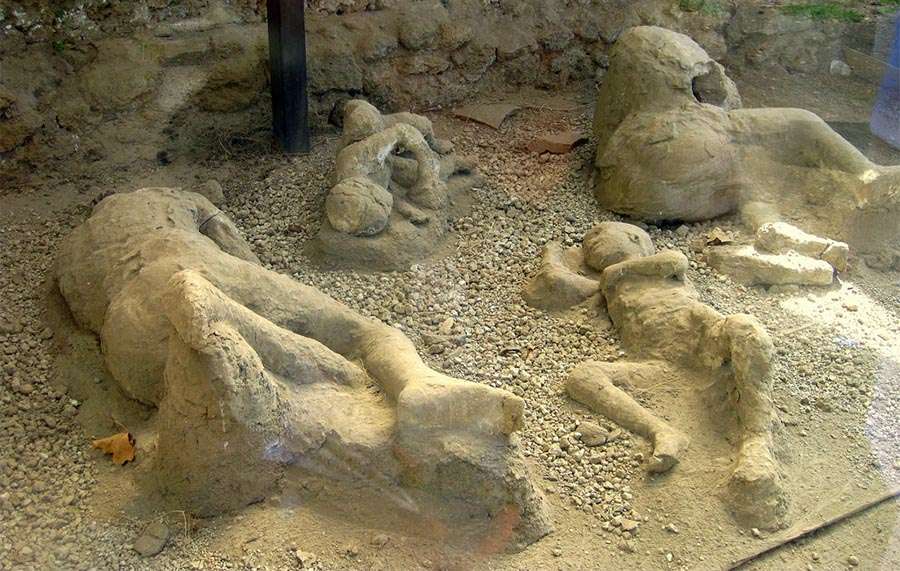
- Uncle Pliny's Stoic death at Stabiae
Pliny, Letters 6.16.18-20
My uncle lay down there on a discarded sail, and repeatedly drank cold water, which he had requested. Then flames and the smell of sulphur heralding the flames impelled the rest to flight and roused him. Leaning on two of his confidential slaves, he stood up and at once collapsed. I infer that his breathing was choked by the greater density of smoke, and this blocked his gullet, which was often frail and narrow, and often unsettled. When daylight was restored, two days after his eyes had closed in death, his body was found intact and unharmed. It was covered over, still in clothes he had worn. It was more like someone sleeping than a corpse.
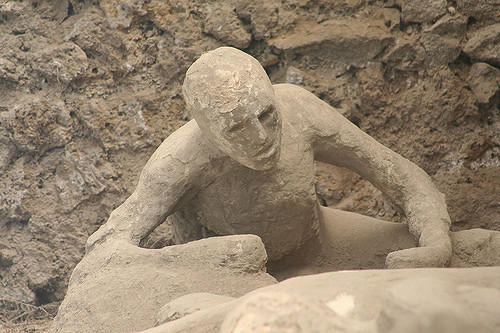
- Pliny the Younger's testimony to experience in Misenum, "I believed that I was perishing together with the whole world, and the whole world was perishing with me," 6.20.17
Pliny, Letters 6.20.6-9 (general panic & Pliny's self-representation as Stoic)
The buildings all around were shaking, and though we were in the open, it was a confined space, and our fear of falling buildings became great and definite. We then finally decided to quit the town, followed by a stupefied mob. In what passes for prudence at a time of panic, they preferred the decision of others to their own, and in an extended column they pressed close to us and drove us on as we departed. Once we were away from the buildings we halted. There we experienced many remarkable and many fearful things, for the carriages which we had ordered to be brought out were moved in opposite directions though on wholly level ground, and did not remain stationary in the same tracks even though wedged with stones. Moreover, we watched the sea being sucked back and virtually repelled by an earth-tremor; at any rate the shoreline advanced, and left many sea-creatures stranded on the dry sand.
National Geographic footage of 2011 tsunami in Japan

- flight of victims from Misenum on second day: trauma, panic, rumors & despair
Pliny, Letters 6.20.13-15
Dense blackness loomed over us, pursuing us as it spread over the earth like a flood. 'Let us turn aside,' I said, 'while we can see. Otherwise, if we stay on the road, we may be brought down and flattened in the darkness by the crowd accompanying us.' We had scarcely sat down when darkness descended. It was not like a moonless or cloudless night, but like being in an enclosed place where the light had been doused. You could hear women moaning, children howling, and men shouting; they were crying out, some seeking parents, others children, and others wives, or recognizing them by the sound of their voices. Some were lamenting their own misfortune, others that of their families. A few in their fear of death were praying for death. Many were raining their hands to implore the gods, but more took the view that no gods existed anywhere, and that this was an eternal and final darkness hanging over the world. There were some who magnified the actual dangers with invented and lying fears. Some persons reported that one part of Misenum was in ruins, and that another was on fire; it was untrue, but their listeners believed it.
Earthquakes in popular media:
Pompeii (2014 film)
San Andreas (2015) trailer
Red Hot Chili Peppers' Californication video (1999)