CLAS 355
Phaedrus, Fables (conclusion)
May 2, 2023
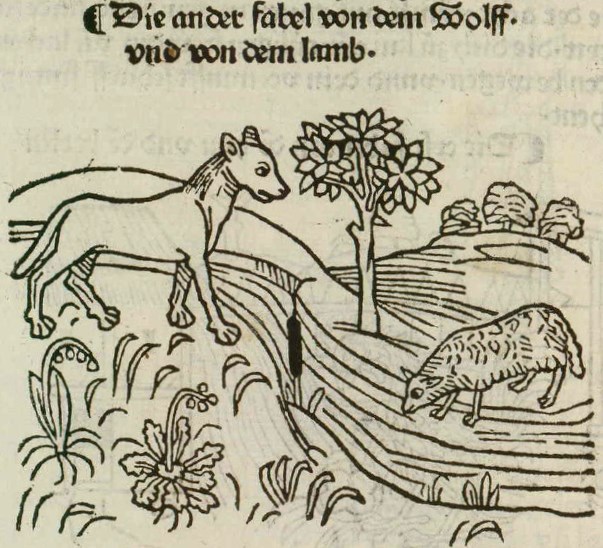
"The Wolf and the Lamb", German edition of Aesop, ca. 1479
*Study Guide for Final Examination: May 10, 1-3pm*
*Student Course Surveys*
Phaedrus, Fables 3-5: continuation of political themes of Books 1-2 (safety-net of fables); poet's claims of independence from Aesop (forging a literary identity = poetic monument, i.e. name/fame/memory/voice in challenging circumstances); humorous fables
- Fables 3, Prologue: to Eutychus, busy freedman (?)/businessman, contrasted with poet ("minded to enter the mansion of the Muses . . . immune to the lure of money"); ideal reader/patron (?) ("if they go unread, / At least I will pass the pleasure to posterity")
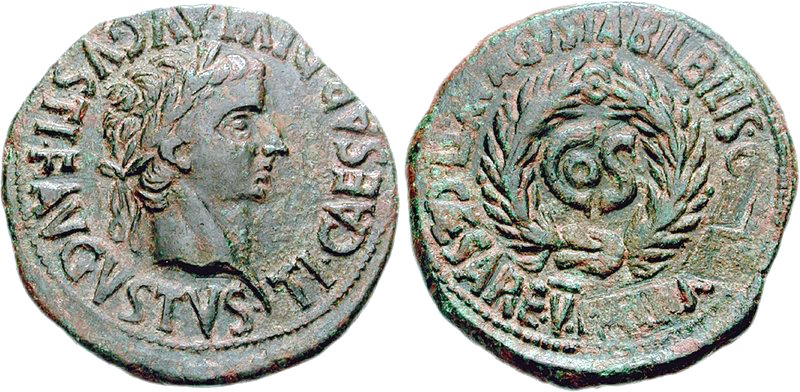
Coin of Tiberius (L: TI • CAESAR • DIVI • AVGVSTI • F(ilius) • AVGVSTVS) with Sejanus's name removed on reverse (damnatio memoriae), 31 CE
Fables 3, Prologue (Phaedrus's expanded program; individual vs generic targets & "plausible deniability")
Now let me give you a little lesson
On why fables, as a form, were first invented.
Slaves are exposed to incessant hazards.
Unable openly to express what he wanted,
One of them projected his personal opinions
Into fictional fables and found shelter
From carping critics in comic inventions.
The lane that he left I’ve enlarged to a highway
And thought up more themes than he bequeathed,
Though some have got me into terrible trouble.
If my accuser, my judge, and my jury
Had been any other than simply Sejanus,
I’d have openly acknowledged my evident errors,
And I wouldn’t be worrying about saving my name.
I express in advance the hope of being excused.
If people persist in being a prey to suspicion
And mistakenly take themselves to be my targets,
When I’m aiming at the obvious errors of all,
The cause is clear: their consciences are guilty.
If I give them pain, I apologize profusely:
My purpose is not to pillory any person,
But to illustrate life and the ways of the world.
. . . Well, Eutychus, have I teased you into reading?
I'd really appreciate your opinion of these poems—
Candid criticism of your customary kind.
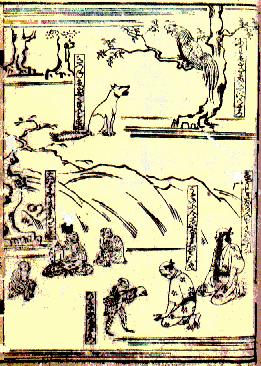
Woodblock print illustration of Japansese translation of Aesopica, 1659
Fables 4, Prologue (Phaedrus's independence, Romanization)
Since, then, Particulo, you're partial to fables
(Which I call Aesopic, not actually Aesop's,
Since I've made more than the few he fathered,
Following his form, but with modern content)
You can now read the following, my fourth volume.
Fables 5, Prologue
I’ve already acknowledged what I owed Aesop.
And if anywhere I insert his name again,
I’m doing it purely to profit from his prestige.
- fables require reader to fill in the blanks, e.g. 3.1, "What the Old Woman said to the Wine Jar"
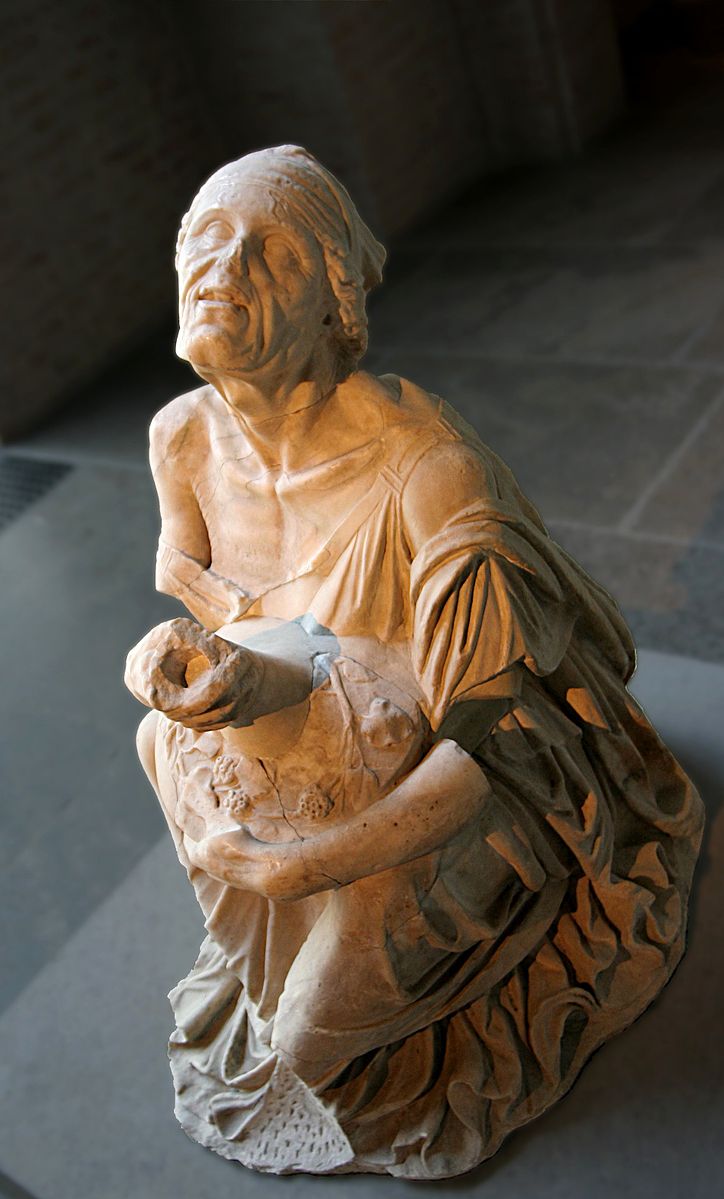
Old Woman Clutching Wine Jug, Roman copy of Hellenistic Statue, ca. 200-180 BCE
Fables 3.1 (old woman sniffs lees of Falernian wine-jug)
"Delightful perfume, how perfect in your prime
You must have been, when your remains are so marvelous."
To people who know me, the point will be plain.
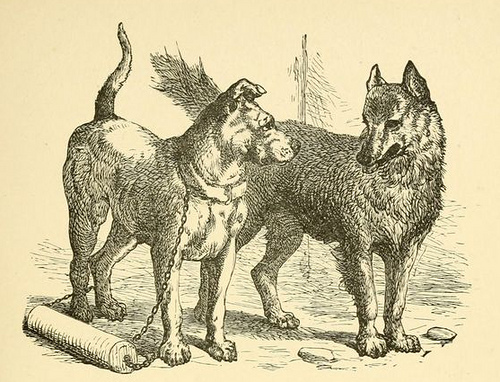
Illustration from Tenniel's Aesops's Fables, 1848
- sweetness of (lost) freedom: Stoicism & nostalgia (cf. Lucan & security/freedom swap)
Fables 3.7, "The Wolf and the Sleek Dog" (conditions of dog's service, chafed neck, nature of kingship)
This fable affirms the sweetness of freedom.
. . .
“So, dog, you keep doing what does you good.
Personally, I prefer to rough it in my freedom.
You wouldn’t catch me consenting to be king,
If it made me no longer master of myself."
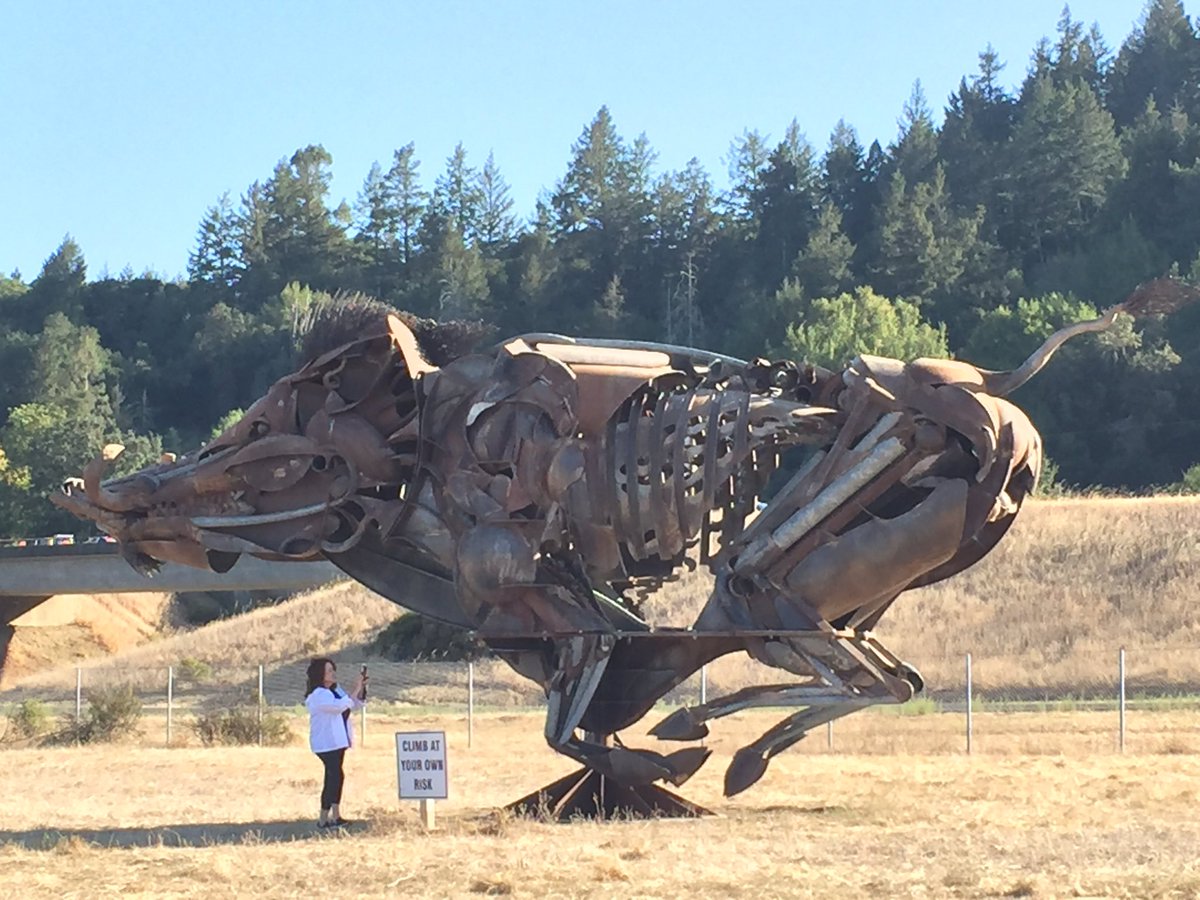
Wild boar sculpture, Geyserville, CA
Fables 4.4, "The Horse and the Wild Boar" (water rights, alliance with horseman)
Then the horse morosely muttered, "How misguided,
What a fool I feel! I was full of resentment
And vowing vengeance for a negligible
nuisance,
And here I end up exploited forever."
The story should serve as a salutary warning
To the angry and aggressive that it’s always better
To bear with being hurt without hitting back
Than be put in the power of another person.
- autocracy & capricious power, autocrat as vicious predator (+ sycophants, dishonest subjects); cf. monarchy/principate
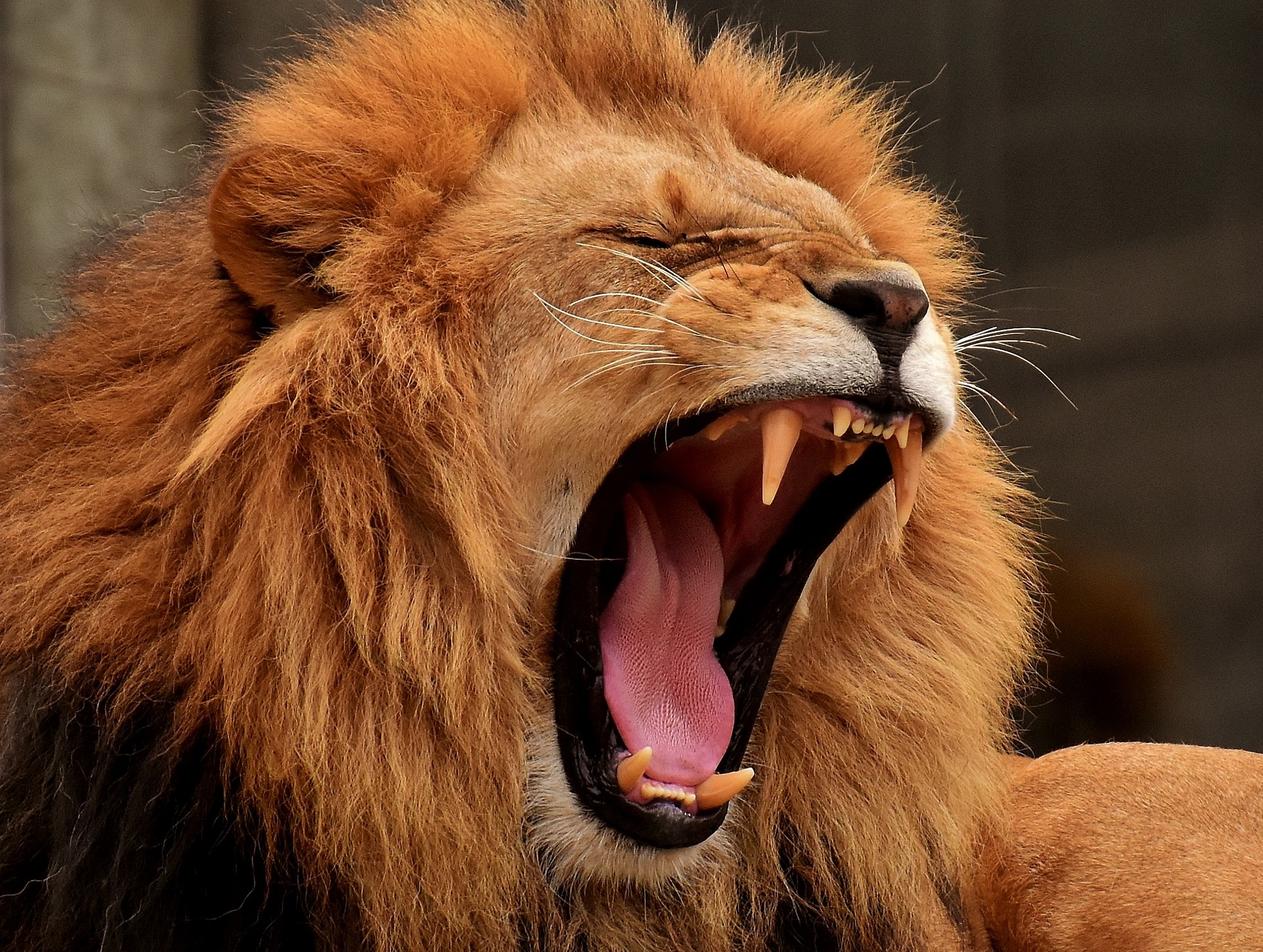
"Does my breath smell?"
Fables 4.13A, "The Reign of the Lion" (precarious double bind of speaking freely under "Dear Leader")
There are times when the penalties for speaking out
And for keeping quiet are equally awful.
. . . The ape answered, "Beautiful, beatific.
Something like cinnamon, or the subtle spices
That smell so glorious on the altars of the gods."
"Who am I and who are these you see at my feet?"
Fables 4.13B, "The King of the Apes" (two travelers; speaking truth to the Emperor-Ape; political theater)
“Nothing benefits more than to tell the truth.”
Of course, we should commend this moral:
But sincerity sometimes has disastrous results.
. . .
"You're an ape, as always, and all those assembled
Are apes also, and always will be."
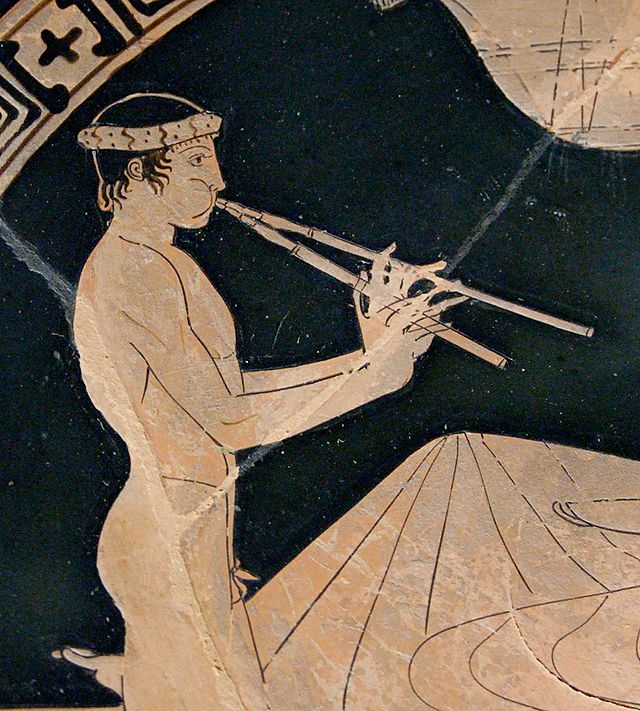
Youth playing aulos (Latin tibia), Attic red-figure ca. 460-450 BCE
Fables 5.7, "King the Flute Player": false praise of King (princeps, "first citizen"; cf. principate) with broken tibia, accompanist of Bathyllus the dancer, set in Augustan theater ("Rejoice, Rome, / Your state is safe, now the king has recovered"); subversive (performative power, title)?
Fables 5.7 (moral)
When a frivolous mind is made complacent
By the wayward winds of popular applause
And assumes an attitude of arrogant assurance,
Its pretentions are easily pricked by ridicule.
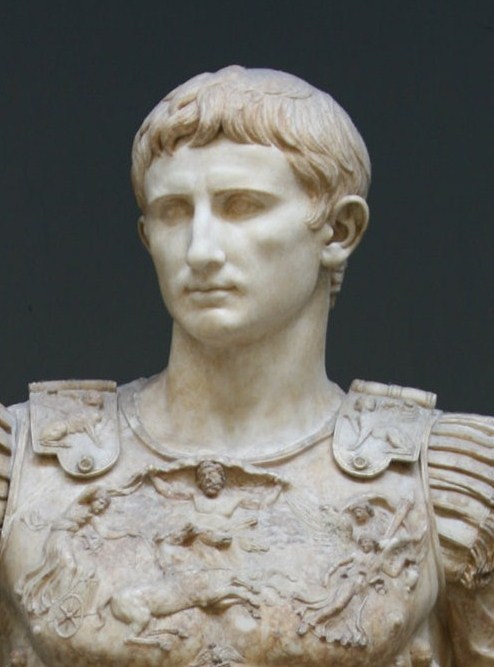
Augustus of Prima Porta, 1st century BCE/CE
- Fables 3.10, "The Poet, on Believing and not Believing": flattering portrait of Augustus (cf. Fables 2.5, "Tiberius' Words to an Attendant", emperor as exceptional creature?); legacy hunting (freedman) secretary's plot (cf. Hippolytus, Phaedra & Theseus in tragedy); disingenuous fabulist (plausible deniability)?
Fables 3.10 (believing or not believing the wife/secretary)
To believe and not to believe, both are dangerous:
Here’s a brief example of each extreme.
. . . Augustus cut through the thicket of calumny
And detected the true foundation of the facts.
. . . Neither accept nor reject a report
On the spot. The most improbable people,
Outwardly innocent, can be very vicious;
And those far from fault can be fooled and framed.
. . . I’ve gone into this question at greater length
Than usual, since a few friends have informed me
That they find my fables somewhat too short.
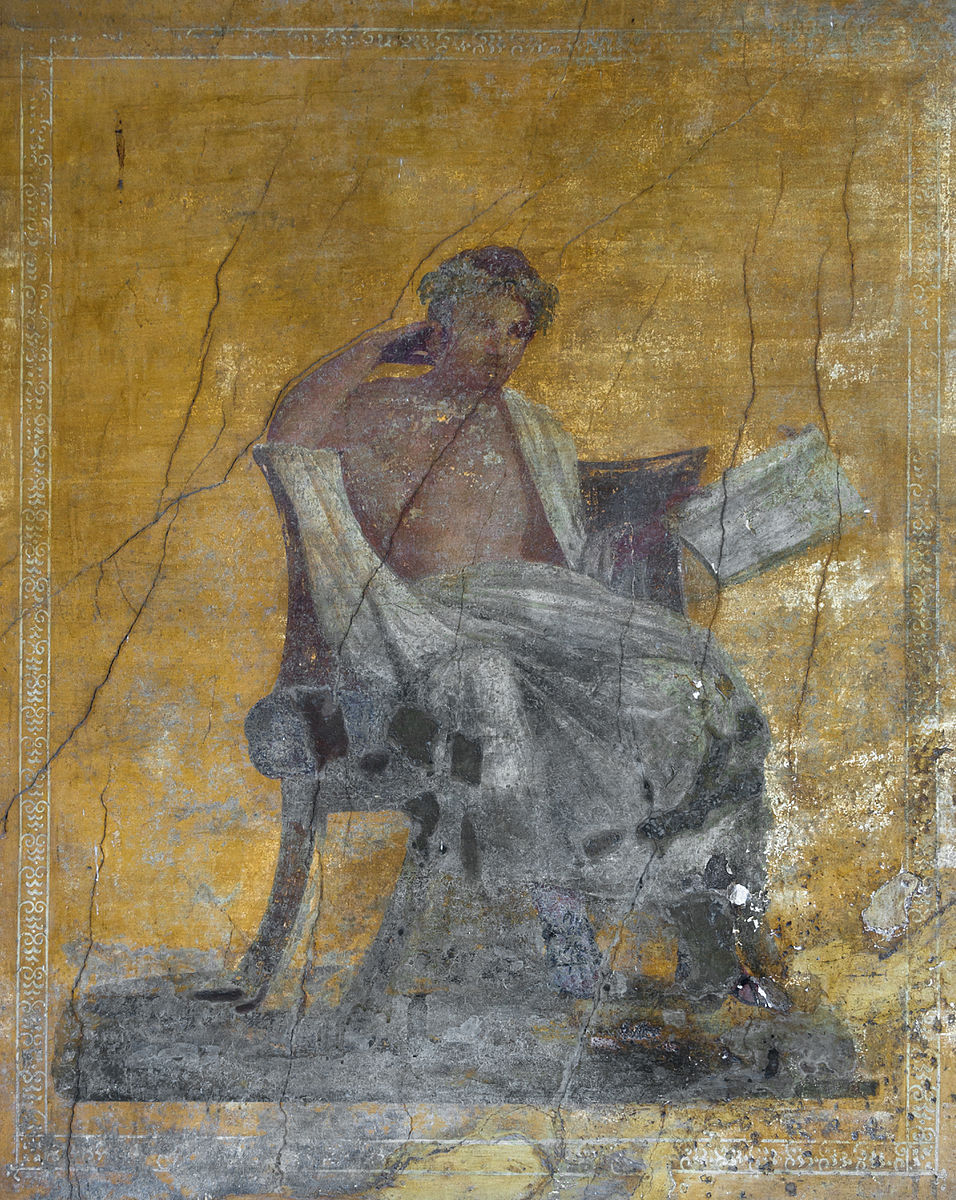
.jpg)
L: Comic Poet Menander Fresco, Pompeii; R: Garden of the House of Menander, Pompeii
- gender: (binary) gender stereotyping & essentializing others, Fables 5.1, "King Demetrius and the Poet Menander"
Fables 3.11, "The Eunuch’s Reply to his Insulting Adversary"
"True," said the eunuch, "there I'm weaker than you:
I've no testicular evidence of integrity, [testes, "witnesses", "testicles"]
But my failing, you fool, is the fault of Fortune:
Why hold it against me? Genuine disgrace
is to suffer deservedly for deliberate misdeeds."
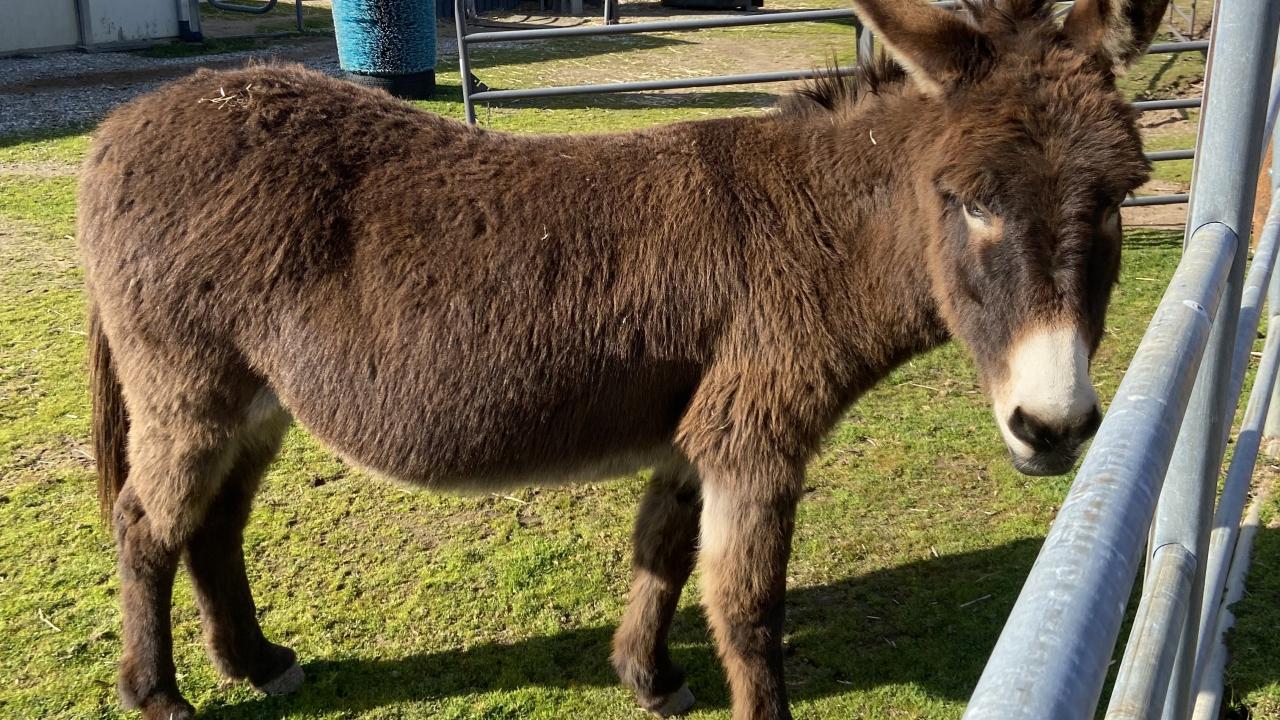
Lily (survivor of oleander poisoning, 2023)
- humorous aetiological fable: Fables 4.18, "The Dogs Send Envoys to Jupiter" (two delegations to Jupiter; "Their descendant dogs to this day are awaiting / Their return"); Fables 4.1, "The Ass and the Priests of Cybele" ("we still give him as good a beating")
Encyclopedia Britannica video on the chemistry of canine butt-sniffing
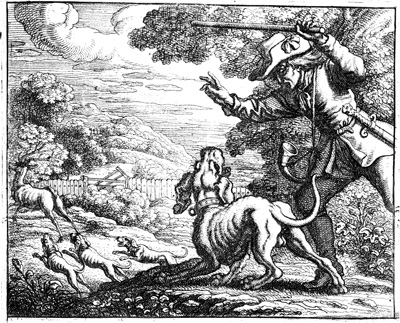
Illustration from Barlow's Aesop's Fables, 1666
- closing the collection: Fables 5.10, "The Old Dog and the Hunter" (cf. ancient Cynics, "Dogs"/social critics)
"It's strength, not spirit, that's deserted me, master.
If you want to blame me for what I've become,
you should give me credit for what I was?"
No need, I fancy, to stress the message.
