CLAS 4/532
February 3, 2025
Translation Equivalence, Product & Process, Function
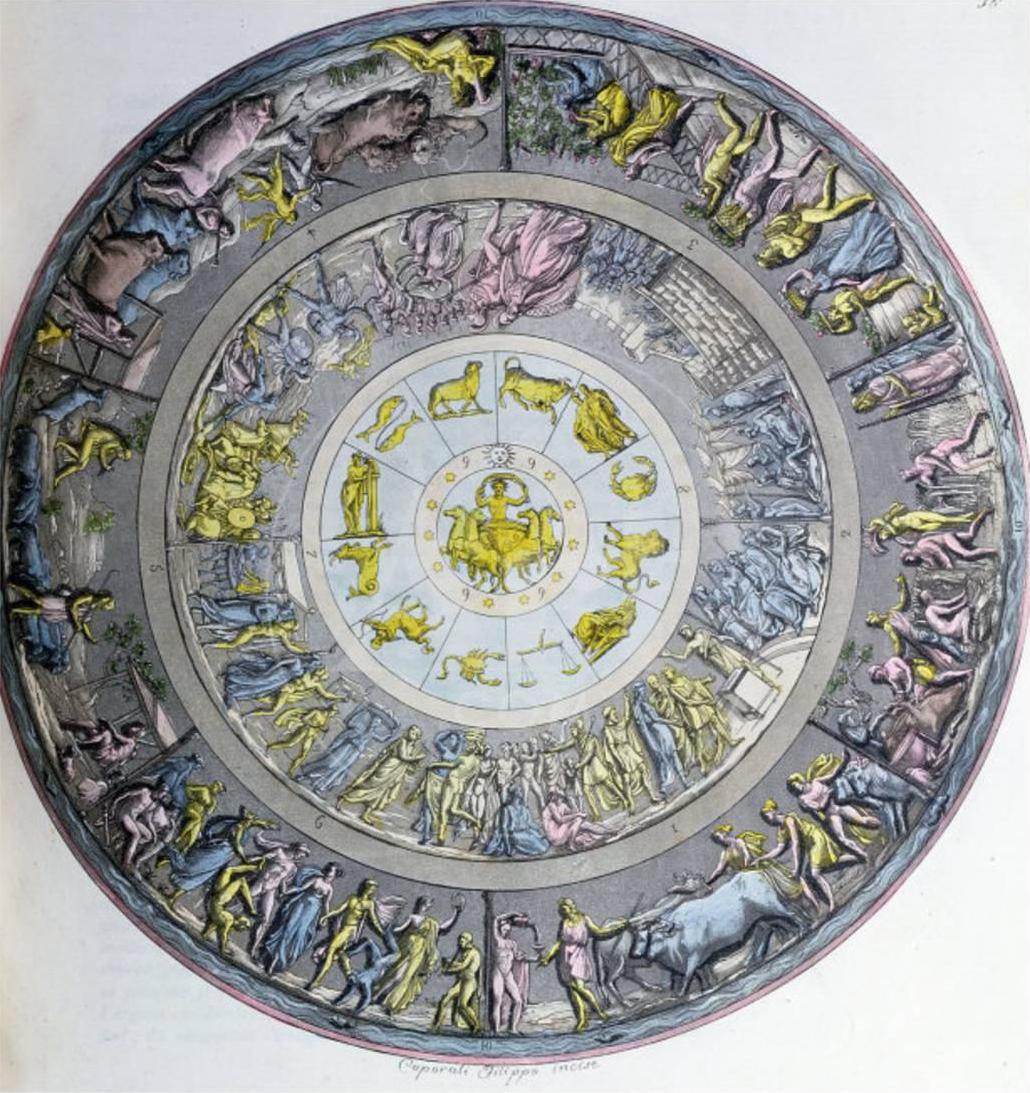
Angelo Monticelli's Shield of Achilles (ca. 1820)
1. Equivalence in translation (Munday, ch. 3); Jakobsen (“On Linguistic Aspects of Translation”) – 3 types of translation + statement of translatability in terms of linguistic meaning & equivalence
- fundamental semiotic principles: words mean what they mean by linguistic agreement/convention, relationship between signifier and signified [= sign] arbitary; experience of signified concept not necessary for understanding
- everything translatable without full equivalence between code units/signs (re-coding, substitution of messages) – translation shows differences between sign-systems
- poetry: problematic because of play of rhythm, sound, meaning (cf. Reiss's “expressive text”, expressing ST's attitude/standpoint in a particular aesthetic and artistic form) and untranslatable (?) & requiring “creative transposition” (3 types); cf. David Melnick's Men in Aïda
Nida: move away from strict word-for-word equivalence (literal vs. free debate; rigorous exercises to distinguish cultural differences between terms) to consideration of TT reader > reader-response orientation of translation (removal of ST from authoritative pedestal):
- formal equivalence: close match of ST and TT in form & content (“foreignization”)
- dynamic equivalence = equivalent effect: TT recreates relationship between ST & ST audience to match response; adjustments required (“naturalizing” grammar, culture, etc.) to create similar responses/effects in TL/TT (“domestication”)
- problems with achieving “equivalent effect” (ST/TT dislocations of space, time, culture)?
2. Strategies & Procedures in translation, i.e. systemizing & classifying translation shifts = departures from formal equivalence (Munday, ch. 4; Vinay & Darbelnet, now aided by computers & corpus-study)
- direct translation (“literal” strategy): borrowing, calque, word-for-word (procedures)

- oblique translation (“free/idiomatic” strategy, obligatory or optional – style & preference): common procedures
transposition (parts of speech)
modulation (semantics and/or point of view, e.g. abstract<>concrete, active<>passive)
amplification/expansion (vs. economy)
explication (implicit>explicit)
generalization (particular<>general)
adaptation (cultural references)
compensation (loss/gain)
3. Translatorial Action (Munday, ch. 5 – Snell-Hornby integrated approach to text-type & translation, Figure 5.2, p. 106?): shift of focus to translation's purpose/goal/outcome within sociocultural & economic context > moving beyond linguistic equivalence to communicative exchange
- translation as functional event: various agents & roles (initiator, commissioner, users, receivers, etc.) – commission (agreement on translation's goals & conditions, needs of intended audience)
- Skopos Theory (Vermeer): further “dethroning of ST”, TT to be judged mainly on functional adequacy = does TT successfully meet commissioned goals (vs. best/correct/most faithful, et sim., translation of ST, linguistically or otherwise) > intratextual coherence for TT receivers (vs. intertextual fidelity to, anchoring in ST/author intentions?), adequacy over equivalence
CLAS 532 2-3.pdf