LAT 530
November 5, 2024
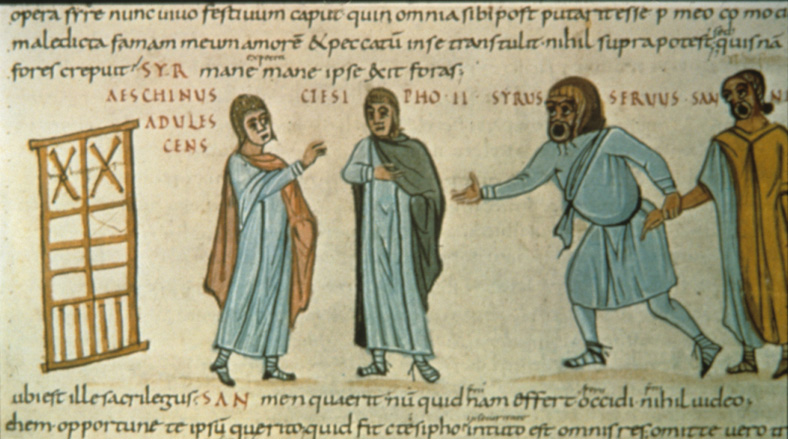
Codex Vaticanus Latinus 3868 = C (9th century CE) illustrations
Terence = Publius Terentius Afer
- Suetonius, Vita Terenti in De Poetis: born in Carthage (184 BCE), taken as good looking slave to Rome, manumitted by master & associates with Roman elite (Scipio Aemilianus, Laelius), dies on trip to Greece (159 BCE)
- Terence's cultural context: new wave of Hellenism following Battle of Pydna (L. Aemilus Paullus defeats Perseus of Macedon, 168 BCE); Roman expansion & engagement in Mediterranean geopolitics; culture wars (traditionalism vs. foreign influences), e.g. banishment of Greek philosophers & rhetoricians (161 BCE); philhellenic Roman aristocrats – "Scipionic Circle" (literary & philosophical coterie)?
- 6 comedies performed in 160s BCE preserved with didascalia (p. 43 in Martin) & plot summaries (2nd century CE); troupe leader & producer L. Ambivius Turpio; same temporary theater as Plautus'
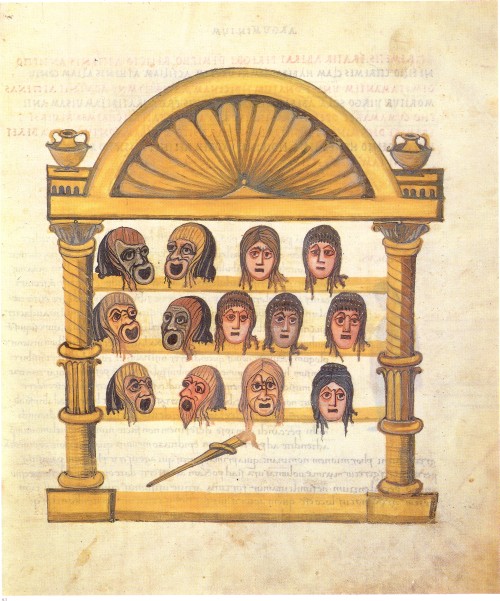
- many MSS (school text); two recensions from 3rd-4th century CE archetype, i.e. A (superior codex Bembinus, 4th/5th CE, rustic caps.) and Σ (9th-11th centuries, miniscules, some with illustrations)
- Aelius Donatus (4th century CE): grammarian's extant commentary – detailed analysis of language, comparisons with Greek sources, interpretations
- ancient reception/canonization: model of elegance, linguistic "purity" (sermo purus); o dimidiate Menander (Caesar); Latina voce Menandrum (Cicero)
- comic style: follows Greek New Comedy models (usually Menander) more closely than Plautus; few verbal fireworks (Plautine neologisms, metaphor, puns, jokes, etc.); spoken iambic trimeters (Ad. 1-154) & longer (accompanied) iambic-trochaic measures, virtually no cantica
- dramatic priorities: development of characters' psychology (nuances, changes, surprises); naturalistic dialogue, internal monologues, fractured speech (e.g. aposiopesis at Ad. 135-7); comedy of misunderstanding(s)
- metatheater: more subtle than Plautus; less interaction between actors & audience; less farce, clever slave & slavery de-centered (cf. Syrus in Ad.); endings in legitimate marriage; sustained illusion of Greece (Romanization)
- prologues: avoid exposition of plot, rhetorically evasive & esoteric dramatic/literary criticism; unnamed rivals – literary "establishment" (Collegium of Writers and Actors, Temple of Minerva, 207 BCE, 2nd century College of Poets)?
- repeated charges of "contaminating" Greek sources (contaminare, "spoil", "debase") in formative years of Latin literature & "plagiarism" (furtum), e.g. scene of Diphilus' Synapothnescontes (Ad. 6-14); collaboration of nobiles (Ad. 15-21) – patronage?
- Adelphoe (funeral games of L. Aemilius Paullus by son Scipio Aemilianus & brother, 160 BCE): adaptation of Menander's lost Adelphoi; double plot (brothers), debate on parenting (extent of patria potestas); non-expository prologue and 2 opening scenes (1-154)