LAT 521
November 7, 2019
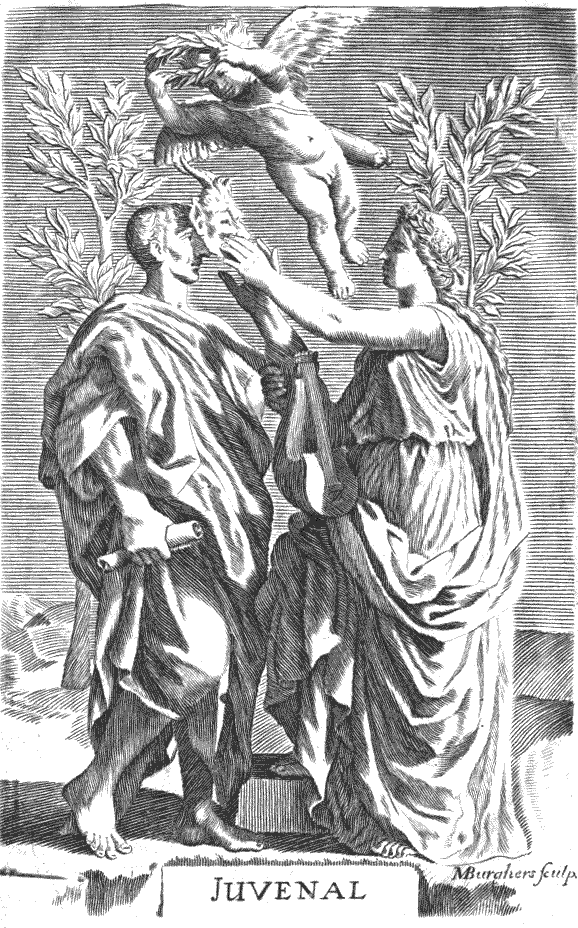
Juvenal & Roman Satire
- satura quidem tota nostra est (Quintilian 10.1.93); cf. lanx satura ("full dish"); satura ("stuffed sausage"); lex satura ("mixed bill"); nostri farrago libelli at Juv. 1.86
- heterogeneous content, presentation and style of satire highlight fullness, mixture, blending & variety (e.g. morality, social criticism, invective, philosophizing, education, literary criticism, parody, nugatory subjects) in dactylic hexamter
- quasi-autobiographical monologue (persona) + dialogue, multiple voices, narrative styles (e.g. mock epic, animal fable, philosophical diatribe) & stylistic registers (e.g. colloquial, epic, tragic, didactic, rhetorical)
- Lucilius (180-102 BCE); regarded as primus inventor by later satirists; outspoken social critic (Hor. S.1.10.3-4: sale multo / urbem defricuit); “the mighty son of Aurunca” at Juv. 1.20 (Juvenal redirects satire back to Lucilius)
- Horace (65-8 BCE) : “Venusia’s lamp” at Juv. 1.51; freedman-courtier's satire for well-connected circle; “congenial” satire; "displaced" by Juvenal?
- Persius (34-62 CE): stern Stoicism; crabbed & allusive style, obscurity
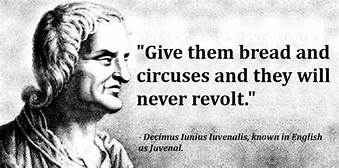
- Decimus Iunius Iuvenalis (Juvenal): born ca. 60 CE, d. after 127 CE: “indignant” moral satire/invective (si natura negat, facit indignatio versum, 1.79); little known of life (from Aquinum in southern Latium; cf. 3.318ff., Umbricius: "... and whenever / you manage to get out of Rome for a break, and return to Aquinum, / ask me up from Cumae ... I'll don my boots and come to your chilly / district, to hear your satires ...")
- speaker's satirical mask(s); cf. "angry white man" (Stephen Colbert): powerless outsider or displaced insider in a dynamic, cosmopolitan, multi-cultural society: depicts himself as poor client dependent on stingy patron(s), pushed aside by immigrants/foreigners (esp. "Orientals"), powerful women, homosexuals, nouveaux riche, legacy-hunters, the terminally greedy/corrupt, political informers, spendthrifts, etc., of thoroughly "unjust" society (topsy-turvy world of Others; even exemplars undermined)

- 16 satires after reign of Domitian (emp. 81-96 CE), but do not reflect the optimism following emperor’s death ("The High Empire"/Pax Romana: Trajan, emp. 98-117 CE, Hadrian, emp. 117-138 CE)
- Satire 1: programmatic opening for Juv. 1-5 (first book); speaker’s dissatisfaction with contemporary literary scene & Roman rhetorical training (suasoria, controversia)
- jaundiced representation of contemporary society: 1.30 difficle est saturam non scribere
- "tragic horror" of contemporary morality demands an appropriate style: sublime & low language/thought juxtaposed, bathos, hyperbole & usual rhetorical arsenal; metonymy (e.g. 1.53 mugitum labyrinthi) > "shock comedy"
- Juvenal's nostalgia emulates Lucilian satire; indignatio a departure from genteel, non-agressive Roman satire of Horace (cf. antiquarianism of Second Sophistic); self-representation as "epic satirist" in a degraded, non-heroic world where epic is dead
- satirist's self-deprecating fear of offending the powerful: experiar quid concedatur in illos / quorum Flaminia tegitur cinis atque Latina (1.170-1)