Classics 301B
February 21, 2024
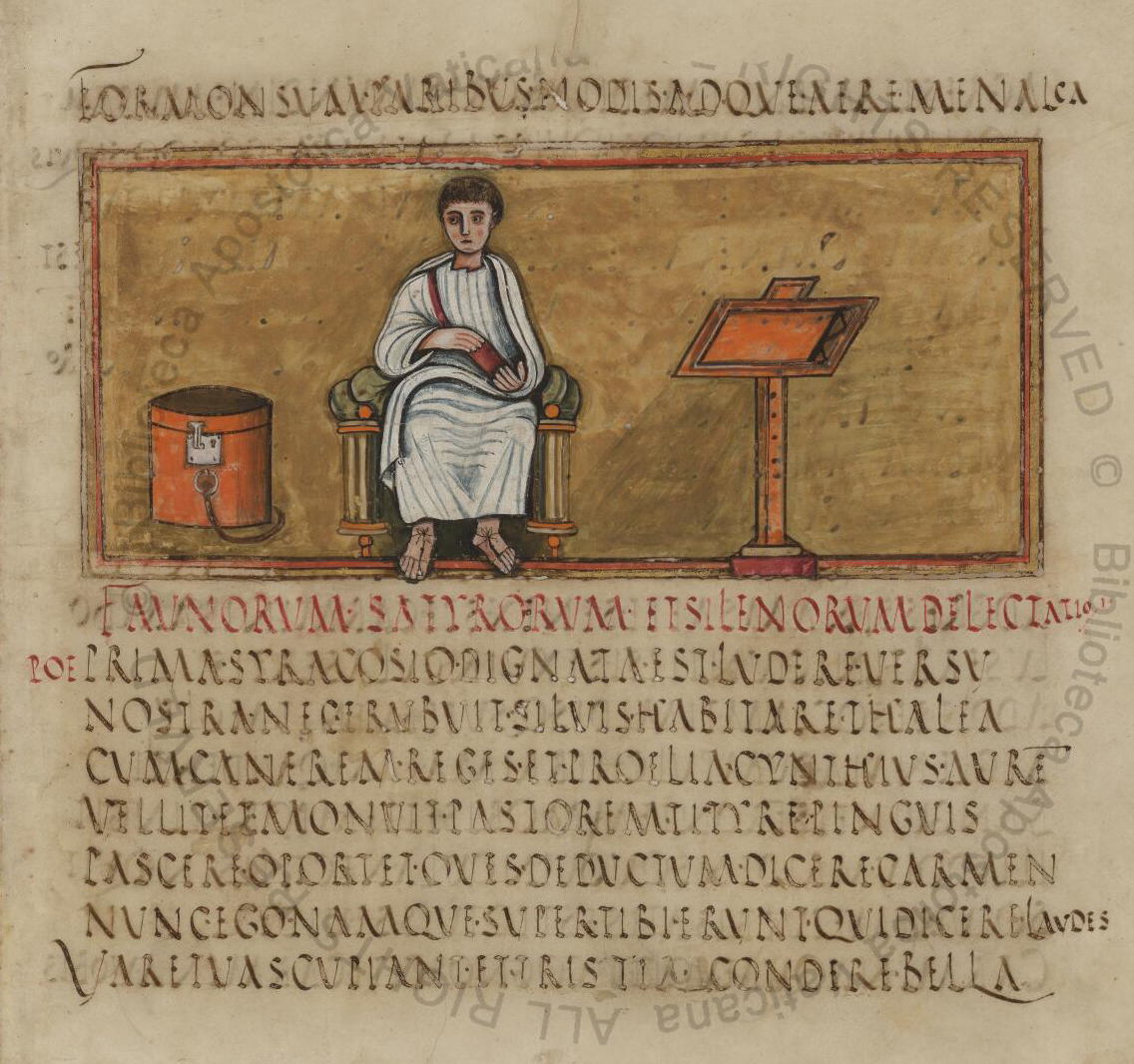
Portrait of Vergil ("Vergilius Romanus", 5th century CE illustrated manuscript)
Key to Exam #1
Paper Topics
Publius Vergilius Maro (Vergil): reinterpreted, reinvented throughout European & American literature and culture, always relevant in humanistic discussion
- poetry & recurrent western preoccupations: individual/society; colonialism, imperialism & ideology of empire; what constitutes "civilization"? + tragedy of human suffering & mortality
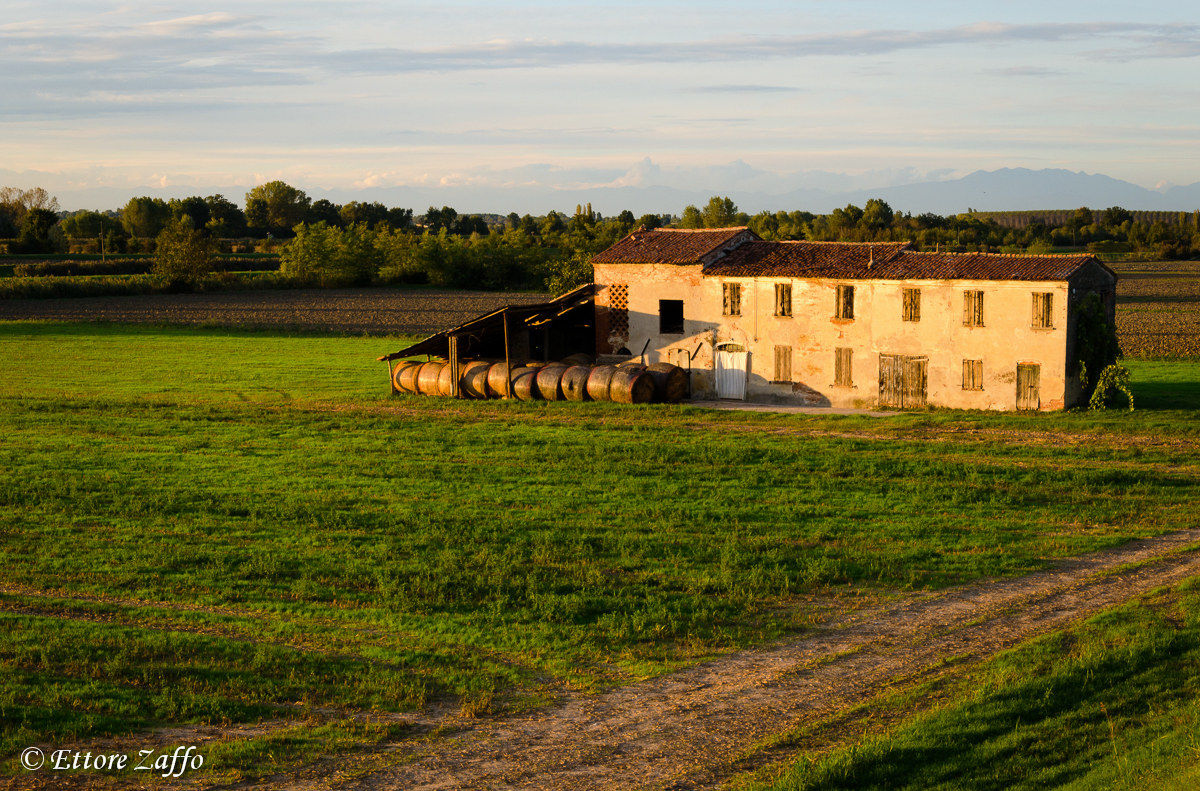
- biography: Mantua (70 BCE-19 BCE); father a landowner; Rome & Naples (= Parthenope: Epicureanism); no public career; family-land confiscated by Octavian (41 BCE) after defeat of Brutus & Cassius, Battle of Philippi (42 BCE); farm returned on appeal (cf. Eclogue 1)
- poetic career: Eclogues (= Bucolics, ca. 42-39 BCE): 10 pastoral poems on model of Theocritus’ Idylls (3rd century BCE) in Alexandrian style – nostalgic poems of idyllic/rustic/agrarian world of shepherds, esp. their loves, daily lives, (meta)poetic contests
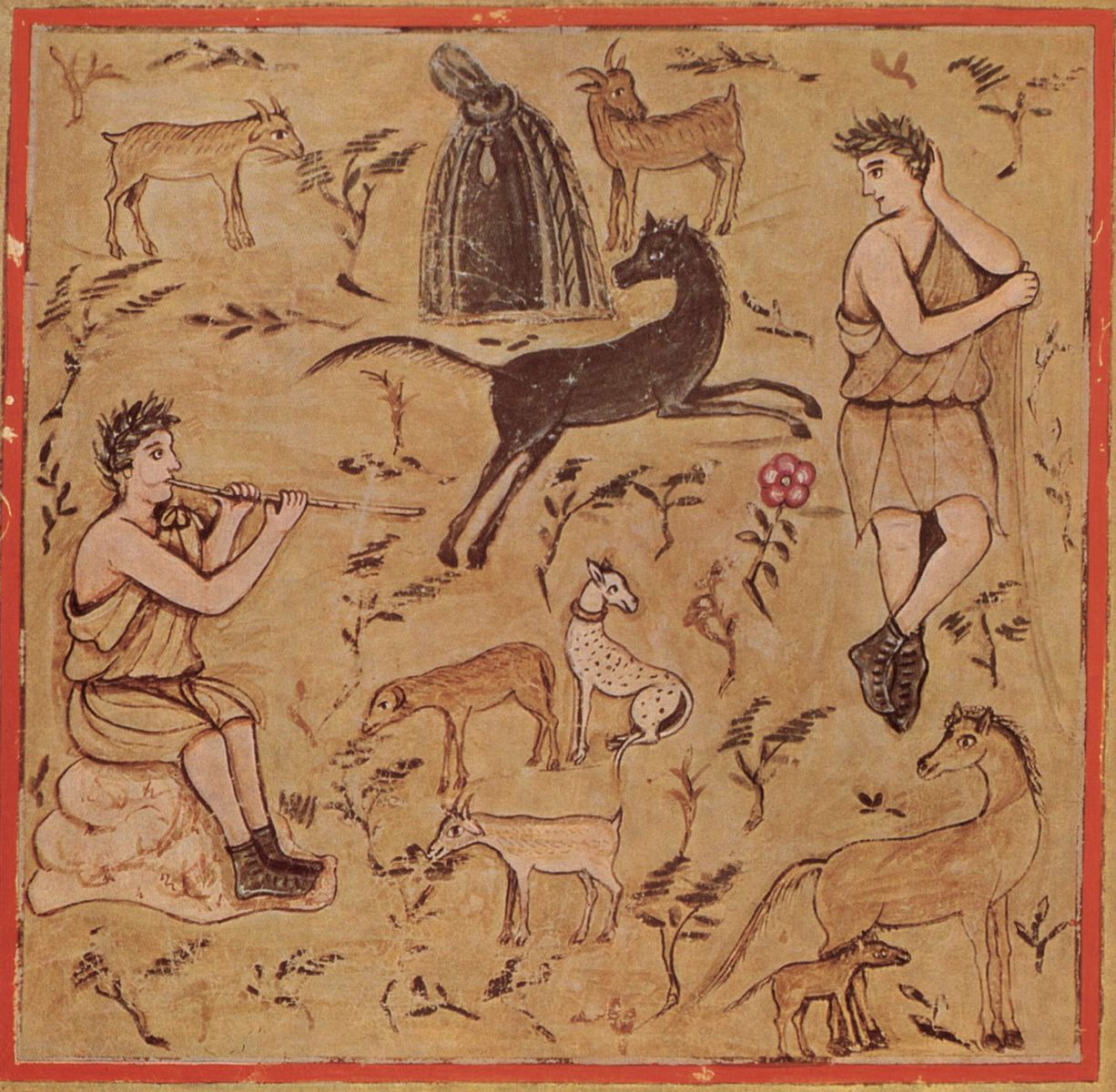
Illustration of "Vergilius Romanus" (5th century CE manuscript)
- Eclogue 1: dialogue of Meliboeus & Tityrus; contemporary politics invade pastoral world; shepherd's respective fates; personal, political, philosophical implications
Eclogue 1.1-35 READER: Kyle (Meliboeus)
Meliboeus
Tityrus, lying there, under the spreading beech-tree cover,
you study the woodland Muse, on slender shepherd's pipe.
We are leaving the sweet fields and the frontiers of our country:
we are fleeing our country: you, Tityrus, idling in the shade,
teach the woods to echo 'lovely Amaryllis'.
Tityrus
O Meliboeus, a god created this leisure for us. [cf. Lucretius 5.8 deus ille fuit . . .]
Since he'll always be a god to me, a gentle lamb
from our fold, will often drench his altar.
Through him my cattle roam as you see, and I
allow what I wish to be played by my rural reed.
Meliboeus
Well, I don't begrudge you: rather I wonder at it: there's such
endless trouble everywhere over all the countryside. See,
I drive my goats, sadly: this one, Tityrus, I can barely lead.
Here in the dense hazels, just now, she birthed twins,
the hope of the flock, alas, on bare stones.
I'd have recalled that this evil was prophesied to me,
by the oak struck by lightning, if my mind had not been dulled.
But, Tityrus, tell me then, who is this god of yours?
Tityrus
Meliboeus, foolishly, I thought the City they call Rome
was like ours, to which we shepherds are often accustomed
to drive the tender young lambs of our flocks.
So I considered pups like dogs, kids like mothers,
so I used to compare great with small.
But this city indeed has lifted her head as high among others,
as cypress trees are accustomed to do among the weeping willows.
Meliboeus
And what was the great occasion for you setting eyes on Rome?
Tityrus
Liberty, that gazed on me, though late, in my idleness, [libertas a political slogan; Epicureanism]
when the hairs of my beard fell whiter when they were cut,
gazed yet, and came to me after so long a time,
when Amaryllis was here, and Galatea had left me. [Tityrus' contrasted lovers]
Since, while Galatea swayed me, I confess,
there was never a hope of freedom, or thought of saving. [peculium > manumission]
My hand never came home filled with coins,
though many a victim left my sheepfolds,
and many a rich cheese was pressed for the ungrateful town.
.jpg)
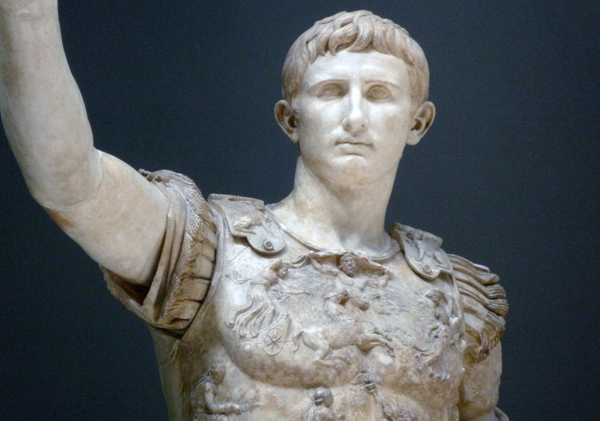
Augustus of Prima Porta (1st century CE)
- Tityrus' appeal to Octavian (?), god-youth of ruler-cult ("There, Meliboeus, I saw that youth for whom / our altars smoke for six days twice a year. /
There he was the first to reply to my request: / 'Slave, go feed your cattle as before: rear your bulls'", 42-5)
- the fate of Meliboeus ("An impious soldier . . . a barbarian these crops", 70-1)?
- Eclogue's last word: umbrae ("shadows"); loss/gain
- Eclogues & Aeneid: Vergil's unwillingness to write epic
Eclogue 6.3-8 (recusatio, "refusal")
When I sang of kings and battles the Cynthian plucked me
by the ear and warned me: "Tityrus, a shepherd
should graze fat sheep, but sing a slender song."
Now (since there are more than enough who desire to sing
your praises, Varus, and write about grim war)
I’ll study the rustic Muse on a graceful flute.
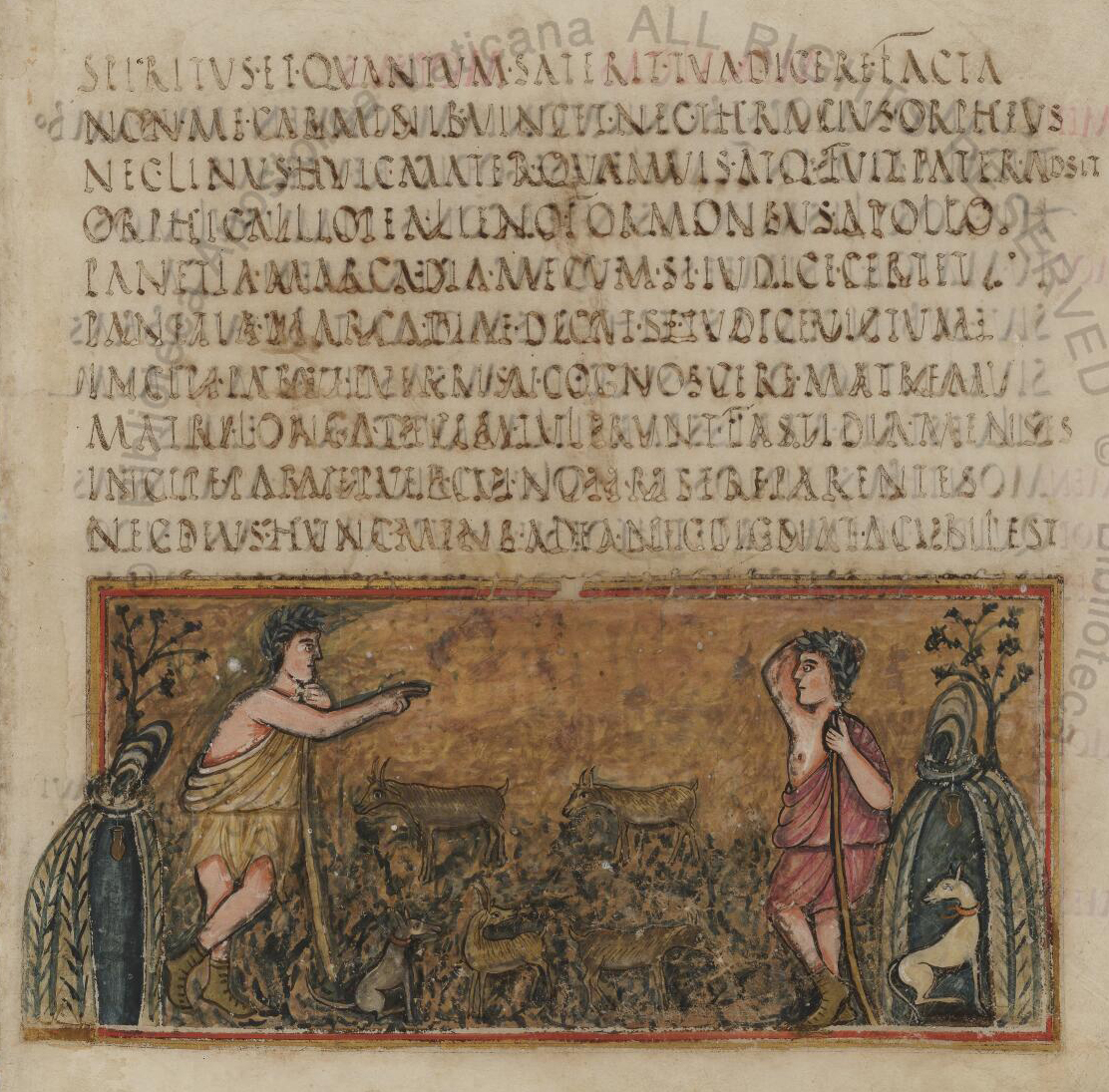
Illustration of "Vergilius Romanus" (5th century CE manuscript)
- Georgics (ca. 38-29 BCE): didactic poetry on agriculture – cf. Hesiod, Alexandrians (Nicander, lost Georgics), Lucretius (beatitude,"Happy is he who’s been able to learn the causes of things, / and has set all fear, and unrelenting fate, and the noise / of greedy Acheron, under his feet", 2.492) + manuals of Cato, Varro
- learned agricultural poetry: tilling fields, arboriculture, livestock, beekeeping; politics permeates agrarian world > broader conception of human experience/"civilization"; Georgics glorifies farmer-warrior as culture-hero/orderer of nature, but tragic & pessimistic, e.g. plague (end of Georgics 3) following account of raising healthy livestock
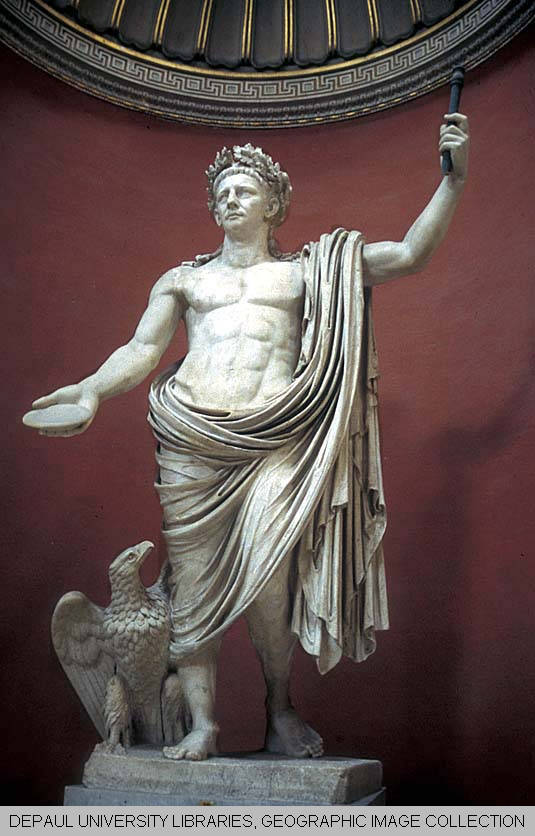 Claudius as Jupiter (42-43 CE)
- Vergil in circle of Maecenas: opening hymn to agricultural deities, climax with Octavian (cf. imperial panegyric & apotheosis)
Georgics 1ff.
I'll begin to sing of what keeps the wheat fields happy,
under what stars to plough the earth, and fasten vines to elms,
what care the oxen need, what tending cattle require,
Maecenas, and how much skill's required for the thrifty bees.
[invocation of various agricultural deities follows]
. . . and you too, Caesar, who, in time, will live among a company
of the gods, which one's unknown, whether you choose
to watch over cities and lands, and the vast world
accepts you as bringer of fruits, and lord of the seasons,
crowning your brows with your mother Venus's myrtle . . .
. . . grant me a fair course, and agree to my bold beginning*,
pitying the country folk, with me, who are ignorant of the way:
prepare to start your duties, and even now, hear our prayer.

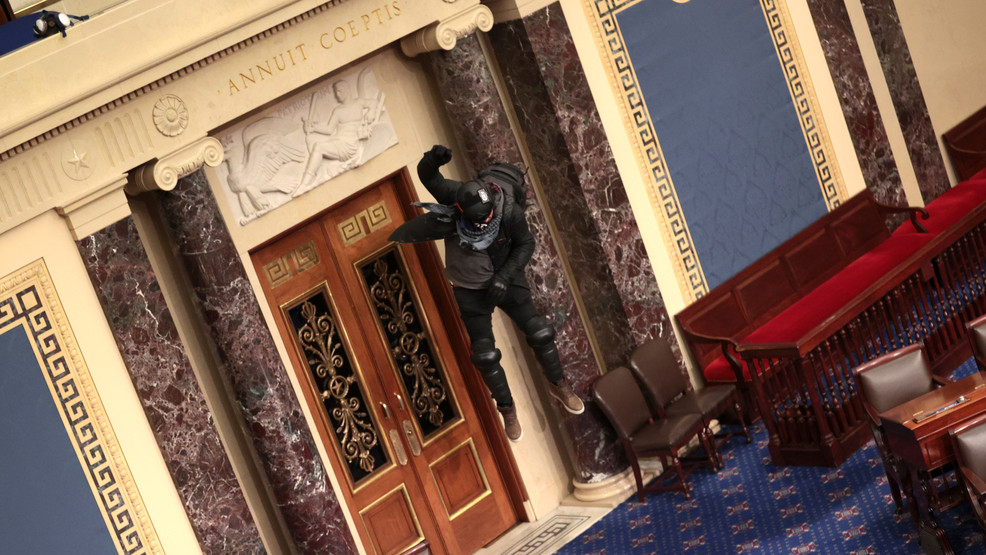
L: ANNUIT COEPTIS, NOVUS ORDO SECLORUM; R: Insurrectionist in US Senate Chamber (January 6, 2021)
*audacibus adnue coeptis, 1.40 (adnuo, of a god's approval; cf. magnus ab integro saeclorum nascitur ordo, Eclogue 4.5)
- Georgics forecasts Aeneid (or Caesareid?), "Soon I’ll gird myself to speak of Caesar’s fiery battles, / and take his name forward, famous, for as many years / as Caesar’s are far from immortal Tithonus’s first birth, 3.46-8)
.jpg)
Bernard Hoyes, Dying Bull (Rag Series, 1979)
- plague, end of Georgics 3 (cf. end of Lucretius, On the Nature of Things): false optimism, unfulfilled promise & hope, tragedy
Georgics 3.517-30 (an Epicurean bull mourns his brother's death)
The ploughman goes sadly
to unyoke the bullock that grieves for its brother’s death,
and leaves the blade stuck fast in the middle of its work.
No shadows of the deep woods, no soft meadows
can stir its spirits, no stream purer than amber
flowing over the stones, as it seeks the plain: but the depths
of his flanks loosen, and stupor seizes his listless eyes,
and his neck sinks to earth with dragging weight.
What use are his labour and his service? What matter that he turned
the heavy earth with the blade? And yet no gifts of Massic wine
or repeated banquets harmed these creatures:
they graze on leaves and simple grass, for sustenance,
their drink is from clear fountains, and rivers racing
in their course, and no cares disturb their healthy rest.
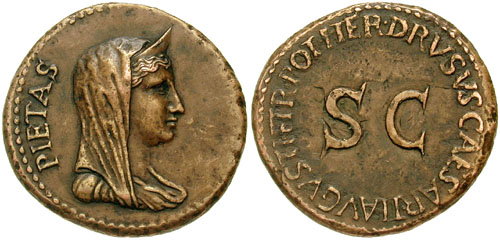
Livia (wife of Augustus) as the goddess Pietas (22-23 CE)
- Aeneid: begun ca. 30 BCE, unfinished at Vergil’s death (19 BCE; includes 58 unfinished lines) > eclipsing Ennius’ Annales as Roman national epic & rivaling Homer as the epic poet of antiquity
Aeneid 1.1
arma virumque cano (“My song is of war and a man . . .”)
Aeneid 7.46ff.:
I will tell of horrendous wars, tell of battle lines
and princes fired with courage, driven to their deaths,
Etruscan battalions, all Hesperia called to arms.
A greater tide of events springs up before me now,
I launch a greater labor.
- Vergil's Odyssey & Iliad: nature of the hero’s journey?; nature of hero? (Aeneas: hero of pietas and fate/history > "reversal" of Trojan War, Rome)
- hero/epic of trauma (personal, e.g. Aeneas wishes he had died like Hector at Troy, 1.94ff., and cultural trauma); national epic to support idea of unified Roman community in traumatic aftermath of Roman civil wars (mending social fabric of 1st century BCE Rome)
- epic & human responsibility, motivations – gods? (cf. 1st century BCE Roman philosophy)
Aeneid 9.184-6 (Nisus on epic convention)
Nisus asked, “Do gods enflame our hearts,
Euryalus, or do our fierce desires become
our gods?"
- Vergil’s subjective style vs. the traditional “objective” style of epic (Homer) – narrative admits subjective viewpoints of characters, narrative focalization, apostrophe, etc.
- Augustan teleology: foundation story of Lavinium > reign of Augustus (fall of Troy c. 1200 BCE & Italian foundation myths involving Trojan exiles, foundation myth of Rome by Romulus in 753 BCE (via "Alban Kings"); Battle of Actium, 31 BCE, Octavian named Augustus in 27 BCE as Aeneid a work-in-progress)
- Augustus Caesar (63 BCE-14 CE) first emperor; "refounding" Rome, propaganda denies civil war, heralds "golden age" of peace/prosperity (emperor's post-civil war remake)
- Vergil associated with Augustan regime via Maecenas – e.g. Aeneid's first simile (Neptune & furious winds, 1.148ff.)? Jupiter's optimistic prophecy to Venus?
Aeneid 1.257ff.
"Let go your fear, Cytherea. Your people's fate
remains unchanged: you'll see Lavinium and
its promised walls, you'll raise great-souled Aeneas
to the stars. I haven't changed my mind.
Since this worry gnaws at you, I'll tell you more,
and unroll the secrets of the fates. Your son
will wage wide war in Italy, subdue
ferocious tribes, and give them walls and customs . . .
[Jupiter describes events down to Rome's founding by Romulus (753 BCE)]
. . . On them [Romans] I set no boundaries of time or space.
I've granted empire without end. Even cruel [imperium sine fine]
Juno, terror of the land and sea and sky,
will change her plans and (like me) favor Romans:
people of the toga, rulers of the world.
So I've decreed. As years slip by, an age
will come
when Assaracus' house will conquer
Argos and crush Phthia and famed Mycenae.
Trojan Caesar will be born, of lovely Venus' line,
whose rule will reach all shores, his fame the stars
—Julius, a name passed down from the great Iülus.
Freed from worry, you'll greet him in the skies.
He'll come laden with Eastern spoils, and men will pray
to him; harsh centuries of war will cease.
Ancient Trust and Vesta, Remus and Quirinus
will set down laws; the awful iron Gates of War
will close. Inside, impious Rage, crouched on
brutal weapons, tied up with a hundred knots
of bronze, will roar from blood-stained jaws."
[Temple of Janus closed in absolute peacetime, 29 and 25 BCE]

- Aeneas as spectator at Juno's temple in Carthage: ekphrasis (Carthaginian building project); Trojan suffering, loss (compensation through art, memory, memorialization?)
Aeneid 1.446-65 READER: Gemmalee
Here, Dido of Tyre was building a huge
temple, rich in gifts, rich in her godly presence.
At the entry rose bronze stairs, the doorposts too
were bronze, the door creaked on bronze hinges.
In this grove first, a sight appeared that eased
Aeneas' fear and let him dare to dream
of safety, to have more hope in troubled times.
As he scanned each detail of the giant temple,
waiting for the queen, and admired the city's
fortune and its craftsmen's skill and work, he saw
the stages of the Trojan War, the battles blazoned
by their fame across the world, Atreus's
sons, King Priam, and Achilles cruel to both.
He stopped in tears: "Achates, what place on earth,
what land isn't steeped in what we've suffered? Look:
the world weeps, and mortal matters move the heart. [sunt lacrimae rerum, lit. "there are tears for things"]
Let go your fear. This fame will bring some safety."
He spoke, and fed his soul on empty images,
sighing heavily. Tears streamed down his face.
Aeneid 1.485-8 (Hector's death)
Aeneas groaned deep in his heart, when he saw
the spoils, the chariot, the very body of his
friend, and Priam stretching out defenseless hands.
He saw himself as well, mixed in with the Greeks . . . [cf. variant of Aeneas as Greek collaborator (Menecrates of Xanthus, 4th century BCE)]
- Dido and Aeneas: commonalties: Venus' tale to Aeneas (Tyre, Sychaeus, Pygmalion, Dido’s vulnerability)?
Aeneid 1.627-30 (Dido to a moved and grateful Aeneas)
". . . Fortune once
harassed me with hardship like your own. At last,
the fates let me settle in this land. Knowing
pain, I can learn to help the pain of others."
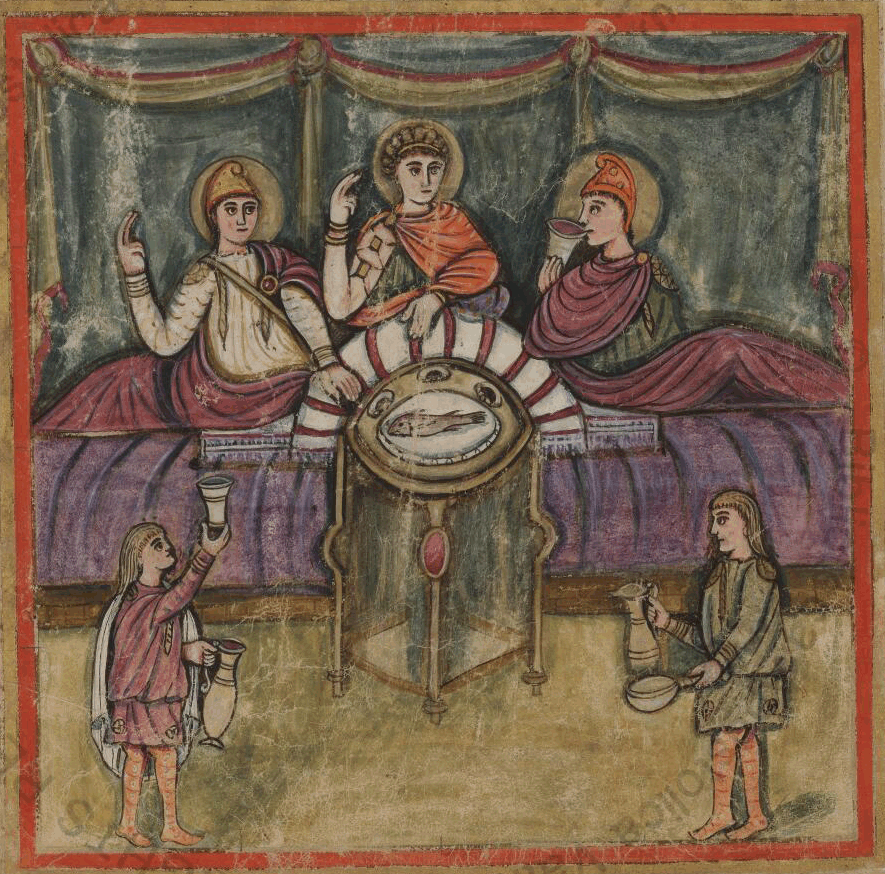
Dido's banquet ("Vergilius Romanus", 5th century CE illustrated manuscript)
- Dido's banquet, end of Aeneid 1?
Google Map of Aeneas' Journey
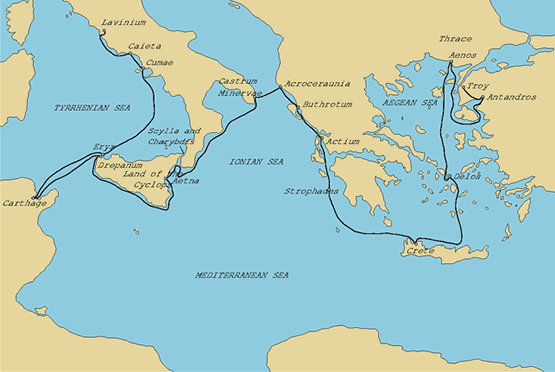
Aeneid 2: Aeneas as narrator (cf. Odysseus among the Phaeacians, Odyssey 9-12)